
A Visitor's Introduction to The Royal Pavilion, Brighton
The Royal Pavilion in Brighton is one of the most distinctive historic buildings in the United Kingdom, notable for its exotic architectural style and richly decorated interiors. Situated in the centre of Brighton, just a short walk from the seafront, the Pavilion was originally built as a seaside retreat for George, Prince of Wales, who later became King George IV. Its construction began in the late 18th century, with major expansions and redesigns carried out between 1815 and 1823 under the direction of architect John Nash.
The result was a striking building unlike anything else in Britain at the time. Inspired by Indian Mughal architecture on the outside and decorated in a lavish Chinese-inspired style on the inside, the Royal Pavilion reflects the tastes, ambitions, and eccentricities of the Regency period. Today, it is owned by Brighton & Hove City Council and operates as a museum and visitor attraction. Its unique history, design, and role in Brighton’s development as a fashionable seaside resort have ensured its place as one of the city’s best-known landmarks.
Recommended Brighton accommodation: Hotels Bed & Breakfasts Pub Accommodation
Pre-book Brighton Attractions, Tours & Activities
Why is the Royal Pavilion worth a visit?
The Royal Pavilion is worth visiting for its unique architectural and cultural significance. Nowhere else in Britain offers quite the same blend of Indo-Islamic exteriors with interiors inspired by Chinese decorative arts. This fusion style reflects the global influences that shaped Britain during the Regency period and provides a fascinating insight into the tastes of George IV, one of the most extravagant monarchs of his time.
The building tells multiple stories: it reveals how Brighton grew from a fishing town into a fashionable destination; it illustrates the opulence and indulgence of the Regency elite; and it charts the later history of the building, which included use as a hospital for Indian soldiers during the First World War. Its interiors are preserved to showcase their original grandeur, making a visit feel like stepping back into an age of royal spectacle and eccentric design. For anyone interested in history, architecture, design, or simply unusual places, the Pavilion offers a rich and memorable experience.
Royal Pavilion Highlights
The Architecture
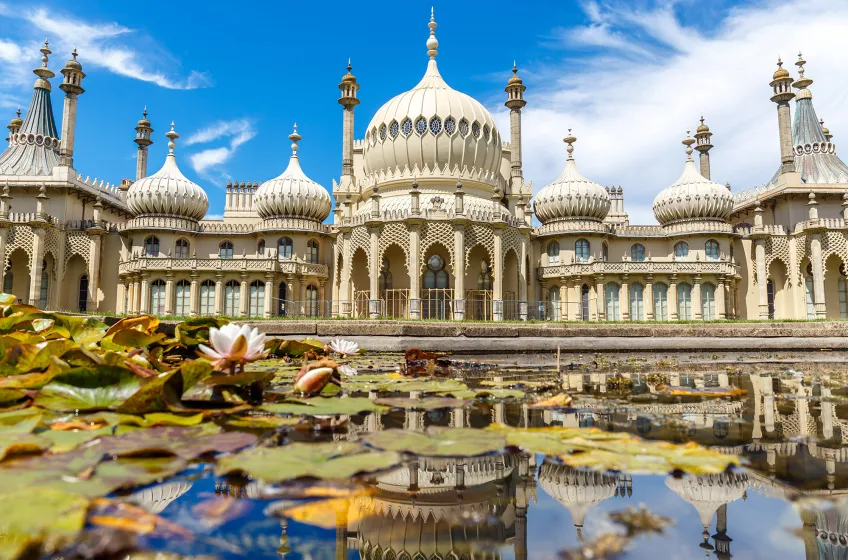
The exterior of the Royal Pavilion is one of its most striking features. Designed by John Nash, it reflects an interpretation of Mughal and Indo-Islamic architectural styles, with onion-shaped domes, tall minarets and intricate stucco work. Its appearance makes it stand out from other royal residences and has become an enduring symbol of Brighton itself.
The Banqueting Room
Inside, the Banqueting Room demonstrates the splendour of Regency entertaining. With dazzling chandeliers, richly decorated walls, and elaborate ceiling ornamentation, it was designed to impress guests and reflect George IV’s wealth and status. The centrepiece is a 9-metre high chandelier shaped like a lotus flower, held in the claws of a silvered dragon.
The Music Room
Equally impressive is the Music Room, which was designed for performances and lavish entertainments. Its domed ceiling, gilded decoration, and use of rich reds and golds make it one of the most ornate rooms in the building. During its restoration, attention was given to accurately recreating its original decorative scheme after damage during the Second World War.
The Great Kitchen
George IV took a particular interest in food, and the Pavilion’s kitchen reflected his enthusiasm. Unusually grand for its time, the kitchen was fitted with advanced technology, including large cooking ranges, steam heating and mechanised spits. Today, visitors can see displays of copper cooking utensils and learn more about the elaborate feasts once prepared here.
The Royal Apartments
The King’s Apartments, including the bedroom and private chambers, reveal more about George IV’s personal tastes. Though less ostentatious than the state rooms, they still display high-quality furnishings and decoration, balancing comfort with luxury.
The Pavilion Gardens
Surrounding the Pavilion are gardens restored to the Regency style, with winding paths, flower beds, and lawns. They were designed to complement the building and create a sense of exoticism. Today, the gardens are free to enter and popular with both visitors and local residents as a place to relax.
The Indian Military Hospital
During the First World War, the Royal Pavilion was converted into a hospital for soldiers from the Indian Army who were injured on the Western Front. Exhibitions within the Pavilion and interpretation around the site highlight this chapter of its history, which reflects Brighton’s global connections and its role during wartime.
Special Exhibitions
The Pavilion hosts rotating exhibitions and displays that explore aspects of Regency culture, design, and Brighton’s history. These often draw on the collections of the Royal Pavilion & Museums service, which includes fine art, decorative objects, and material from the city’s social history.
Nearby Attractions
The Royal Pavilion is located in central Brighton, making it easy to combine with other attractions in the area. Just next to the Pavilion are the Brighton Museum & Art Gallery, which houses collections of decorative art, fashion, and local history, and the Brighton Dome, a cultural venue originally constructed as part of the Pavilion estate.
A short walk away lies Brighton Palace Pier, a traditional seaside pier with amusements, rides, and food stalls, offering a contrast to the royal splendour of the Pavilion. The Lanes, Brighton’s historic shopping quarter, are nearby too, with narrow streets filled with independent shops, jewellers, and cafés. For those interested in modern art, the Fabrica Gallery is housed in a converted church and regularly stages contemporary exhibitions.
The seafront itself provides access to the i360 observation tower, where visitors can view the coastline from 138 metres above sea level, and the Volk’s Electric Railway, the world’s oldest operating electric railway. These attractions complement a visit to the Pavilion by showing different aspects of Brighton’s identity, from royal retreat to seaside resort and cultural hub.
Practical Advice
The Royal Pavilion is open to the public throughout the year, though opening hours may vary seasonally. Tickets can be purchased on site or online in advance, with concessions available for children, students and seniors. Combined tickets with other local attractions, such as the Brighton Museum, may also be offered.
Photography is usually permitted inside the Pavilion, but without the use of flash or tripods, in order to protect the interiors. Visitors should allow at least one to two hours to explore the building fully, especially if they wish to take in the gardens and exhibitions.
The Pavilion is located in the heart of Brighton, just a 10–15 minute walk from Brighton railway station, which has frequent connections to London and other towns along the south coast. Several bus routes stop nearby, and there are car parks within walking distance, although parking in central Brighton can be expensive and limited.
The Pavilion has level access at the entrance and facilities for visitors with reduced mobility, though some areas may have restricted access due to the historic nature of the building. Audio guides and guidebooks are available, and tours are sometimes offered for groups or special occasions.
Brighton itself can be very busy, particularly during summer weekends and during events such as the Brighton Festival or Pride. Visitors planning to include the Pavilion in their itinerary may find weekday visits less crowded. The Pavilion Gardens are open daily and free to access, providing a good place to pause before or after a visit.
Summary
The Royal Pavilion in Brighton is an architectural and historical landmark that stands apart from any other royal residence in Britain. Its unique Indo-Islamic exterior and lavish Chinese-inspired interiors embody the extravagance of George IV and the artistic experimentation of the Regency era. Combined with its later history as a wartime hospital and its central role in Brighton’s development, the Pavilion offers a multi-layered story that appeals to a wide range of interests. Together with its location at the heart of Brighton’s cultural quarter and proximity to the seafront, it is one of the most rewarding places to visit in the city and a highlight of the Sussex coast.
Shortlist
- Your Shortlist is empty