
Discover Bodnant Garden | A Visitor's Introduction to Bodnant Garden
Bodnant Garden is a historic National Trust property situated in the Conwy Valley, North Wales. Set against the dramatic backdrop of the Snowdonia mountain range, the garden covers over 80 acres of landscaped grounds and features a rich variety of formal gardens, woodland, meadows, and streams. Established in the late 19th century, Bodnant Garden has evolved over generations, blending horticultural excellence with natural beauty. It is especially renowned for its collection of exotic and native plants, many of which were introduced by famous plant hunters of the early 20th century. With seasonal highlights and year-round appeal, Bodnant Garden attracts visitors interested in botany, landscape design, history, and outdoor recreation.
Bodnant Garden visitor information and tickets
Recommended accommodation near Bodnant Garden: Hotels
Why Is Bodnant Garden Worth a Visit?
Bodnant Garden is worth visiting for its exceptional botanical diversity, historical significance, and picturesque setting. Unlike many traditional gardens confined to formal layouts, Bodnant offers a diverse experience across multiple garden types, each with a unique character. The garden is particularly celebrated for its nationally important collections of magnolias, camellias, rhododendrons, and hydrangeas, as well as for its famous Laburnum Arch – one of the longest and most impressive in the UK.
Bodnant also represents a living history of British horticulture. Its development over more than 150 years reflects shifting tastes and international influences, with contributions from prominent figures such as Henry Pochin, his daughter Laura McLaren, and subsequent generations of the McLaren family. Many rare plant specimens brought back from Asia and the Americas were first propagated here. The landscape integrates designed elements with natural topography, offering both cultivated beauty and a sense of wildness. With something new to see in every season, from spring blossoms to autumn foliage, it provides a rewarding visit at any time of year.
Highlights of Bodnant Garden
The Laburnum Arch
Arguably the garden’s most iconic feature, the Laburnum Arch is a 55-metre-long tunnel of golden yellow flowers that bloom in late May to early June. First created in 1880, it draws thousands of visitors annually and has become one of the most photographed features in any British garden. The arch provides a dramatic and immersive floral display that is brief but unforgettable.
The Pin Mill
This elegant 18th-century building was originally constructed in Gloucestershire and transported to Bodnant in the 1930s. It now stands on the Canal Terrace, reflected in the still water and surrounded by manicured planting. Its classical architecture adds a romantic and historical dimension to the formal garden setting.
The Terraces
A series of five Italianate terraces cascade down a hillside near the main house. Built between 1905 and 1914, they incorporate stone balustrades, fountains, ornamental pools, herbaceous borders, and exotic plantings. Each terrace offers a distinct experience, and together they demonstrate the influence of European garden design while framing views of the surrounding countryside.
The Dell
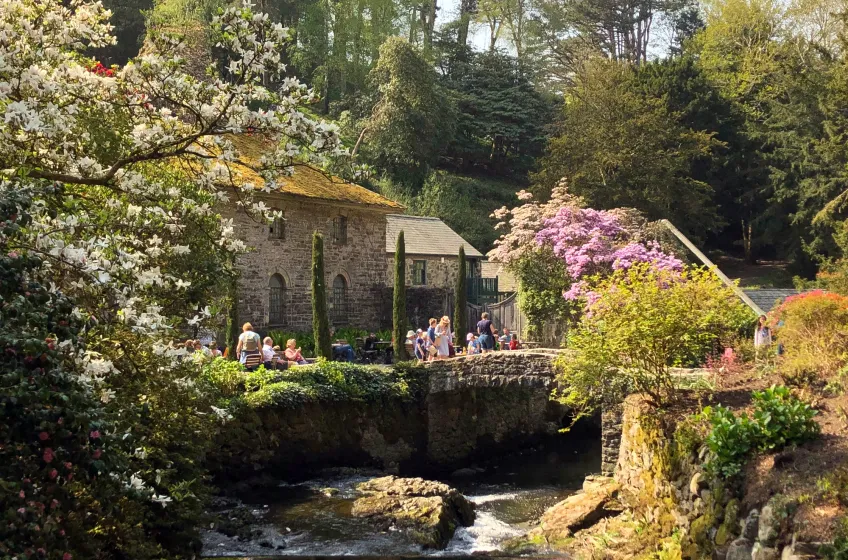
In contrast to the formal areas near the house, the Dell occupies a steep-sided valley carved by the River Hiraethlyn. It features towering trees, waterfalls, rustic bridges, and a more informal planting style. Visitors can follow shaded paths along the stream, passing notable specimens like giant sequoias, tulip trees, and monkey puzzles.
The Skating Pond and Far End
Located in the wild garden area of the estate, the Skating Pond and the Far End represent Bodnant's expansion in the 21st century. These parts of the garden are managed with biodiversity and sustainability in mind, featuring native wildflowers, wetland plants, and habitats for birds and insects. The Far End is particularly tranquil and includes boardwalks over boggy ground and secluded viewing spots.
The Old Park Meadow
A former grazing meadow that has been rewilded and managed for ecological diversity, the Old Park offers open vistas and a chance to observe seasonal changes in the landscape. In spring and summer, it bursts into life with wildflowers, butterflies, and birds. It's also a popular location for picnicking and quiet contemplation.
The Yew Garden
This formal garden area is framed by centuries-old clipped yews and serves as a transition space between the terraces and the wider garden. Its geometric layout and structured hedges contrast with the looser plantings elsewhere, illustrating the diversity of design within Bodnant.
The Winter Garden
Designed to offer colour and interest during the colder months, the Winter Garden includes shrubs with vibrant stems, evergreens, and plants with striking bark or foliage. The effect is a bright, textural display that makes winter visits particularly rewarding.
Plant Collections
Bodnant is home to several National Collections, including magnolias, rhododendrons, and camellias. The garden’s role in the history of plant exploration is significant; specimens collected by renowned explorers such as Ernest Wilson, George Forrest, and Frank Kingdon-Ward were brought here and helped shape British horticulture. These rare plants are labelled and interpreted throughout the site, offering educational value to amateur and professional gardeners alike.
The Poem
Located in the upper garden, The Poem is a striking Grade II-listed mausoleum built by Henry Pochin in memory of his children. Designed in the Gothic Revival style, it adds a solemn architectural note to the landscape and reflects the family legacy at the heart of Bodnant.
Facilities and Accessibility
The garden offers a comprehensive range of visitor facilities. There are two main entrances: the original garden entrance near the Hall, and the newer car park and visitor centre at the top of the site. The latter includes a shop, toilets, ticket office, and café with indoor and outdoor seating. A second café operates seasonally within the garden, offering refreshments closer to the Dell.
Mobility access is addressed through the availability of a limited number of mobility scooters and wheelchairs, which should be reserved in advance. While the garden features steep gradients and uneven paths, a number of accessible routes have been developed, and detailed accessibility maps are provided. Dogs are allowed on certain days and in designated areas, part of a Dog Friendly policy designed to widen access.
There are regular family events, horticultural talks, and seasonal trails, with educational programming tailored to schools and community groups. Plant sales are available on-site, often featuring plants grown from Bodnant's own stock. The garden is also available for group bookings, and guided tours can be arranged.
Nearby Attractions
Bodnant Garden is located in an area rich in natural and cultural attractions. Just a short drive away is the walled town of Conwy, known for its well-preserved medieval castle, a UNESCO World Heritage Site. Conwy also offers a picturesque quay, traditional shops, and Britain's smallest house.
To the south lies Snowdonia National Park, offering opportunities for walking, climbing, and scenic drives through mountain and forest landscapes. The village of Betws-y-Coed serves as a gateway to the park and features charming shops, a railway museum, and woodland walks.
Llandudno, a Victorian seaside resort, is also nearby. Attractions here include the Great Orme, a limestone headland with a tramway, ancient copper mines, and sweeping coastal views. The town itself has beaches, a pier, and a range of cultural and recreational activities.
Closer to Bodnant, the Bodnant Welsh Food Centre – once affiliated with the estate – offers local produce, a farm shop, and a restaurant, although its current operation status should be checked before visiting.
Practical Advice for Visitors
Bodnant Garden is open year-round, with seasonal variations in opening times and facilities. The busiest period is late spring, particularly during the Laburnum Arch bloom. To avoid crowds during this time, early morning or weekday visits are advisable. Tickets can be pre-booked through the National Trust website, which is recommended during peak times.
Weather in North Wales can be changeable, so appropriate clothing and sturdy footwear are recommended, especially for visitors planning to explore the steeper parts of the garden. Maps are available at the entrance, and staff are on hand to offer advice and directions. Dogs are welcome on Thursdays, Fridays, and Saturdays, but visitors should check the latest policy online.
Parking is available at the top entrance, and a shuttle service operates on busy days to help visitors with mobility issues. Public transport links are limited, but there are bus services from Llandudno Junction and Conwy. The nearest railway station is at Llandudno Junction, from which taxis can be arranged.
Visitors should allow at least two to three hours to explore the main areas of the garden, although longer stays are common. Picnicking is permitted in designated areas, and there are waste bins throughout the site. Photography is allowed for personal use, and commercial photographers must seek permission in advance.
Bodnant Garden offers a rich and varied experience that appeals to a broad audience, from keen horticulturists to families, history enthusiasts, and walkers. With careful planning, it makes for an inspiring and enjoyable day out in North Wales.
Shortlist
- Your Shortlist is empty