
Discover Beauvais | A Visitor's Introduction to Beauvais
Beauvais is a compact and historic city in the northern French region of Hauts-de-France, just over an hour from Paris. Best known for its awe-inspiring Gothic cathedral—home to the tallest choir in the world—Beauvais is a lesser-known gem with a rich medieval past, a strong tapestry-making heritage, and a lively local culture. With its atmospheric old town, pretty parks, and regional charm, Beauvais makes for a rewarding day trip or weekend escape.
Recommended Beauvais Accommodation: Hotels Bed & Breakfasts
Why is Beauvais Worth a Visit?
Beauvais is worth visiting for its unique architectural marvels, particularly the Cathedral of Saint Peter, which boasts ambitious heights and an extraordinary astronomical clock. The city’s history stretches back to Roman times, and it flourished in the Middle Ages as a centre of ecclesiastical power and fine craftsmanship.
While it may not attract the crowds of Paris or Lille, Beauvais offers an authentic experience of northern France, with friendly cafés, half-timbered houses, and an appealingly slow pace of life. It’s also a practical gateway to the wider Oise department, full of forests, castles, and charming villages. Whether you're drawn by history, architecture, or simply looking for a quieter corner of France, Beauvais delivers on all fronts.
Beauvais Highlights: Things to See and Do in Beauvais
Cathédrale Saint-Pierre de Beauvais
The Cathedral of Saint Peter is Beauvais’s most striking feature—and one of the most remarkable Gothic structures in France. Construction began in the 13th century with the ambitious aim of creating the tallest church in Christendom. The result was partially achieved: the choir soars to an astonishing 48 metres, the tallest ever built. However, the rest of the cathedral was never fully completed, making it both magnificent and haunting in its incompleteness.
Inside, visitors can marvel at the 19th-century astronomical clock, with its intricate mechanical figures and planetary movements, and admire the original medieval stained glass windows. Guided tours are available, and it’s well worth timing your visit to witness the clock's chimes.
Musée de l'Oise (MUDO)
Housed in a beautifully restored former episcopal palace right next to the cathedral, the MUDO – Musée de l’Oise – showcases an impressive collection of paintings, sculptures, and decorative arts from the Renaissance through to the 19th century. Highlights include works by Thomas Couture, Camille Corot, and an engaging display of local history. The building itself is worth a visit, with its grand halls, vaulted ceilings, and peaceful garden courtyard.
Galerie Nationale de la Tapisserie
Beauvais has a long-standing reputation for fine tapestry production, and the Galerie de la Tapisserie celebrates this heritage. Located near the cathedral, the museum highlights the evolution of tapestry-making from classical motifs to bold modern interpretations. Visitors can explore how the Manufacture Nationale de Beauvais played a pivotal role in France's decorative arts history, often producing pieces for royal residences.
Maladrerie Saint-Lazare
On the outskirts of Beauvais lies the Saint-Lazare Leper Hospital, a remarkably well-preserved example of medieval hospital architecture. Dating back to the 12th century, this peaceful site includes a chapel, cloister, barn, and medicinal garden. Today, it serves as a cultural centre and event space, but its calm setting and historic ambience make it a tranquil retreat from the bustle of town.
The Plan d’Eau du Canada
For a spot of nature and leisure, head to the Plan d’Eau du Canada, a large lake and recreational area just minutes from the city centre. In warmer months, it’s popular for walking, picnicking, pedal-boating, and even swimming at the supervised beach. There are also cycle paths, play areas for kids, and outdoor fitness equipment—ideal for families or anyone wanting to relax outdoors.
Place Jeanne-Hachette
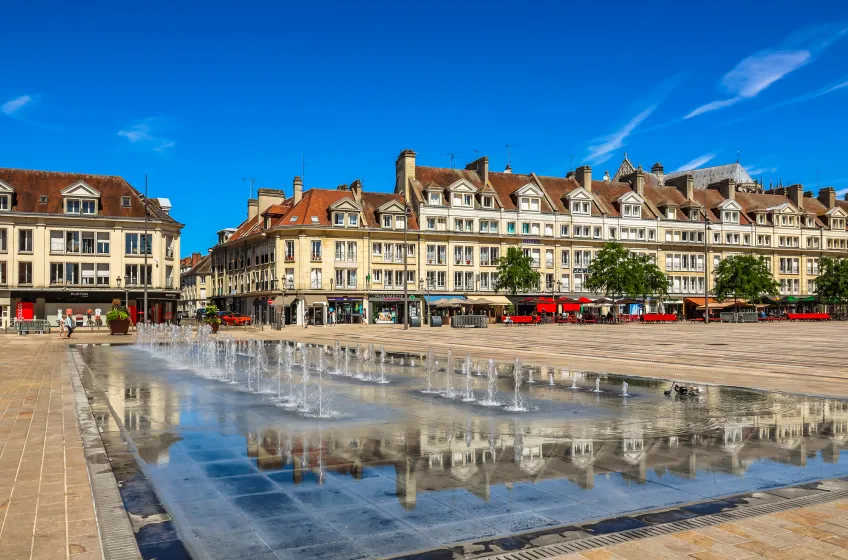
Named after the local heroine who defended Beauvais against Burgundian troops in 1472, this central square is the heart of city life. It's surrounded by shops, cafés, and brasseries, and frequently hosts markets and public events. The statue of Jeanne Hachette stands proudly in the centre, commemorating her bravery.
Hôtel de Ville and Clock Tower
Beauvais’s 18th-century town hall is an elegant building with classical lines and an adjoining belfry tower. The clock tower is particularly striking and adds character to the town's skyline. While the building isn’t generally open to the public, it forms part of the charming architectural ensemble near Place Jeanne-Hachette.
Practical Advice for Visitors
Getting There
Beauvais is well connected by both road and rail. From Paris Gare du Nord, regional trains run regularly and take just over an hour. By car, Beauvais is about 75 km north of Paris via the A16 motorway.
Beauvais is also known for its airport—Paris Beauvais–Tillé Airport—which serves budget airlines such as Ryanair and Wizz Air. From the airport, it's just a 15-minute taxi or shuttle bus ride into the city centre.
Parking
There are several public car parks in and around the city centre, many of which are reasonably priced. Parking is available near the cathedral, at Place des Halles, and around Place Jeanne-Hachette. Street parking is metered but usually easy to find, especially outside peak hours.
Dining
Beauvais offers a good mix of traditional French and modern cuisine. For classic regional dishes, try La Part des Anges, known for its elegant, locally sourced menu. Le Zinc Bleu is a stylish bistro with seasonal plates and a fine wine list. Craving something simple and authentic? Look out for tarte au maroilles, a rich, cheesy tart made with northern France’s famously pungent Maroilles cheese.
For a sweet treat, pop into Boulangerie Saint-Pierre for pastries or enjoy a relaxed coffee at Café du Beffroi, which overlooks the main square.
Shopping
While Beauvais isn’t a major shopping hub, its compact centre has a good selection of boutiques, chocolatiers, and artisan shops. Don’t miss the Marché de Beauvais held weekly (usually Wednesday and Saturday mornings), where you can browse local cheeses, charcuterie, honey, and flowers.
For local souvenirs, consider a tapestry item or products from the Oise region such as craft beer or cider.
When to Visit
Beauvais is pleasant year-round, but spring (April to June) and early autumn (September to October) are the best times to visit for mild weather and blooming parks. Summer brings festivals and outdoor events, while winter is quieter but charming—especially when the Christmas lights illuminate the cathedral and central square.
If you’re planning a visit to the cathedral, consider timing it to coincide with the Son et Lumière light show (usually in summer), when its intricate façade is illuminated in colourful patterns.
Local Events
One of Beauvais’s most celebrated events is the Fête Jeanne Hachette, held every June. This historic festival commemorates the town’s 15th-century heroine with parades, medieval re-enactments, music, and a festive market.
The Festival Pianoscope in autumn draws classical music lovers, and the city also hosts jazz concerts, theatre performances, and contemporary art exhibitions throughout the year.
Exploring Beyond Beauvais
The surrounding Oise department is full of attractions for those with extra time. The Château de Chantilly, with its grand gardens and impressive art collection, is less than an hour away. The medieval town of Gerberoy, often listed among the “most beautiful villages in France,” is a 30-minute drive and perfect for a half-day trip with cobbled lanes and rose-covered cottages.
The forests of Hez-Froidmont and Compiègne offer lovely walking and cycling routes, and the region is ideal for leisurely drives through scenic countryside dotted with abbeys and old farmsteads.
Shortlist
- Your Shortlist is empty