
Discover Avignon | A Visitor's Introduction to Avignon
Recommended places to visit, places to stay and things to do in and around Avignon
Avignon is one of southern France’s most atmospheric and historically rich cities, perched on the banks of the Rhône River in the Vaucluse department of the Provence-Alpes-Côte d’Azur region. Known as the “City of Popes,” Avignon was the seat of the Catholic papacy in the 14th century and still boasts a strikingly well-preserved medieval centre surrounded by robust city walls. Its mix of ecclesiastical grandeur, Provençal warmth, and artistic flair makes it one of the most rewarding city breaks in France.
With its UNESCO-listed monuments, cobbled streets, bustling squares, and famed theatre festival, Avignon appeals to history lovers, cultural travellers, and anyone enchanted by the sun-soaked romance of Provence.
Recommended Avignon Accommodation: Hotels Bed & Breakfasts
Why is Avignon Worth a Visit?
Avignon is worth visiting for its unique combination of papal history, Gothic architecture, Mediterranean ambience, and thriving cultural scene. Few cities in France offer such a dramatic historical backdrop—from the monumental Palais des Papes to the iconic Pont d’Avignon, all set against a skyline of tiled roofs and church spires.
But Avignon isn’t just about the past. It’s a living city full of character, creativity, and Provencal charm. Its lively cafés, art galleries, bustling markets, and shaded squares make it a joy to explore at a relaxed pace. Time your visit during the Festival d’Avignon, one of Europe’s biggest performing arts festivals, and the city transforms into a vibrant open-air theatre.
Its strategic location also makes Avignon an ideal base for day trips to the Luberon villages, Pont du Gard, Châteauneuf-du-Pape, and other Provençal gems.
Avignon Highlights: Things to See and Do in Avignon
Palais des Papes (Palace of the Popes)
This massive Gothic fortress-palace is Avignon’s crown jewel. Built in the 14th century when the city was the seat of the papacy, the Palais des Papes is the largest Gothic palace in Europe. Visitors can explore its grand halls, chapels, papal apartments, and battlements. The multimedia "Histopad" provided with your ticket brings the past vividly to life, with virtual reconstructions of how the palace looked in its prime.
Don’t miss the rooftop terrace for panoramic views over Avignon and the Rhône Valley.
Pont Saint-Bénézet (Pont d’Avignon)
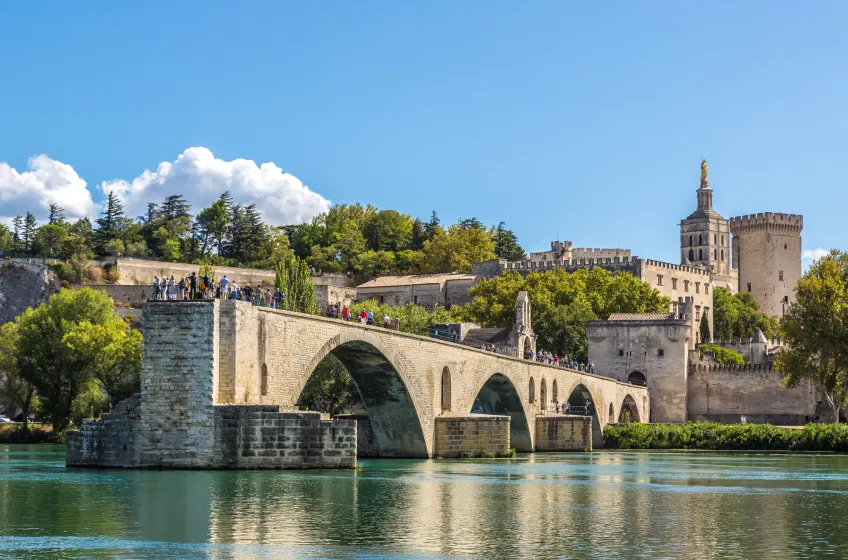
Famed in the French children’s song “Sur le pont d’Avignon,” this medieval bridge was once a vital crossing over the Rhône. Today, only a few arches remain, but the Pont Saint-Bénézet is one of the city's most beloved landmarks. A small museum at the entrance explains its history, and the views from the bridge towards the city and palace are stunning, particularly at sunset.
Place de l’Horloge
The beating heart of Avignon, Place de l’Horloge is a classic Provençal square lined with cafés, restaurants, and the city’s neoclassical town hall and opera house. It’s the perfect place to sip a glass of local rosé, enjoy an ice cream, or watch street performers in summer. The atmosphere here is lively and quintessentially southern French.
Les Halles d’Avignon
If you want to taste Provence, head to Les Halles, Avignon’s covered food market open every morning (except Monday). With over 40 stalls selling cheeses, olives, bread, wine, produce, seafood, and regional specialities, it’s a feast for the senses. Grab some supplies for a picnic or settle at one of the counters for a quick, tasty lunch with the locals.
Rocher des Doms
This leafy park perched above the city offers a peaceful escape and sweeping views of the Rhône, the Pont d’Avignon, and Mont Ventoux in the distance. Rocher des Doms was the original site of the settlement and is now a family-friendly space with fountains, sculptures, and shady spots for a break from sightseeing. It’s an easy walk from the Palais des Papes and ideal for cooling down on hot afternoons.
Avignon Cathedral (Notre-Dame des Doms)
Next to the Palais des Papes stands Avignon Cathedral, a Romanesque structure topped with a golden statue of the Virgin Mary. The interior includes ornate chapels, tombs of several popes, and a peaceful cloister. It’s smaller than the palace but beautifully serene and still an active place of worship.
Rue des Teinturiers
This cobbled street, once the centre of the city’s textile industry, is one of Avignon’s most picturesque and atmospheric. Lined with canals, water wheels, old buildings, and shady terraces, Rue des Teinturiers (Street of the Dyers) is a favourite with locals. During the theatre festival, it becomes a vibrant stage for street performances and impromptu shows.
Festival d’Avignon
Every July, Avignon hosts one of Europe’s most important performing arts festivals. The Festival d’Avignon transforms the city into a giant stage, with classical and contemporary theatre, dance, and visual art taking over courtyards, cloisters, and street corners. There’s also an “Off” festival with hundreds of independent productions. Even if you don’t have tickets, the energy, posters, and performers in the streets make for an unforgettable experience.
Petit Palais Museum
Housed in a former archbishop’s palace near the main square, the Musée du Petit Palais is a superb (and often quiet) collection of Renaissance art, featuring works by Botticelli, Carpaccio, and other Italian masters. Entry is free, and the museum also offers a lovely view over the city.
Calvet Museum
The Musée Calvet, located in an elegant 18th-century mansion, is Avignon’s fine arts museum, featuring works by French, Italian, and Dutch masters. It also has an extensive archaeological and ethnographic collection. It’s one of the best regional museums in Provence and worth a couple of hours for art lovers.
Practical Advice for Visitors
Getting There
Avignon is well connected by road and rail. There are two train stations:
-
Avignon TGV, 6 km outside the city, with high-speed services to Paris (2h40), Lyon (1h10), Marseille (35 min), and beyond.
-
Avignon Centre, near the city walls, is linked to the TGV station via a regular shuttle train.
Marseille Provence Airport is about an hour away by car or shuttle, offering international flights. Nîmes and Montpellier airports are also nearby.
Driving in the old town is tricky due to narrow streets and pedestrian zones, but the city is extremely walkable. Parking is easier outside the walls, with shuttle buses into the centre.
Parking
Use park-and-ride lots like Île Piot, which offer free parking and frequent shuttle buses into the centre. Inside the city, try Parking Palais des Papes, Les Halles, or Jean Jaurès, but expect narrow spaces and fees.
Dining
Avignon’s food scene blends Provençal and Rhône valley influences. Local dishes to try include:
-
Gardianne de taureau (bull meat stew)
-
Ratatouille
-
Fougasse (flatbread with olives or cheese)
-
Papeton d’aubergine (eggplant flan)
For a traditional meal, try La Fourchette, Le Goût du Jour, or L’Agape. For gourmet dining, Christian Étienne, beside the Palais des Papes, offers creative Provençal cuisine. Wine lovers should explore local Côtes du Rhône, Châteauneuf-du-Pape, and Lirac vintages.
Shopping
Avignon’s boutiques and markets are great for souvenirs. Look for:
-
Provençal linens and tableware
-
Lavender products
-
Handmade soaps from Marseille
-
Local wines and olive oils
The Saturday market at Place Pie and Les Halles offer the best food and produce, while Rue de la République and Rue Joseph Vernet host fashion and artisan shops.
When to Visit
-
Spring (April–June): Pleasant weather, blooming gardens, and fewer crowds.
-
Summer (July–August): Hot but buzzing with festivals and open-air events.
-
Autumn (September–October): Warm days, grape harvests, and local markets.
-
Winter (November–March): Quieter, ideal for museums and festive events, though some attractions may close or reduce hours.
Local Events
-
Festival d’Avignon (July): World-class theatre and arts in every corner of the city.
-
Avignon Jazz Festival (August): Up-and-coming artists and intimate venues.
-
Provence Prestige Fair (late November): Christmas market meets Provençal lifestyle.
-
Les Hivernales (February): Contemporary dance festival.
Exploring Beyond Avignon
Avignon is ideally placed for day trips:
-
Pont du Gard: Majestic Roman aqueduct just 30 minutes away.
-
Châteauneuf-du-Pape: Renowned wine village and tasting heaven (20 minutes).
-
L’Isle-sur-la-Sorgue: Antiques, canals, and markets in a picturesque setting (30 minutes).
-
Gordes, Roussillon, and the Luberon villages: Among France’s most beautiful and quintessentially Provençal stops (45 minutes to 1 hour).
-
Arles: Roman monuments, Van Gogh heritage, and Mediterranean charm (1 hour).
Avignon is a city where history lives and breathes in the walls, the stones, and the streets. From papal palaces to open-air theatre, it blends grand heritage with lively Provençal spirit. Whether you’re following in the footsteps of medieval popes, tasting wines in a shady square, or catching a street performance at sunset, Avignon offers a travel experience rich in culture, warmth, and authenticity.
Shortlist
- Your Shortlist is empty