
Discover Albi | A Visitor's Introduction to Albi
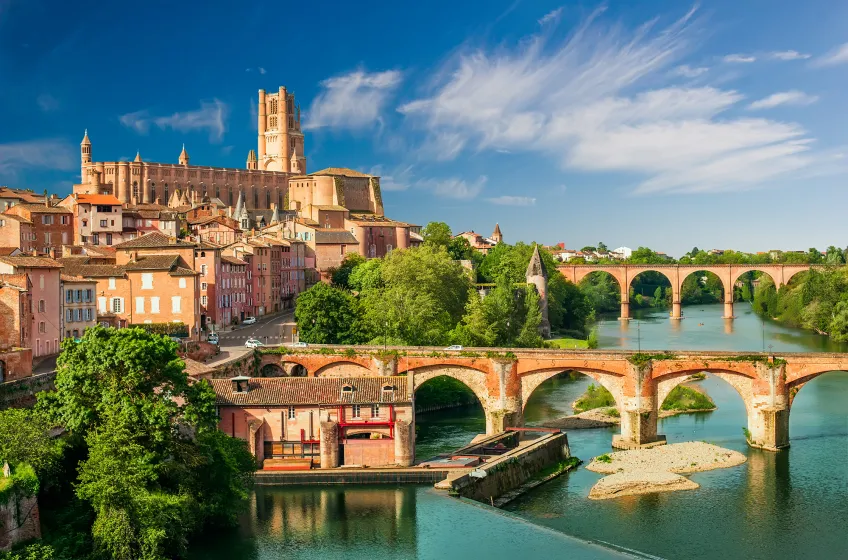
Albi is a picturesque town in the Tarn department of southern France, nestled on the banks of the River Tarn. Known for its extraordinary red-brick architecture and UNESCO-listed episcopal complex, this charming town is a haven for lovers of medieval history, Gothic art, and relaxed riverside charm. With its blend of cultural richness, warm Occitan spirit, and scenic surroundings, Albi offers a captivating escape into the heart of the Occitanie region.
Recommended Albi Accommodation: Hotels Bed & Breakfasts
Why is Albi Worth a Visit?
Albi is worth visiting for its exceptional architectural heritage, artistic legacy, and intimate, laid-back atmosphere. The town’s crowning jewel is the Sainte-Cécile Cathedral, one of the most unique religious structures in Europe, not only for its size but also for its richly decorated interior. The old town is a delightful maze of narrow cobbled streets, half-timbered houses, and sunny terraces, offering a timeless French experience away from the bustle of bigger cities.
Albi was also the birthplace of Henri de Toulouse-Lautrec, the famous post-impressionist painter known for his vibrant depictions of Parisian nightlife. Today, his legacy is honoured at the Toulouse-Lautrec Museum, which holds the largest collection of his works in the world.
Whether you're wandering along the riverbanks, diving into local history, or sipping a glass of Gaillac wine on a sunny terrace, Albi charms with its blend of southern warmth, cultural depth, and undeniable beauty.
Albi Highlights: Things to See and Do in Albi
Sainte-Cécile Cathedral
The Sainte-Cécile Cathedral is Albi's unmissable landmark. Towering above the old town, this awe-inspiring structure is the largest brick-built cathedral in the world and a symbol of Albi’s ecclesiastical power in the Middle Ages. Its stark exterior contrasts with an intricately painted interior featuring vivid frescoes, an ornate rood screen, and a Last Judgement mural that’s both haunting and spectacular. Entry is free, though the choir area has a small fee. Visit early in the morning for a peaceful experience and lovely light filtering through the stained glass.
Toulouse-Lautrec Museum
Housed in the grand Palais de la Berbie, the Toulouse-Lautrec Museum is a cultural gem. It contains over 1,000 works by the artist, including famous posters, drawings, and early paintings. The museum also offers a broader art collection and beautiful gardens with views over the River Tarn. It’s a must for art lovers and those curious about the bohemian spirit of late 19th-century Paris.
Old Town and Half-Timbered Houses
Strolling through Albi’s old town is like stepping back in time. The ochre-red buildings and medieval alleyways retain a distinctly southern charm. The Rue Mariès, Place du Vigan, and Rue de l’Hotel de Ville are particularly lovely for a wander. Many of the buildings have plaques explaining their history, so you can enjoy a self-guided historical walk at your own pace.
Pont Vieux
The Old Bridge, or Pont Vieux, dates back to the 11th century and offers wonderful views of the cathedral and riverbanks. Still in use today, this red-brick bridge is best appreciated in the golden light of early evening. There are a few riverside cafés nearby where you can enjoy the view with a drink or light meal.
Cloître Saint-Salvi
Just a short stroll from the cathedral, the Saint-Salvi cloister is a peaceful oasis in the heart of Albi. The blend of Romanesque and Gothic architecture is particularly striking, and the surrounding gardens offer a quiet space for reflection. It’s free to enter and less crowded than other sites, making it ideal for a quiet break.
Les Jardins de la Berbie
The gardens attached to the Palais de la Berbie are among the most beautiful in Albi. Meticulously maintained, with boxwood parterres and views of the Tarn River below, they’re perfect for a leisurely stroll. The gardens are accessible without a ticket to the museum and are especially stunning in spring and early summer.
Musée Lapérouse
Dedicated to the Albi-born navigator Jean-François de Galaup, comte de Lapérouse, this small museum traces the life and mysterious voyage of the explorer who vanished in the Pacific in the late 18th century. The museum includes models of ships, artefacts from his expeditions, and maps, making it a great stop for maritime history enthusiasts.
River Tarn Boat Cruises
For a different perspective of Albi, take a short cruise along the Tarn. These boat trips, which run from spring through autumn, offer views of the town’s red-brick skyline, the cathedral, and the lush riverbanks. It’s a relaxing way to see the town and especially pleasant in the late afternoon.
Albi’s Covered Market (Marché Couvert)
The covered market near Place Sainte-Cécile is a sensory delight. Packed with local produce, cheeses, meats, and baked goods, it’s a perfect place to gather picnic ingredients or sample regional specialities. The market is open most mornings except Monday and is a great spot to feel the town’s pulse.
Practical Advice for Visitors
Getting There
Albi is easily accessible by train from Toulouse, with regular TER services taking about an hour. If you’re driving, the journey from Toulouse also takes around an hour via the A68 motorway. Albi has a small train station, Albi Ville, which is within walking distance of most attractions in the town centre.
For international travellers, the nearest airport is Toulouse-Blagnac, with connections to many major European cities. From the airport, you can hire a car or take a train into Albi via Toulouse-Matabiau station.
Parking
If you’re arriving by car, parking is generally straightforward. There are several car parks near the town centre, including the Lices Jean-Jaurès and Parking du Vigan, which are both convenient for the cathedral and old town. Some street parking is available, but be mindful of time limits and restrictions, especially in the historic centre.
Dining
Albi has a thriving food scene rooted in Occitan traditions. For a refined experience, try Le Clos Sainte-Cécile, located in a former schoolhouse with views of the cathedral. For traditional southern French fare, Le Lautrec offers cassoulet, duck confit, and local wines in a rustic setting.
If you're after something casual, the Marché Couvert has vendors offering street-food-style eats and small plates. Don’t miss out on regional specialities like foie gras, Gaillac wines, and croustade (a local apple pastry).
Shopping
Albi offers a mix of local boutiques and artisan shops. Head to Rue Timbal and Rue Saint-Julien for independent fashion, crafts, and gourmet products. La Maison du Vieil Alby sells local crafts and also functions as a small museum.
For wine lovers, pick up a bottle of Gaillac wine at La Cave de Léna or Les Caves de la Madeleine, both offering tastings and expert advice on regional vintages.
When to Visit
Albi is a year-round destination, but the best time to visit is between May and September. Summer brings warm, sunny weather perfect for exploring on foot, though it can get busy during July and August. Spring and early autumn are quieter, with mild temperatures and fewer crowds, making it ideal for relaxed sightseeing.
Winter is much quieter and many outdoor activities are limited, but the town’s charm and festive decorations around Christmas still make it a cosy, romantic getaway.
Local Events
One of the town’s biggest events is the Pause Guitare Festival, held each July. This popular music festival brings major French and international artists to Albi for open-air concerts and a lively atmosphere.
In late summer, the Fête des Vins de Gaillac showcases local wines with tastings, music, and food stalls. The Albi Carnival, held in February or March, features colourful floats and parades, reflecting the town’s festive spirit.
Exploring Beyond Albi
If you have extra time, the Tarn region offers several wonderful day trips. Cordes-sur-Ciel, a medieval hilltop village just 30 minutes from Albi, is breathtaking and often compared to a fairytale. Its cobbled streets and artisan shops are perfect for a half-day excursion.
Gaillac, about 25 minutes away, is the centre of one of France’s oldest wine regions. Visit vineyards and enjoy tastings directly from the producers. For nature lovers, the Gorges du Tarn and the Monts de Lacaune offer hiking, canoeing, and dramatic scenery just a couple of hours' drive away.
Albi may not be as famous as Paris or Bordeaux, but it offers a uniquely authentic French experience steeped in history, art, and southern charm. From its red-brick cathedral and medieval streets to its river views and Toulouse-Lautrec heritage, this compact town punches well above its weight in atmosphere and appeal. Whether you're there for a weekend or a longer stay, Albi promises a rich and rewarding visit.
Shortlist
- Your Shortlist is empty