
Discover Albert | A Visitor's Introduction to Albert, Picardy
Albert is a small, historically poignant town in the Somme department of northern France, best known as a focal point during World War I. Located in the heart of the former Western Front, it has become a place of remembrance and reflection, drawing visitors from around the world who come to trace the events of the Great War. Surrounded by serene countryside and close to many key battlefield sites, Albert serves as a central hub for exploring the Somme Valley and understanding the impact of one of the most significant conflicts in modern history. With its mix of wartime legacy, charming streets, and welcoming atmosphere, Albert is an essential stop for history lovers and anyone seeking to connect with the past in a meaningful way.
Recommended Albert Accommodation: Hotels Bed & Breakfasts
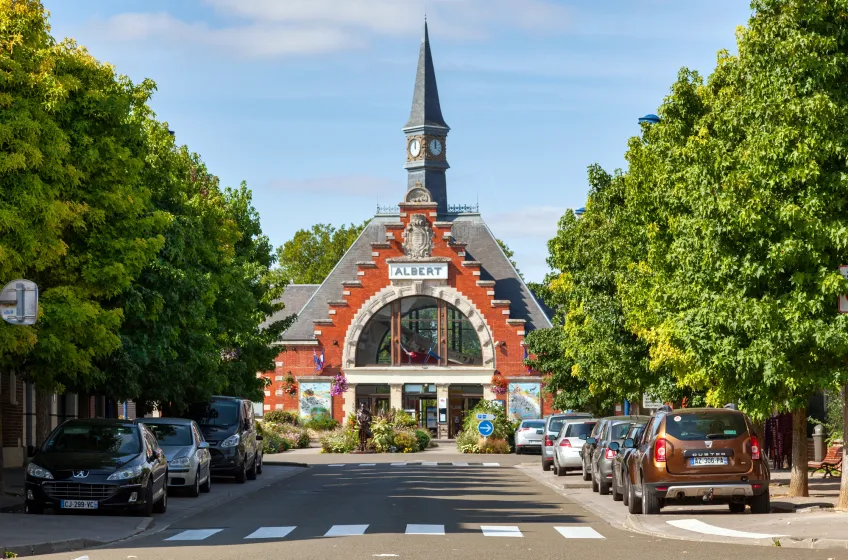
Why is Albert Worth a Visit?
Albert is worth visiting for its profound historical importance and its role as a centre for World War I remembrance tourism. The town was almost completely destroyed during the First World War and rebuilt in the 1920s, giving it a unique architectural blend of resilience and memory. As a frontline town during the Battle of the Somme in 1916, it witnessed some of the most intense fighting and now honours that legacy with museums, memorials, and access to surrounding battlefields.
Beyond its wartime connections, Albert is also a welcoming and peaceful town, offering a slower pace and authentic French small-town charm. It’s ideally situated for those wanting to explore northern France’s military history, while also enjoying rural landscapes and traditional local culture.
Albert Highlights: Things to See and Do in Albert
Musée Somme 1916
Located in the tunnels beneath the Basilique Notre-Dame de Brebières, this museum is one of the most comprehensive and moving exhibitions on World War I in the region. The displays include uniforms, weapons, everyday items, and life-size reconstructions of trenches and shelters. The museum provides a vivid and accessible account of trench warfare and the daily lives of soldiers. It’s a must-visit for understanding the personal impact of the war.
Basilique Notre-Dame de Brebières
This striking basilica is the heart of Albert and a symbol of both destruction and rebirth. Originally built in the late 19th century, it was heavily damaged during World War I, particularly its golden statue of the Virgin Mary, which famously leaned at a precarious angle and became an eerie symbol of the war’s destruction. The current structure is a beautiful reconstruction, and its bell tower offers panoramic views over the town and surrounding countryside.
Lochnagar Crater
Just outside Albert in the village of La Boisselle, this massive crater marks the site of one of the largest mine explosions on the first day of the Battle of the Somme. Now a peaceful memorial site, the Lochnagar Crater is a powerful reminder of the devastation of war. Information panels tell the story of the mining operation and the soldiers who fought and died here. It’s one of the most visually striking and emotionally impactful sites in the area.
Albert Communal Cemetery Extension
This war cemetery is located on the outskirts of town and contains graves of many Commonwealth soldiers. Like others in the region, it is immaculately maintained by the Commonwealth War Graves Commission and offers a serene place for reflection and remembrance.
Peace Garden and Town Centre
Albert’s small town centre is pleasant to explore on foot. The Peace Garden near the basilica offers a tranquil space with benches, flowers, and a view of the church. The town square, lined with cafés and shops, is a great place to enjoy a coffee or light lunch while soaking in the atmosphere of this humble yet historically rich place.
Circuit of Remembrance
Albert is one of the starting points for the Circuit du Souvenir, a well-marked trail that connects major First World War sites in the Somme. This includes the Thiepval Memorial, the Newfoundland Memorial Park at Beaumont-Hamel, the Ulster Tower, and the Historial de la Grande Guerre in Péronne. Whether driving or cycling, this route is an excellent way to explore the full scale of the Somme battlefields.
Guided Battlefield Tours
Several local companies and guides based in Albert offer battlefield tours tailored to specific interests, including British, Canadian, Australian, or New Zealand sectors. These tours often include stories of individual soldiers and units, bringing history to life in a deeply personal way.
Practical Advice for Visitors
Getting There
Albert is accessible by train from Amiens, which connects to Paris via high-speed rail. The train journey from Paris to Albert, with a transfer in Amiens, typically takes around 2 to 2.5 hours. By car, Albert is just off the A1 motorway, about 1.5 hours from Paris and under an hour from Amiens. Driving is the most convenient way to explore the wider battlefield region.
Parking
Parking in Albert is free and relatively easy, especially near the basilica, museum, and town centre. Most attractions have nearby spaces, and the town is compact enough to explore entirely on foot once parked.
Dining
Albert has several cosy restaurants and cafés offering hearty French fare. Le Corner's Pub is popular for its casual vibe and local dishes, while Le Royal Picardy offers a more traditional brasserie experience. For a relaxed lunch or coffee, try Café de la Paix near the basilica. Be sure to sample regional specialities such as ficelle picarde (a savoury pancake with ham and cheese) or local cheeses.
Shopping
The town has a few souvenir shops and boutiques where you can find books, regional products, and World War I memorabilia. The Maison de la Presse in the centre is good for maps and guidebooks. There’s also a local market on Saturdays where you can pick up fresh produce, pastries, and other local treats.
When to Visit
Spring and autumn are the best times to visit Albert, especially if you plan to explore the battlefields. The weather is mild and the landscape is at its most colourful. Summer is also lovely, though busier, especially around key anniversaries like 1 July (the start of the Battle of the Somme). Winter is quieter and can be a reflective time to visit the memorials, though some smaller sites and services may be limited.
Local Events
-
Remembrance Day (11 November) – Albert hosts ceremonies to mark the Armistice, with wreath-laying at local memorials and often special exhibitions at the Somme museum.
-
Battle of the Somme Commemorations (1 July) – Events around Albert and the Somme Valley include services, historical talks, and guided tours.
Exploring Beyond Albert
Albert is ideally located for visiting the major memorials and museums of the Somme region. Highlights include:
-
Thiepval Memorial (8 km) – The imposing memorial to the missing of the Somme, dedicated to over 72,000 British and South African soldiers who have no known grave.
-
Newfoundland Memorial Park (10 km) – A preserved section of battlefield honouring the Royal Newfoundland Regiment, complete with trenches and a visitors’ centre.
-
Historial de la Grande Guerre in Péronne (35 km) – A world-class museum offering a broader perspective on the First World War, with exhibits on civilian life and multiple nations involved in the conflict.
Other nearby attractions include the town of Amiens, with its magnificent cathedral and canals, and the natural beauty of the Baie de Somme, about an hour west.
Shortlist
- Your Shortlist is empty