
Discover Yonne | A Visitor's Introduction to Yonne
Recommended places to visit, places to stay and things to do in Yonne
Yonne is a picturesque and culturally rich département in the northern part of Burgundy (Bourgogne-Franche-Comté), named after the river that flows through it. A region of medieval towns, vineyards, abbeys, and forests, Yonne offers a delightful mix of heritage, nature, and gastronomy, just a short distance from Paris. Whether you're drawn to the famous white wines of Chablis, the architectural treasures of Auxerre, or the spiritual calm of Vézelay, Yonne is a region that rewards exploration at a leisurely pace.
Ideal for history lovers, foodies, wine enthusiasts, and outdoor adventurers, Yonne provides an authentic taste of Burgundy without the crowds, making it a perfect getaway for a long weekend or a more extended rural escape.
Recommended Yonne accommodation: Hotels Bed & Breakfasts
Why is Yonne Worth a Visit?
Yonne is worth visiting for its unspoiled countryside, beautifully preserved towns, and world-famous wines. It’s a region of gentle river valleys, rolling vineyards, and rich monastic history — a quieter, more rustic cousin to the Côte-d'Or to the south. This part of Burgundy has a deep sense of tradition, seen in its timber-framed houses, sleepy canals, and weekly markets that have changed little in generations.
It’s also a convenient escape from urban life: only 90 minutes from Paris by train or car, Yonne is close enough for a spontaneous trip but far enough to feel a world away. Whether you're wandering Roman ruins, tasting Chablis in the village that bears its name, or admiring the grandeur of Gothic churches, Yonne invites you to take your time and soak up the charm.
Yonne Highlights: Things to See and Do in Yonne
Auxerre
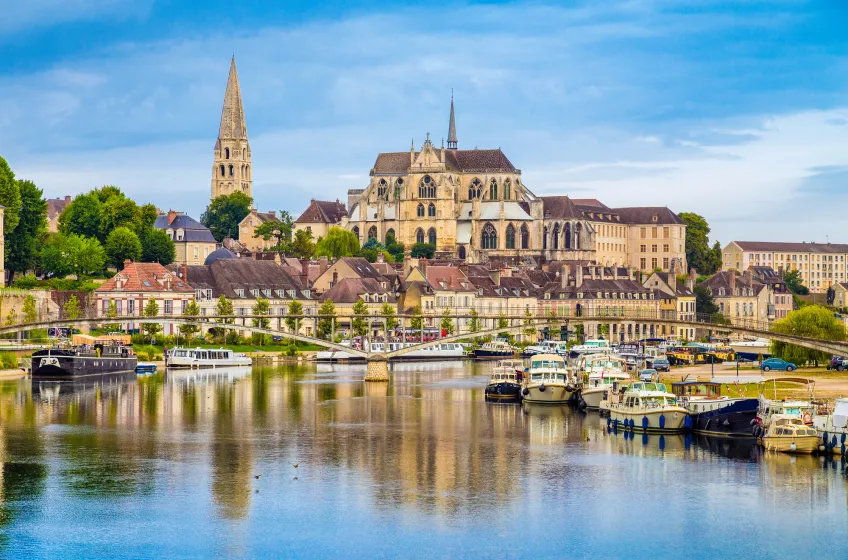
The capital of Yonne, Auxerre sits gracefully on the River Yonne and is full of character and history. Its skyline of spires and domes, medieval old town, and riverside quays make it one of the most beautiful towns in Burgundy.
Things to see in Auxerre:
-
Cathedral of Saint-Étienne – a masterpiece of Gothic architecture with stunning stained glass and a Romanesque crypt
-
Abbey of Saint-Germain – with one of the oldest known Christian wall paintings in France
-
The Clock Tower (Tour de l’Horloge) – at the heart of the pedestrianised old town
-
Timber-framed houses and quiet squares – perfect for a café stop or lazy wander
Auxerre also has a lively food scene, several excellent wine bars, and easy access to the surrounding vineyards and waterways.
Chablis and the Chablis Wine Region
Chablis is one of the most famous white wine names in the world — and the village itself is just as charming. Set among rolling hills and neatly tended vines, it’s the centre of the Chablis AOC, producing pure, flinty Chardonnay known for its elegance and minerality.
While in Chablis:
-
Visit local domaines for tastings (many welcome walk-ins)
-
Stroll along the Serein River
-
Attend the Fête des Vins de Chablis (October) for tastings, music, and local food
-
Explore nearby villages like Préhy, Fontenay-près-Chablis, and Maligny
It’s a peaceful and atmospheric place to stay, especially for wine lovers.
Vézelay
Perched on a hilltop and visible from miles around, Vézelay is one of the most spiritual and architecturally rich villages in France. Its Basilica of Sainte-Marie-Madeleine, a UNESCO World Heritage Site, is a starting point for the Camino de Santiago pilgrimage and a masterpiece of Romanesque design.
In Vézelay:
-
Visit the basilica for breathtaking architecture and panoramic views from the hilltop terrace
-
Wander the medieval streets, full of artisan galleries and boutiques
-
Learn about the region’s past at the Zervos Museum, housed in a former home of Romain Rolland
The village exudes a timeless atmosphere, particularly at sunset when the light hits the golden stone buildings.
Noyers-sur-Serein
Classified as one of Les Plus Beaux Villages de France, Noyers-sur-Serein is a fairytale village of cobbled streets, half-timbered houses, and flower-filled squares.
Highlights include:
-
The medieval ramparts and towers
-
A local art and crafts scene
-
The gentle Serein River, perfect for walks or a summer paddle
It’s a great place for a quiet lunch or a slow afternoon wander, and often features small seasonal markets or music performances.
Canal du Nivernais
This peaceful canal runs through the western part of Yonne and is one of France’s most scenic waterways, popular with cyclists and boaters alike.
Activities along the canal:
-
Rent a bike and ride along the towpath through small villages and forests
-
Try canal boating for a few days of slow, scenic travel
-
Stop in towns like Clamecy and Coulanges-sur-Yonne, which offer old-world charm and riverside cafés
It’s especially beautiful in spring and early summer when the canal is lined with wildflowers and everything is in bloom.
Tonnerre
Tonnerre is a town with a rich architectural heritage and strong wine connections. It's the birthplace of Chevalier d'Éon, an 18th-century diplomat and soldier known for living part of their life as a woman — a fascinating piece of history.
Visit:
-
La Fosse Dionne – a mystical natural spring and ancient wash basin
-
Hôtel-Dieu de Tonnerre – a vast medieval hospital with a dramatic vaulted hall
-
Local wineries producing Tonnerre and Epineuil wines (lesser-known but high quality)
Tonnerre is also on the Canal de Bourgogne and is a good stop for boaters or cyclists.
Avallon
Sitting above the Cousin Valley, Avallon is a historic hill town with a fortress-like feel, cobbled streets, and fine stone houses.
Key sights:
-
The 12th-century Collégiale Saint-Lazare
-
Ramparts and towers, offering views over the surrounding countryside
-
Artisans' shops and a traditional Saturday market
It’s a useful base for visiting Vézelay, the Morvan Natural Park, and various walking trails in the surrounding hills.
Natural Beauty and the Morvan
The Parc Naturel Régional du Morvan extends into the southern and western edge of Yonne and offers forests, lakes, and quiet walking paths. It’s ideal for nature lovers, with plenty of opportunity for:
-
Hiking – with marked trails through forests and along hilltops
-
Lakes and rivers – for swimming, kayaking, or fishing
-
Picnics and wildlife spotting – particularly around Cousin Valley and Lac de Saint-Agnan
Spring and autumn are especially beautiful in this region, when the colours of the landscape change dramatically.
Practical Advice for Visitors
Getting There
By car: Yonne is easily accessible from Paris (approx. 1.5–2 hours) via the A6 motorway, which runs through Sens, Auxerre, and towards Beaune.
By train:
-
Auxerre, Tonnerre, and Joigny have regional TER connections to Paris-Bercy
-
Chablis and Vézelay are not on major rail lines but can be reached by car or local bus from nearby stations
By bike or boat: The Canal du Nivernais and Canal de Bourgogne are perfect for gentle cycling and boating holidays.
Getting Around
To make the most of Yonne, a car is essential, particularly for visiting villages, vineyards, and countryside sites. Some towns are walkable, and cycle tourism is increasingly popular thanks to the region’s greenways.
Dining
Yonne offers excellent regional cuisine that combines rustic simplicity with fine ingredients.
Must-try dishes and products:
-
Gougères – cheesy choux pastry puffs often served with wine tastings
-
Escargots de Bourgogne – classic Burgundy snails with garlic and parsley butter
-
Oeufs en meurette – poached eggs in red wine sauce
-
Burgundy beef and Morvan charcuterie
-
Goat’s cheeses and local honey
Restaurants range from cosy auberges to Michelin-starred dining in towns like Auxerre and Chablis. Many vineyards also offer picnic options or host food and wine pairing lunches.
Shopping
Yonne’s towns and villages are great places to pick up:
-
Chablis wines directly from producers
-
Local cheeses and cured meats from market stalls
-
Handcrafted pottery, woodwork, and textiles
-
Antiques and brocante items from village markets
Market days vary by town, but Saturday in Auxerre and Sunday in Chablis are particularly vibrant.
When to Visit
-
Spring (April–June) – mild weather, blossoms, and fewer crowds
-
Summer (July–August) – lively, with festivals and vineyard activity
-
Autumn (September–October) – grape harvest, golden vineyards, wine festivals
-
Winter – quieter, but towns remain charming, and food is a strong focus
If wine is your focus, October during the harvest or the Fête des Vins in Chablis is a perfect time.
Local Events
-
Fête des Vins de Chablis (October) – tastings, cellar visits, and live music
-
Auxerre en Fêtes (summer) – concerts and open-air events
-
Vézelay music festival – sacred music in the basilica
-
Village markets and food fairs – nearly every weekend from spring to autumn
Exploring Beyond Yonne
If you have time, consider nearby excursions to:
-
Burgundy’s Côte-d’Or wine region – about 1.5–2 hours south
-
Troyes – a historic city in neighbouring Aube with timbered houses and Champagne nearby
-
Fontenay Abbey – a UNESCO-listed Cistercian site in northern Côte-d’Or, not far from Avallon
-
Burgundy canal systems – ideal for multiday bike or boat trips
Yonne is the kind of place where you can spend a morning wandering ancient streets, an afternoon tasting world-class wine, and an evening dining by candlelight in a riverside inn. With its blend of heritage, quiet countryside, and exceptional food and drink, it offers all the best of Burgundy with a relaxed, rural soul.
Whether you're walking the hilltop paths of Vézelay, sipping Chablis in a vaulted cellar, or pedalling beside a sleepy canal, Yonne invites you to travel slowly, taste deeply, and discover a lesser-known — but deeply rewarding — side of France.
Shortlist
- Your Shortlist is empty