
Discover Versailles | A Visitor's Introduction to Versailles
Recommended places to visit, places to stay and things to do in and around Versailles
Versailles is a historic city in the Île-de-France region of northern France, just southwest of Paris. Best known for the majestic Palace of Versailles (Château de Versailles), the city is synonymous with opulence, political intrigue, and French grandeur. Once the epicentre of royal power, Versailles is now a must-visit destination for lovers of history, architecture, and stunning formal gardens. With its well-preserved old town, elegant avenues, and world-famous heritage, Versailles offers more than just a day trip from Paris — it’s a deep dive into the splendour of France’s ancien régime.
Recommended Versailles Accommodation: Hotels
Pre-book Versailles Skip-the-Line Tickets & Guided Tours
Why is Versailles Worth a Visit?
Versailles is worth visiting for its extraordinary place in European history and its architectural marvels that continue to impress centuries later. The Palace of Versailles, the symbol of absolute monarchy in France, was once home to kings Louis XIV, XV, and XVI, and it witnessed events that shaped the course of European history, including the signing of the Treaty of Versailles in 1919. Beyond the palace, the city itself exudes a quiet elegance, with cobbled streets, bustling markets, and tree-lined boulevards.
The grandeur of Versailles isn’t just about the buildings — it's about the details: the ornate gilded gates, the endless rows of fountains, the whisper of politics in the Hall of Mirrors, and the whimsical hideaways like Marie Antoinette’s private hamlet. It’s a city that brings history to life while offering visitors moments of peace and beauty in its expansive green spaces and vibrant cultural offerings. Whether you're a history buff, garden lover, or simply in search of a uniquely French experience, Versailles has something to enchant every visitor.
Versailles Highlights: Things to See and Do in Versailles
The Palace of Versailles (Château de Versailles)
Undoubtedly the centrepiece of any visit, the Palace of Versailles is a jaw-dropping spectacle of Baroque architecture and extravagant décor. Originally a modest hunting lodge, it was transformed by Louis XIV into a grand royal residence in the 17th century. Highlights inside include the Hall of Mirrors (Galerie des Glaces), where chandeliers and mirrors reflect the golden glow of the gilded interiors, and the King's and Queen's Apartments, lavishly decorated with period furniture, paintings, and tapestries.
Tickets can be booked online in advance, and it’s wise to arrive early to beat the crowds. Plan to spend at least three hours exploring the palace alone — more if you want to take it all in slowly.
The Gardens of Versailles (Les Jardins)
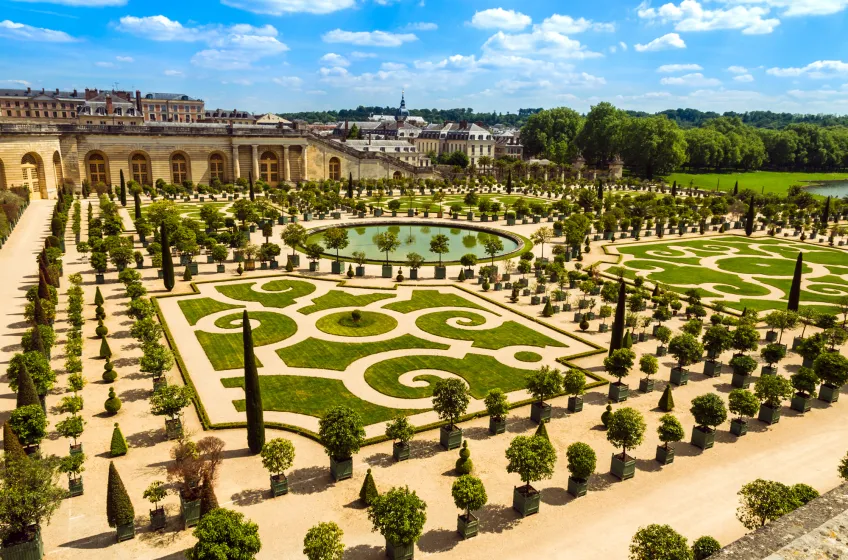
Spread over 800 hectares, the formal gardens designed by André Le Nôtre are masterpieces in their own right. Perfectly manicured lawns, geometric flowerbeds, ornate fountains, and tree-lined paths all contribute to the grandeur. Don’t miss the musical fountain shows (Les Grandes Eaux Musicales) held during spring and summer weekends, where the fountains come to life in time to classical music. Renting a bike or golf cart is a great way to cover more ground.
Entry to the gardens is often free during the week, though the fountain shows and musical events usually require a separate ticket.
The Grand Trianon
Tucked away from the formality of the main palace, the Grand Trianon is a pink marble palace built by Louis XIV as a retreat from court life. It’s more intimate and less crowded, allowing visitors to enjoy the refined architecture and tranquil atmosphere. Napoleon later made use of it, and it still serves as a residence for visiting heads of state. The colonnaded peristyle and landscaped gardens here are particularly photogenic.
The Petit Trianon and Marie Antoinette’s Estate
Close to the Grand Trianon lies the Petit Trianon, a charming neoclassical residence given to Marie Antoinette by her husband Louis XVI. Here, she escaped the rigid court etiquette of Versailles. But the real gem is the Queen’s Hamlet (Hameau de la Reine), a fairytale village of thatched cottages, a mill, a dairy, and a small farm created for the queen to live a pastoral fantasy. It’s delightfully unexpected and a testament to the romantic ideals of 18th-century aristocracy.
The Royal Stables (Grande Écurie and Petite Écurie)
Opposite the Palace of Versailles, the Royal Stables once housed the king's horses and now host the Equestrian Academy of Versailles. Watch live dressage performances or explore the exhibits on horse-drawn carriages and the role of equestrianism in royal life. It's an often-overlooked gem for those interested in heritage and craftsmanship.
Versailles Market (Marché Notre-Dame)
One of the best markets in France, the Marché Notre-Dame is a local institution. Operating since the time of Louis XIV, it’s a vibrant mix of fresh produce, cheeses, charcuterie, wines, and baked goods. On market days (Tuesday, Friday, and Sunday), the square surrounding the indoor pavilions fills with additional stalls. It’s the perfect spot to grab picnic ingredients before heading to the gardens.
The Cathedral of Saint Louis
Built in the 18th century, the Saint Louis Cathedral is an elegant example of French ecclesiastical architecture. Though often overshadowed by the palace, it’s worth a stop for its fine classical façade, stained glass windows, and peaceful atmosphere. It remains an active parish church and occasionally hosts concerts.
The Potager du Roi (King’s Kitchen Garden)
Just behind the palace, the King’s Kitchen Garden is a living museum of horticultural history. Created in the 1670s to supply fresh fruit and vegetables to the court, it’s still cultivated today using traditional techniques. You can take a guided tour or simply enjoy a quiet walk among espaliered fruit trees and ancient varieties.
The Salle du Jeu de Paume
This historic building was the site of the famous Tennis Court Oath in 1789, a key event in the early stages of the French Revolution. Today, it houses a museum commemorating the moment when members of the Third Estate pledged not to separate until a new constitution had been established. The museum is small but deeply symbolic.
Versailles Old Town
The historic centre of Versailles is a pleasure to explore, with elegant 18th-century architecture, charming squares, and a laid-back atmosphere. Don’t miss Rue de Satory for its cafés and restaurants or the antiques quarter near Rue Carnot. It’s a quieter contrast to the palace and offers a glimpse into the everyday life of the city.
Versailles Festivals and Cultural Events
Throughout the year, Versailles hosts a variety of cultural events, including classical music concerts in the palace, summer open-air performances, and the “Versailles Festival,” which features opera, theatre, and dance in historical settings. Watching a concert in the Hall of Mirrors or gardens is a truly unique experience.
Practical Advice for Visitors
Getting There
Versailles is conveniently located around 20 kilometres southwest of Paris, making it an ideal day trip or overnight stay. The easiest way to reach it from Paris is by train:
-
RER C Line: Stops at Versailles Château – Rive Gauche, which is the closest station to the palace (about a 10-minute walk).
-
SNCF trains: From Gare Montparnasse to Versailles Chantiers or from Gare Saint-Lazare to Versailles Rive Droite.
Trains run frequently and the journey takes around 30–40 minutes depending on the line.
Parking
If you're driving, parking is available near the palace in designated car parks such as the Place d'Armes directly in front of the château. Be aware these fill up quickly during peak seasons. Street parking is available further into the town, often at a lower cost. Consider using the Parking de Sceaux or Parking Saint-Louis for longer stays.
Dining
Versailles has a surprisingly good food scene ranging from traditional French bistros to upscale dining. Try La Table du 11 for Michelin-starred cuisine in a contemporary setting or Chez Tiouiche for authentic Moroccan food just steps from the palace.
For a casual lunch, pick up fresh bread, cheese, and pastries from Maison Bigot, a patisserie dating back to 1919. There are also plenty of outdoor cafés around Rue de Satory, perfect for a relaxed coffee or crêpe.
In the gardens, there are cafés and restaurants like La Petite Venise, offering classic French dishes in a picturesque setting.
Shopping
Versailles is known for its antique shops, artisan boutiques, and local delicacies. Head to Rue Carnot for antiques and vintage finds, and the Marché Notre-Dame for gourmet goodies and fresh produce. Look out for regional products like honey, handmade soaps, and fine chocolates.
There’s also a small shopping centre near the palace and independent fashion shops throughout the town centre.
When to Visit
The best time to visit Versailles is in spring (April–June) and autumn (September–October), when the weather is pleasant and the gardens are in bloom or ablaze with colour. Summer sees the biggest crowds but also offers the most events, including fountain shows and concerts. Winter can be quiet and atmospheric, with fewer crowds in the palace, though the gardens are less visually impressive.
Try to avoid Mondays, as the palace is closed, and weekends if you want to steer clear of crowds.
Local Events
Notable annual events include:
-
Musical Fountains Show (April to October) – Fountains in the gardens dance to baroque music.
-
Versailles Festival (June–July) – A series of concerts, operas, and theatre held in historical venues.
-
Christmas Markets (December) – Festive stalls pop up in the town centre with crafts, food, and seasonal cheer.
-
Heritage Days (Journées du Patrimoine, September) – Special access to parts of the palace and city normally closed to the public.
Exploring Beyond Versailles
If you have extra time, the surrounding region offers plenty more to explore:
-
Saint-Germain-en-Laye: A charming royal town with a château that houses the National Archaeology Museum, just 20 minutes away.
-
Rambouillet: Known for its forest and château, this tranquil spot is perfect for nature lovers and is 40 minutes by train.
-
Paris: With the capital just 30–40 minutes away by train, combining Versailles with a stay in Paris offers the best of both worlds.
Final Thoughts
Versailles is far more than a palace — it’s a complete destination with a rich historical heart and a charming town atmosphere. Whether you're admiring the gold-laden halls of the château, strolling through the geometrical perfection of the gardens, or sipping wine on a sunny terrace in the old town, you’ll find yourself swept up in the elegance of another era. Come for the grandeur, stay for the charm — Versailles is a timeless treasure that continues to inspire awe.
Shortlist
- Your Shortlist is empty