
Discover Syon Park | A Visitor's Introduction to Syon Park
Syon Park is a grand historic estate on the Thames in West London, the London home of the Duke of Northumberland for over 400 years. Known for its Robert Adam–designed interiors at Syon House and its sweeping Capability Brown–landscaped grounds, this stately setting blends aristocratic history with rare riverside nature. With elegant architecture, a spectacular early glasshouse and meadowland where the Thames still rises and falls, Syon Park is a perfect destination for history lovers, garden enthusiasts and anyone after a calm green escape within easy reach of central London. With its heritage buildings, ornamental gardens and wildlife-rich tidal meadow, Syon Park offers a serene slice of country estate life on the edge of the city.
Recommended West London accommodation: Hotels Bed & Breakfasts Pub Accommodation
Pre-book London Attractions, Tours & Experiences
Why is Syon Park Worth a Visit?
Syon Park is worth visiting for its unique combination of immaculate Georgian design and genuinely wild river landscape, all wrapped up in one estate. The centrepiece, Syon House, is one of Britain’s most refined neo-classical interiors, reworked in the 1760s by the celebrated architect Robert Adam. Step outside and you’re in the hands of Lancelot ‘Capability’ Brown, who reshaped the grounds with sweeping lawns, serpentine water and artfully framed views. What makes Syon different from many London green spaces is its rare tidal water meadow, which floods with the Thames on high tides and supports an unusual mix of plants and birdlife. The estate’s Great Conservatory, an early and striking iron-and-glass structure from the 1820s–30s, adds serious horticultural theatre. Whether you’re into stately homes, glasshouse splendour, landscape history, gentle rambles or a refined afternoon tea, Syon Park delivers a quietly memorable day out.
Syon Park Highlights: Things to See and Do in Syon Park
Syon House
Syon House is the historic residence of the Percy family, Dukes of Northumberland, and a masterclass in Robert Adam’s interiors. The Great Hall’s marble and symmetry set the tone, but it’s the succession of richly decorated rooms—think classical motifs, delicate plasterwork and bold colour—that really impress. Look out for the Ante-Room’s intricate ceilings and the State Dining Room’s grandeur. Guided entry days vary through the season, so it’s sensible to plan for a timed visit and allow yourself at least an hour inside to appreciate the craftsmanship.
The Great Conservatory
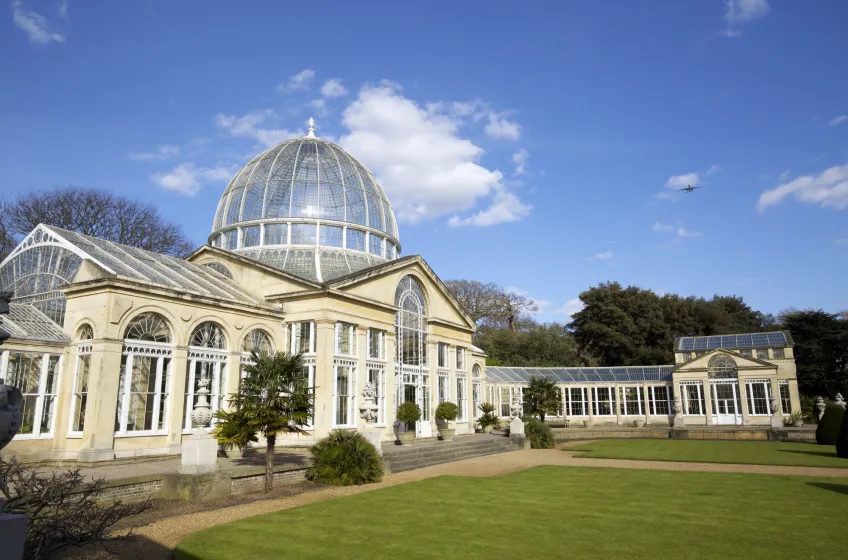
At the far end of the gardens stands the Great Conservatory, an early monumental glasshouse famed for its airy ironwork, domed roof and elegant palm-lined interior. It was cutting-edge when built and still feels theatrical today, especially when the sunlight pours through the glass and casts lace-like shadows across the floor. It’s a photographer’s dream and a lovely spot to linger if the weather turns.
Capability Brown Landscaped Grounds
The parkland is classic 18th-century landscape design: smooth lawns rolling into ornamental water, scattered clumps of trees, and strategically placed vistas that make the house and conservatory look like they’re posing for a portrait. Paths loop around the lake and through woodland, giving you a gentle circuit packed with seasonal interest—from spring blossom and carpets of bulbs to gold-tipped trees in autumn. Benches are well placed for picnics and bird-watching.
The Tidal Meadow on the Thames
Syon’s riverside meadow is the only significant surviving tidal meadow of the Thames in inner London. On spring tides you can see the river creep in and flood the grassland, leaving a shining sheet of water that retreats to reveal waders pecking about. It’s a rare habitat in the capital and gives the estate a wilder, more elemental edge than most city parks.
Courtyard Café and Afternoon Tea
Within the estate you’ll find a relaxed café for soups, bakes and light lunches, plus cakes that go down very well after a lap of the lake. On selected dates, afternoon tea is offered in suitably refined surroundings—perfect if you want to make a mini-occasion of your visit. Indoor and outdoor seating make it easy to adapt to the weather.
Hillier Garden Centre and Estate Shops
By the entrance sits a well-stocked garden centre with plants suited to London gardens, helpful staff and seasonal displays that can be quite inspiring. There’s also an estate shop for books, gifts and local bits and pieces. Gardeners will enjoy browsing for ideas after seeing the borders and glasshouse plantings.
Family-Friendly Spaces and Play
Syon is an easy place to visit with children. The lawns are ideal for a runaround, the lake attracts ducks and geese, and the long sightlines make it simple to keep an eye on little explorers. There’s usually a dedicated play area nearby on the estate, and family trails are sometimes available during school holidays to make the gardens more interactive.
Photography and Painting Spots
From the long axial view between Syon House and the Great Conservatory to reflections in the ornamental water, the estate is rich in painterly scenes. Early morning and late afternoon light flatter the buildings, while the glasshouse interior rewards close-ups of fronds, shadows and ironwork details.
Seasonal Displays and Light Installations
While the estate is elegant at any time, seasonal displays—spring bulbs, summer borders, autumn colour—are a major draw. In some years there are evening openings or special light-themed events in the darker months, which turn the glasshouse and trees into a glowing spectacle. If you’re local, it’s worth keeping an eye on the events calendar to catch these.
Riverside Wanders to Brentford and Kew
Step outside the gates and you’re minutes from the Thames Path, with easy wanders to Kew Bridge in one direction and Brentford’s historic waterfront in the other. It’s very doable to combine Syon Park with a stroll across the river to Kew’s pubs or, for a bigger day, a separate visit to the Royal Botanic Gardens at Kew.
Practical Advice for Visitors
Getting There
Syon Park sits between Brentford and Isleworth in West London. By rail, Syon Lane and Brentford stations on the South Western Railway are the closest, each around a 15–20 minute walk depending on which part of the estate you’re heading for. The District line and London Overground stop at Gunnersbury and Kew Gardens on the opposite bank; from there you can connect by bus or walk via Kew Bridge. Several local buses serve the Great West Road and London Road corridors, placing you within a short stroll of the entrances. If you’re driving, Syon Park is a straightforward hop from the A4 Great West Road and the A315 London Road; allow extra time on match days at Brentford or during peak commuting hours.
Parking
There is on-site parking close to the house and garden centre, typically free for estate visitors, though time limits or validation may apply during peak periods or special events. Arrive earlier on sunny weekends and school holidays, as the main car parks can fill, especially when the gardens and house are both open. Accessible bays are available near level paths; if mobility is a concern, drop-off is possible closer to entrances—check signage on the day.
Dining
The Courtyard Café covers the essentials—good coffee, sandwiches, quiche and cakes—with seasonal specials and child-friendly options. On selected days you can book an afternoon tea service that pairs neatly with a tour of the house. If you fancy a pub lunch before or after your visit, there are classic options in Brentford and along the river towards Kew Bridge and Isleworth, many with outdoor seating. For something smarter, the nearby hotel restaurant on the estate provides a more formal setting.
Shopping
Plant lovers should set aside time for the Hillier Garden Centre at the entrance, which stocks everything from heritage roses and climbers to houseplants, tools and seeds. Inside the Syon estate shops you’ll find tasteful gifts, garden-themed books and locally produced treats—a handy spot for souvenirs. In Brentford, a short walk away, independent cafés and small shops cluster near the waterfront for a different vibe.
When to Visit
Syon is a genuine year-round destination, but the character shifts with the seasons. Spring showcases blossom and bulbs against fresh green lawns; May and June are prime for borders and long, bright evenings; late September into October brings the most photogenic light and russet foliage; winter is quieter, ideal for tranquil walks and the chance of special evening events. The house usually opens on selected days through the main season, while the gardens have broader opening; if seeing the interiors is a priority, plan for a day when both house and gardens are accessible.
Local Events
Across the year the estate hosts exhibitions, fairs, specialist plant sales and, in some seasons, evening light experiences centred on the glasshouse and grounds. Weekend craft markets and wedding fairs pop up periodically. Dates can shift year by year, so it’s wise to check the events listing shortly before you go if you’re timing your visit around a specific happening.
Exploring Beyond Syon Park
You’re in a rich pocket of West London sights. The Royal Botanic Gardens, Kew, sit just across the river, offering a world-class plant collection, treetop walkway and iconic Temperate House. To the north-east lies Chiswick House and Gardens, a Palladian villa with its own superb landscape. A few miles west is Osterley Park and House, a National Trust gem with biking and walking trails around a grand Robert Adam mansion. Along the river towards Richmond you’ll find Ham House, another 17th-century treasure, and the handsome green spaces of Richmond itself. Closer to hand, the London Museum of Water & Steam near Kew Bridge turns industrial heritage into a surprisingly engaging family visit. All of these are within a 10–25 minute drive or a couple of stops by train or bus.
Syon Park is that rare London outing that genuinely feels like a country estate day, yet sits a short hop from town. Come for the Adam interiors and iron-and-glass drama; stay for the lawns, wildlife and the hush of a tidal meadow breathing with the Thames.
Shortlist
- Your Shortlist is empty