
Discover Ste-Mère-Église | A Visitor's Introduction to Ste-Mère-Église
Recommended places to visit, places to stay and things to do in or near Ste-Mère-Église
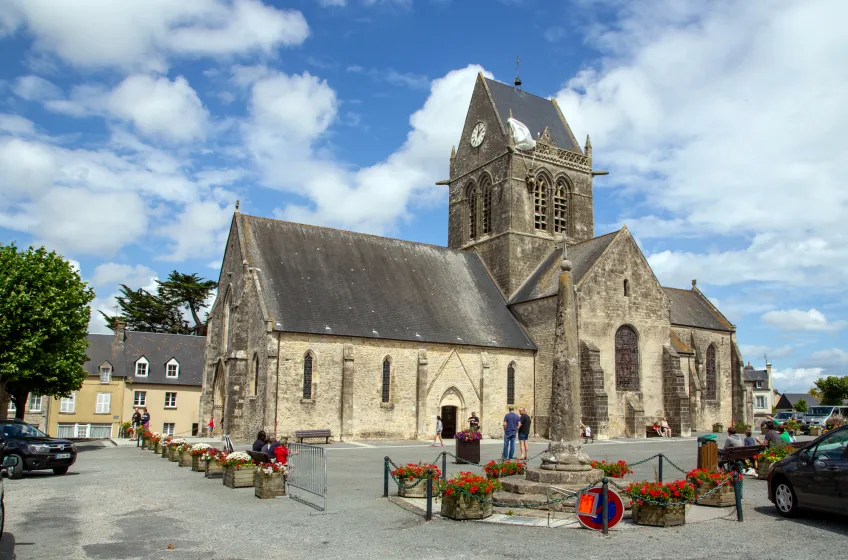
Sainte-Mère-Église is a small town in the Normandy region of northern France, famous for its pivotal role in the D-Day landings of World War II. Nestled in the Manche department, this peaceful and historically rich commune was one of the first to be liberated by Allied forces during Operation Overlord in June 1944. Known particularly for the paratrooper John Steele, whose parachute famously got caught on the church tower during the invasion, Sainte-Mère-Église is a place where history comes vividly to life. Perfect for military history enthusiasts, cultural travellers, and those exploring the scenic Cotentin Peninsula, Sainte-Mère-Église offers a moving and memorable stop on any Normandy itinerary.
Recommended Ste-Mère-Église accommodation: Hotels Bed & Breakfasts
Why is Sainte-Mère-Église Worth a Visit?
Sainte-Mère-Église is worth visiting for its unique position in modern history—it was the first town to be liberated in the early hours of D-Day, and it wears this heritage with pride and dignity. The town is practically an open-air museum, where the stories of the past are told through monuments, museums, and preserved wartime artefacts. It’s also deeply atmospheric, retaining its rural charm and calm despite its place in one of the most violent episodes of the 20th century.
The village offers a thoughtful and tangible connection to the events of June 6, 1944, unlike any textbook or documentary can provide. The sight of a parachute still hanging from the church steeple is a powerful symbol of sacrifice and freedom. Beyond the war history, Sainte-Mère-Église is a charming Norman town with traditional cafés, quiet streets, and easy access to the rugged Normandy coast, perfect for those who want to combine history with gentle countryside exploration.
Ste-Mère-Église Highlights: Things to See and Do in Sainte-Mère-Église
Airborne Museum (Musée Airborne)
This world-class museum is dedicated to the American paratroopers of the 82nd and 101st Airborne Divisions who landed in and around Sainte-Mère-Église on D-Day. Set just next to the town's church, the museum features immersive exhibits including real C-47 aircraft, glider fuselages, personal testimonies, interactive displays, and authentic uniforms and weapons. The experience is both emotional and educational, making it a must-visit for all ages. Allow at least 2 hours to explore.
Église Notre-Dame de Sainte-Mère-Église
The parish church stands as one of the most iconic landmarks of D-Day. It was here that American paratrooper John Steele became inadvertently famous when his parachute got caught on the church’s steeple. A mannequin still hangs from the spire as a tribute. Inside the church, you’ll find beautiful stained-glass windows depicting paratroopers and wartime scenes, blending spirituality with commemoration.
D-Day Paratrooper Historical Path
For those who enjoy walking with purpose, this signposted path traces the movements of American paratroopers during the early hours of D-Day. With interpretive panels along the route, it offers a deeper understanding of the landscape and the fierce battles that took place across the fields and hedgerows. It’s best enjoyed on a quiet morning or evening when you can reflect in peace.
Sainte-Mère-Église Market
Held on Thursdays, the town’s open-air market is a fantastic way to experience the local way of life. Normandy’s culinary reputation shines here with stalls selling fresh oysters, local cheeses like Camembert and Pont-l’Évêque, charcuterie, apple cider, and Calvados. It’s an excellent opportunity to enjoy the more everyday side of French country life, away from the tourist trail.
La Fière Bridge and Iron Mike Memorial
Located just 3 km from the town, the La Fière Bridge was a critical strategic point during the D-Day landings. The battle fought here by American paratroopers was one of the most intense of the campaign. Today, the site is marked by the "Iron Mike" statue, honouring the airborne troops. A quiet and respectful place to visit, especially around early June when commemorations are held.
Dead Man’s Corner Museum
A short drive south to Saint-Côme-du-Mont brings you to this smaller, focused museum located in the former German command post. It offers a deep dive into the story of the American paratroopers, particularly those of the 101st Airborne. The museum is immersive, offering audio guides and lifelike dioramas that place you in the heart of the action.
Utah Beach
Only about 12 km west of Sainte-Mère-Église, Utah Beach is one of the key D-Day landing sites. It’s quieter and less commercial than Omaha Beach, making it ideal for reflection. The Utah Beach Museum is housed in a German bunker and offers excellent displays of vehicles, aircraft, and wartime logistics. Walking along the sands where history was made is a humbling experience.
Normandy Victory Museum
Located at the Azeville crossroads near Carentan, this newer museum offers life-sized dioramas and multimedia displays illustrating the broader Battle of Normandy. It’s well-curated and less crowded than some of the other larger museums. If you’re travelling with children or teens, this museum is a particularly engaging stop.
Sainte-Marie-du-Mont
This nearby village was another key location on D-Day and is home to the beautiful Church of Sainte-Marie-du-Mont and several small memorials. It's also close to Brecourt Manor, the site of a famous assault by Easy Company (depicted in Band of Brothers). Fans of the series will appreciate seeing the landscape and buildings still recognisable today.
Bicycling the Normandy Countryside
Renting a bike and pedalling through the Cotentin’s hedgerow-laced lanes is a peaceful and scenic way to absorb the atmosphere of the region. Local hire shops can set you up for half-day or full-day excursions, and maps are available highlighting historical routes and memorials.
Commemorative Events and D-Day Anniversary
Each year around the 6th of June, Sainte-Mère-Église becomes the centre of a week-long series of commemorations, re-enactments, parachute drops, parades, and community events. Veterans and their families often attend, and it’s an incredibly moving and celebratory time to visit. Accommodation books out quickly though, so plan well in advance.
Practical Advice for Visitors
Getting There
Sainte-Mère-Église is easily accessible by car, and driving remains the most flexible way to explore Normandy. From Caen, it’s just over an hour’s drive north via the N13. If coming from Paris, expect a 3.5 to 4-hour journey by car. There are also regional trains to Carentan, 15 minutes away by taxi. Some bus services connect the town to nearby villages, but service can be limited—especially on weekends.
Parking
Free and paid parking are available throughout Sainte-Mère-Église. There is a decent-sized car park near the Airborne Museum which is the most convenient for visiting the town centre. During the D-Day commemorations in early June, some roads may be closed and parking more restricted, so arrive early or park slightly outside town.
Dining
For a small town, Sainte-Mère-Église offers a good variety of dining options. Le Sainte-Mère is a welcoming brasserie with local dishes and generous portions—try the duck confit or moules frites when in season. For a more casual bite, Le Normandy does hearty lunches and has a nice outdoor terrace. Crêperies and boulangeries provide budget-friendly and tasty options, and no visit is complete without sampling a local apple tart or Calvados-infused dessert.
Shopping
The town has a few souvenir shops specialising in D-Day memorabilia, military collectibles, and books. D-Day Experience Shop near the Dead Man’s Corner Museum is well-stocked. Local produce like cider, cheese, and pâté make excellent gifts, and the market is the best place to find authentic regional items.
When to Visit
The best time to visit Sainte-Mère-Église is between May and September. June is particularly special for the D-Day commemorations, but it’s also the busiest. May and September offer milder weather, fewer crowds, and blooming countryside. Winter months are quiet, and some attractions may have reduced hours or be closed entirely.
Local Events
Aside from the D-Day anniversary, the town hosts local fêtes, open-air concerts, and exhibitions throughout the year. Check the tourist office for schedules if you're interested in community events, art shows, or traditional Norman festivals. The Fête de la Libération in August is another celebration with music, food stalls, and dancing in the square.
Exploring Beyond Sainte-Mère-Église
Sainte-Mère-Église is an excellent base for exploring the broader Cotentin Peninsula and D-Day coastline. Carentan, just 15 minutes away, has a pretty marina and more WWII sites. Bayeux, about an hour to the east, is home to the famous Bayeux Tapestry and the British War Cemetery. Further afield, Mont-Saint-Michel is reachable within two hours for a dramatic day trip. And for nature lovers, the wild beaches and nature reserves of the Cotentin marshes provide space for birdwatching and walks.
Sainte-Mère-Église may be a small dot on the map, but its story looms large in the collective memory of the 20th century. Whether you come to honour its role in liberation, immerse yourself in military history, or enjoy the serenity of rural Normandy, this little town leaves a big impression.
Shortlist
- Your Shortlist is empty