
A Visitor's Introduction to The Romney, Hythe & Dymchurch Railway
The Romney, Hythe and Dymchurch Railway (often abbreviated to RH&DR) is one of Kent’s most distinctive visitor attractions and a remarkable feat of miniature engineering. Stretching for nearly 14 miles across the Romney Marsh, this railway operates on a 15-inch (381 mm) gauge track, making it one of the world’s smallest public railways of its kind. Running between Hythe in the west and Dungeness in the east, it has been in continuous operation since its opening in 1927.
The railway is not just a novelty but a fully functioning public transport service that has been carrying passengers for almost a century. It runs through varied landscapes, from the historic town of Hythe to open countryside, coastal villages and finally to the dramatic shingle expanse of Dungeness, which is part of a National Nature Reserve. The RH&DR has become a much-loved part of the local identity, offering a combination of nostalgia, family fun and scenic travel.
Recommended accommodation in: Hythe New Romney
Why is The RH&DR Worth a Visit?
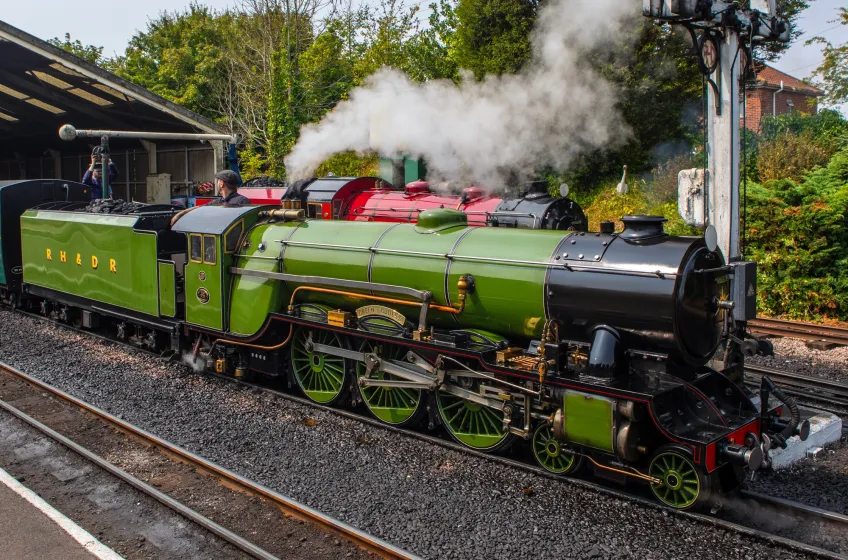
The RH&DR is worth visiting because it offers a unique experience that blends history, engineering, and the Kent coast’s natural environment. For railway enthusiasts, it provides the chance to ride behind immaculately maintained one-third scale steam and diesel locomotives, many of which are original to the line and still operating after nearly 100 years. For families, the journey offers a fun and memorable day out, with opportunities to hop on and off at various stations to explore beaches, nature reserves and villages.
The line’s longevity and the dedication of the RH&DR staff and volunteers ensure that the visitor experience feels authentic, not manufactured. The railway also plays a cultural role: it was used during the Second World War for defence purposes and even for transporting the wounded, giving it a unique place in Britain’s wartime story. Today, it continues to serve both leisure and community needs, with school groups, walkers and holidaymakers all making use of its trains.
Whether you are drawn by the engineering achievement, the scenic ride, or the atmosphere of a lovingly preserved heritage railway, the RH&DR offers something distinct that is unlikely to be found elsewhere.
RH&DR Highlights
The Journey
The full line runs 13.5 miles (about 22 kilometres) from Hythe to Dungeness. The journey takes around 1 hour in each direction, giving passengers time to enjoy the passing scenery. Travelling through Romney Marsh, one of England’s most unusual landscapes, the train passes farmland, villages, coastal stretches and finally the unique shingle headland at Dungeness.
Steam and Diesel Locomotives
The railway operates a fleet of one-third scale steam locomotives, many of which were designed and built specifically for the RH&DR by Henry Greenly and Captain J. E. P. Howey, the line’s founder. The locomotives, with names such as Hercules, Samson and Northern Chief, are powerful machines capable of hauling full-length trains. There are also diesel locomotives used for special duties and quieter periods. The sight and sound of a miniature steam engine working hard along the flat marshland is one of the line’s greatest attractions.
Hythe Station
Hythe is the eastern terminus and one of the busiest stations on the line. It has a traditional station building, booking office, café and gift shop. From here, passengers can watch engines being prepared and trains departing on their journeys across the marsh. Hythe town itself, with its canal, historic church and high street, is just a short walk away, making it a good starting point for a visit.
Dymchurch Station
This station serves the popular seaside village of Dymchurch, well known for its sandy beaches, funfair and family attractions. It is a popular stop for families combining a train ride with a day by the sea. The station itself has waiting facilities and easy access into the village.
New Romney Station and Museum
New Romney is the railway’s headquarters and the main hub of its operations. It features the largest station on the line, extensive workshops where locomotives are maintained, and a model railway exhibition. The museum at New Romney is a highlight, containing historical information about the line, archive photographs, interactive exhibits and displays about the locomotives. This is an excellent stop for anyone wanting to learn more about the history and workings of the RH&DR.
Dungeness Terminus
The western end of the line at Dungeness is one of the most atmospheric railway destinations in Britain. The station is located in the heart of the Dungeness National Nature Reserve, a landscape of vast shingle banks, unique plant life and bird habitats. The area is also home to two lighthouses, a scattering of unusual houses and artists’ dwellings, and views of the nearby nuclear power station. From here, visitors can explore the reserve, climb the Old Lighthouse (when open) and enjoy the remote, windswept beauty of the headland.
Wartime History
During the Second World War, the RH&DR played an active role. It was requisitioned by the military for use in transporting troops, equipment and even wounded personnel. Miniature armoured trains patrolled the marshes to deter potential invasion, and parts of the railway were adapted for military purposes. This unusual wartime contribution is remembered in the railway’s museum and literature, adding an extra dimension of historical interest.
Events and Themed Services
The railway hosts a wide range of events throughout the year. Popular family events include Santa Specials at Christmas, Halloween trains, and Easter-themed rides. Enthusiast events often involve multiple locomotives in steam, vintage vehicle rallies, and photographic charters. Themed days, such as children’s character visits or 1940s weekends, bring added variety for repeat visitors.
Nearby Attractions
The RH&DR passes through or close to a number of other attractions in Kent. At Hythe, visitors can explore the Royal Military Canal, built during the Napoleonic Wars, as well as St Leonard’s Church, famous for its ossuary. Hythe’s high street offers shops, cafés and traditional pubs.
Dymchurch has long been a seaside favourite, with its sandy beach, amusement park, and family-friendly activities. It is also linked with the fictional Doctor Syn stories by Russell Thorndike, which are set in the area.
At New Romney, visitors can explore the town’s historic centre and the medieval St Nicholas Church, while Littlestone nearby is known for its golf course and beach.
Dungeness is a destination in its own right, home to one of the UK’s most unusual landscapes. Attractions include the Old Lighthouse, the RSPB Dungeness Reserve for birdwatching, and Prospect Cottage, the former home of artist and filmmaker Derek Jarman. The headland is also popular with walkers and photographers due to its otherworldly scenery.
Practical Advice for Visitors
The railway operates daily during the main season (usually spring to autumn), with reduced services during the winter months and special services at Christmas. Timetables and fares are published on the official RH&DR website, and advance booking is recommended during peak times and for special events.
The journey from Hythe to Dungeness takes around one hour in each direction, so a round trip including stops can make for a full day out. Visitors should plan time to explore at least one or two stations along the way.
All main stations, including Hythe, New Romney and Dungeness, have cafés and toilets, with New Romney offering the widest range of facilities. Car parking is available at most stations, though it can get busy during the summer. The trains themselves are accessible, though visitors with mobility issues may wish to check in advance about boarding arrangements at smaller stations.
Dogs are welcome on the trains for a small charge, making it an option for those exploring the marsh with pets. Pushchairs can also be carried, though space is sometimes limited on busy trains.
Weather can be changeable on the Romney Marsh and at Dungeness, so visitors are advised to bring suitable clothing. In particular, Dungeness can be windy and exposed even in summer.
Conclusion
The Romney, Hythe and Dymchurch Railway is more than just a miniature railway—it is a living part of Kent’s history and a distinctive way to experience the unique landscapes of the Romney Marsh and Dungeness. Combining nostalgic steam travel, engaging family activities, and access to some of the county’s most unusual environments, it appeals to a wide audience.
Whether you are a railway enthusiast, a family seeking a day out, or a traveller wanting to see a very different side of the Kent coast, the RH&DR provides a memorable experience that has been captivating visitors for nearly a century.
Shortlist
- Your Shortlist is empty