
Discover Pembroke | A Visitor's Introduction to Pembroke
Recommended places to visit, places to stay and things to do in and around Pembroke
Pembroke is a historic market town in South Pembrokeshire, West Wales, best known for its magnificent Norman castle and pretty riverside setting. With its medieval streets, Georgian houses, and strong connection to Welsh and English history, Pembroke is a town that blends heritage with charm. As the birthplace of Henry VII, founder of the Tudor dynasty, it has played a pivotal role in shaping Britain’s story.
Today, Pembroke is a welcoming and atmospheric destination, perfect for history enthusiasts, families, and walkers. Its location makes it an excellent base for exploring the Pembrokeshire Coast National Park, nearby seaside resorts, and the hidden inlets of the Milford Haven Waterway.
Recommended Pembroke Accommodation: Hotels Bed & Breakfasts Pub Accommodation
Why is Pembroke Worth a Visit?
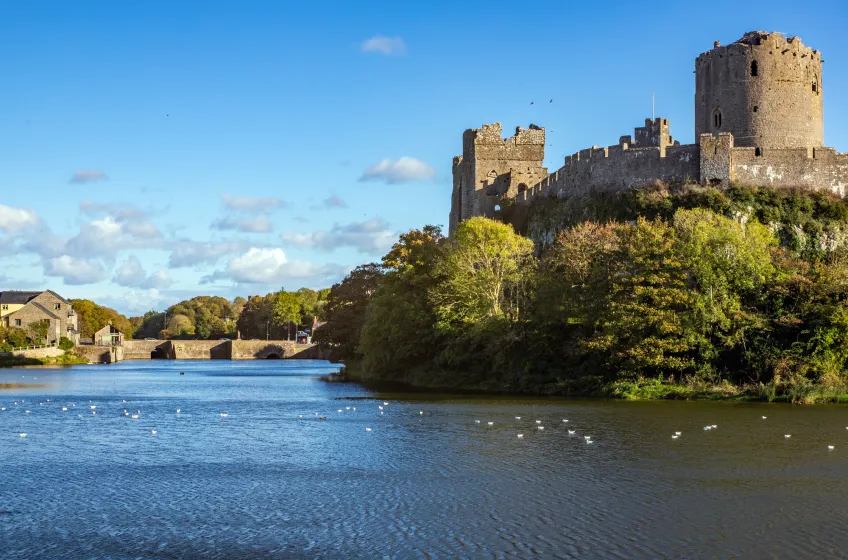
Pembroke is worth visiting because it offers one of the most impressive medieval castles in Wales, combined with the character of a traditional Welsh market town. Pembroke Castle dominates the landscape, rising above the serene Mill Pond and creating one of the most photogenic views in Wales.
But the castle is only the beginning. The town’s long, narrow high street is lined with Georgian and Victorian buildings, with cafés, shops, and pubs tucked between historic walls and towers. Around Pembroke, you’ll find nature reserves, riverside walks, and easy access to beaches, meaning there’s always something to see and do.
Whether you’re tracing the footsteps of kings, taking in the wildlife on the waterway, or heading out for a day on the Pembrokeshire Coast Path, Pembroke is a place that captures both the history and the natural beauty of Wales.
Pembroke Highlights: Things to See and Do in Pembroke
Pembroke Castle
The town’s centrepiece, Pembroke Castle, is one of the finest and largest castles in Wales. Originally built in the 11th century and later expanded, it features massive stone walls, towers, a great keep, and hidden tunnels. It was here in 1457 that Henry Tudor (later Henry VII) was born.
Visitors can explore the castle’s labyrinth of passages, climb the towers for views, and descend into the vast underground cavern known as the Wogan Cave. The castle also hosts events throughout the year, including historical reenactments, open-air theatre, and concerts.
Pembroke Mill Pond
The castle is beautifully reflected in the Mill Pond, a peaceful lake that stretches along the edge of town. A circular walk around the pond provides great views of the castle and a chance to spot swans, ducks, and herons. It’s an easy, family-friendly stroll and very photogenic at sunrise or sunset.
Pembroke Main Street
The town’s high street is long and narrow, running directly from the castle through the medieval town walls. It’s lined with independent shops, pubs, and cafés, as well as Georgian houses that give it a handsome character. Along the street you can also see Burgage plots — long, narrow strips of medieval land still visible in the town layout today.
Monkton Priory
Across the river from the castle lies Monkton Priory, one of Pembrokeshire’s oldest religious sites. Parts of the existing church date back to the 12th century, with fascinating carved stones and an atmospheric graveyard. It’s a quiet spot with a strong sense of history.
The Commons and Nature Walks
Just outside the town centre are areas of open land and green commons, perfect for walking. The nearby Pembroke River and the estuarine inlets of the Milford Haven Waterway provide excellent wildlife-spotting opportunities. Herons, otters, and even kingfishers are sometimes seen here.
Lamphey Bishop’s Palace
A short drive or walk from Pembroke is Lamphey Bishop’s Palace, a 14th-century ruin once used as a retreat by the bishops of St Davids. The remains of its grand hall, chapel, and chambers hint at its former splendour. It’s now a peaceful, atmospheric site with a real sense of the medieval past.
Pembrokeshire Coast Path
Pembroke is close to some spectacular stretches of the Pembrokeshire Coast Path, which winds around the cliffs, beaches, and estuaries of South Pembrokeshire. From nearby Freshwater East or Angle, you can join routes with panoramic views of the sea, dramatic cliffs, and abundant birdlife.
Nearby Beaches
Pembroke itself is inland, but some of Pembrokeshire’s best beaches are just a short drive away. Freshwater East, a sandy, sheltered bay, is only 10 minutes from town. A little further west you’ll find Freshwater West, famous for surfing and for featuring in Harry Potter and the Deathly Hallows as the location of Shell Cottage. Barafundle Bay, often voted one of Britain’s best beaches, is also nearby, reached by a scenic walk from Stackpole Quay.
Practical Advice for Visitors
Getting There
Pembroke is easy to reach by both road and rail. It lies on the A4139, with connections to the A477 from Carmarthen. Driving from Cardiff takes around 2.5 hours, while Swansea is about 1.5 hours away.
Pembroke also has its own railway station, with direct trains from Swansea and Cardiff, making it accessible even without a car. There are also local bus services connecting Pembroke with Tenby, Pembroke Dock, and Milford Haven.
Parking
There are several car parks in Pembroke, including ones close to the castle and the main street. Parking is affordable and generally easy to find, though it can get busy in peak summer months when the castle attracts more visitors.
Dining
Pembroke has a good range of places to eat, from cosy cafés to traditional pubs. Popular choices include:
-
The Cornstore Café – A favourite for breakfast, coffee, and light lunches.
-
Old King’s Arms Hotel – A traditional inn with hearty pub meals.
-
The Waterman’s Arms – A riverside pub with a friendly atmosphere.
-
The Dial Inn – Known for its good beer and classic menu.
For more variety, nearby Tenby and Saundersfoot have plenty of restaurants, especially for seafood.
Shopping
Pembroke’s high street has a mix of independent shops and essential services. Expect to find gift shops, antiques, bookshops, and food stores. For larger shopping trips, Pembroke Dock and Haverfordwest offer supermarkets and bigger retail outlets.
When to Visit
Pembroke is enjoyable year-round. Spring and summer are the best times to explore the castle, walk the coastal paths, and visit beaches. Autumn offers quieter trails and beautiful colours around the Mill Pond and commons. Winter can be cold and wet, but the castle remains open and there’s a cosy atmosphere in the pubs and cafés.
Local Events
-
Pembroke Castle Events – From medieval reenactments to concerts, the castle is the main venue for cultural events.
-
Pembroke Fair – A traditional event usually held in October, with rides and stalls.
-
Local markets – Seasonal markets often take place along the high street or at the castle grounds.
Exploring Beyond Pembroke
Pembroke makes a fantastic base for exploring South Pembrokeshire. Highlights include:
-
Stackpole Estate – National Trust woodland, lakes, and coast, including Barafundle Bay and Bosherston Lily Ponds.
-
Pembroke Dock – A historic naval town with a heritage centre and ferry connections to Ireland.
-
Tenby – About 20 minutes east, famous for its colourful harbour, beaches, and boat trips.
-
Carew Castle and Tidal Mill – A striking castle by a millpond, about 10 minutes north.
-
Angle Village – A quiet coastal spot with a sandy bay and the Angle Lifeboat Station.
Final Thoughts
Pembroke is a town where history is always close at hand, from its mighty Norman castle to its medieval streets and riverside walks. But it’s also a lively and welcoming place, with cafés, pubs, and shops that make it more than just a historical stop. With world-class beaches, scenic countryside, and the Pembrokeshire Coast on its doorstep, Pembroke offers both depth of heritage and plenty of opportunity for adventure. Whether you’re a history buff, a walker, or simply looking for a charming Welsh base, Pembroke has all the ingredients for a memorable visit.
Shortlist
- Your Shortlist is empty