
Osterley House | A Visitor's Introduction to Osterley House
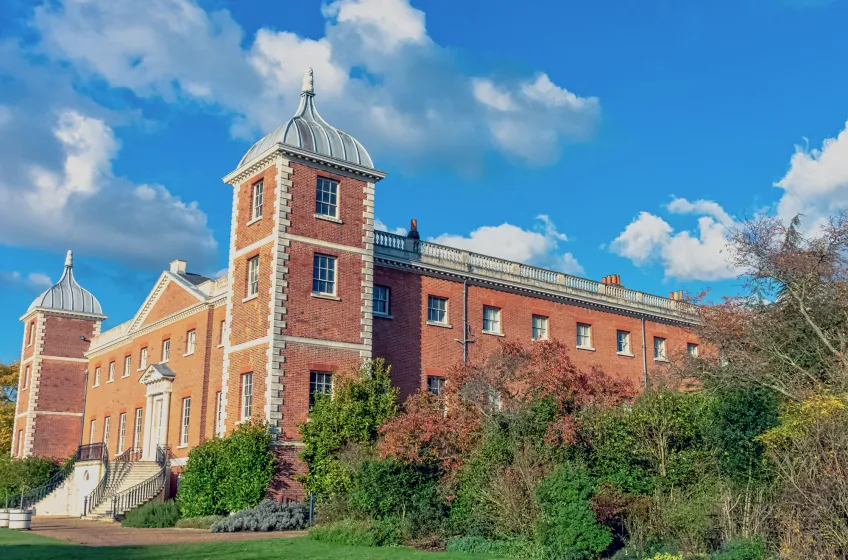
Osterley House is a grand neo-classical mansion set within extensive parkland in Isleworth, west London. Owned by the National Trust, it combines a striking Robert Adam interior with a Tudor-origin estate and a broad sweep of meadows, lakes and formal gardens. The house sits just off the A4 and within easy reach of the Piccadilly line, making it one of the most accessible historic houses from central London. Visitors come for the architecture and interiors, but also for the space: a tranquil green landscape that feels surprisingly rural given its location.
Recommended West London accommodation: Hotels Bed & Breakfasts Pub Accommodation
Pre-book London Attractions, Tours & Experiences
Why is Osterley House Worth a Visit?
Osterley is one of the clearest expressions of Robert Adam’s late eighteenth-century design, a rare place where architecture, interiors and bespoke furnishings survive as a coherent scheme. The mansion overlays Tudor foundations with refined Georgian taste for the Child banking family, telling a layered story of commerce, collecting and design. Inside, rooms such as the Long Gallery, Etruscan Dressing Room and Eating Room show Adam’s mastery of proportion, colour and plasterwork, while the stable court and service areas reveal the working life of a great house.
Just beyond the portico, parkland, lakes and a walled garden offer a genuine “country house in London” experience, with level paths that suit walks, runs and family exploration. The estate’s frequent appearance in film and television adds a familiar note, and seasonal exhibitions keep repeat visits fresh. It is a place where you can balance time in beautifully preserved interiors with unhurried hours outdoors.
Osterley House Highlights
The North Front and portico
Adam’s monumental portico gives Osterley its classical presence, setting up the disciplined symmetry that continues inside. The approach frames the house across lawns and water, making it one of the most photogenic views on the estate.
The Entrance Hall
Laid out with strong classical lines and restrained colour, the hall was designed to impress. Adam’s handling of proportion, columns and decorative plasterwork turns a reception space into an architectural statement.
The Long Gallery
A signature Adam interior, the gallery runs the length of a wing and showcases refined plaster ceilings, chimneypieces and carefully coordinated wall colours. It is one of the most atmospheric spaces in the house.
The Eating Room
This formal dining room illustrates how Adam unified furniture, textiles and architectural detail into a single scheme. Look for classical motifs repeated across chairs, sideboards and cornices.
The Etruscan Dressing Room
Inspired by antiquity, this room uses a distinctive palette and painted decoration influenced by Etruscan vases. It is among the most widely cited examples of Adam’s interest in archaeological design.
State Bedroom and textiles
The bed and hangings, together with period carpets and curtains, show the richness of eighteenth-century interiors. Even where items are reconstructions or later acquisitions, they follow Adam’s documented designs.
Decorative arts and bespoke furniture
Osterley retains fine examples of made-to-measure furniture and decorative objects produced to Adam’s patterns. The ensemble explains how leading designers worked hand-in-hand with specialist makers.
The Grand Stair and circulation spaces
Beyond the headline rooms, the stairs and landings show Adam’s talent for turning movement through a house into a sequence of composed views, with light, colour and detail carefully managed.
The Stable Block and service court
Adam also refined the working heart of the estate. The stables and coach court illustrate the scale of staff and logistics needed to run a grand house.
Formal gardens and the walled garden
Close to the house you’ll find a walled garden, ornamental borders and productive plots. Planting changes through the seasons, and the geometry of the beds echoes the order of the architecture.
The lake and boathouse views
Water features across the parkland create reflections of the house and shelter for wildlife. The edges of the lake are good for gentle, level walks with strong sightlines back to the mansion.
Perimeter path and parkland
A well-used loop around the estate offers a longer walk or jog under mature trees and through open meadow. It’s particularly attractive in spring blossom and autumn colour.
Seasonal exhibitions and interpretation
Rooms periodically host displays drawn from the collection or from external loans that illuminate aspects of the house’s history, design and occupants.
Facilities
Visitor reception and admission
Entry to the house is ticketed, with National Trust members admitted free. At busy times you may be given a timed entry slot for the mansion to manage capacity, while the parkland generally remains open access.
Food and drink
A café in the stable courtyard serves hot and cold food, drinks and cakes. A kiosk sometimes operates in peak periods near the gardens or lakes. Picnics are welcome in the wider park; check signs around the formal gardens.
Shop and plant sales
The National Trust shop stocks books, gifts and homeware, often with a focus on design and gardening. Seasonal plant sales are usually available near the courtyard.
Toilets and baby changing
Toilets, including accessible facilities and baby-changing, are located near reception and the café. Additional facilities may open in peak season.
Accessibility
There is level access to the grounds and ground floor of the house on standard routes. Upper floors may have limited access due to the historic fabric; staff can advise on alternative interpretation such as room guides or digital displays. Blue Badge parking is close to the main entrance.
Parking and cycling
On-site parking is available; charges typically apply for non-members. Cycling is permitted on designated routes, including the perimeter path, making it easy to combine a ride with a visit.
Family-friendly features
Open lawns, waymarked paths and the walled garden make easy spaces for families to explore. Activity trails and school-holiday events take place at intervals through the year.
Nearby attractions
Syon House and Park
A short distance across the Thames at Brentford, Syon offers a contrasting great house with interiors by Robert Adam and extensive riverside grounds including a conservatory and garden centre.
Royal Botanic Gardens, Kew
Kew’s glasshouses, arboretum and galleries are within a few miles, offering world-class plant collections and historic landscapes.
Chiswick House and Gardens
This Palladian villa and its landscaped gardens provide an earlier eighteenth-century take on classical design, complementing Adam’s later style at Osterley.
Gunnersbury Park and Museum
A large public park with lakes, a restored mansion housing local history displays and regular cultural events sits a short drive away.
London Museum of Water & Steam
In nearby Brentford, this museum explores the story of London’s water supply with working steam engines and hands-on exhibits.
Marble Hill House
On the Twickenham side of the river, this elegant villa in a riverside park adds another perspective on Georgian domestic architecture.
Boston Manor House
Recently restored, this Jacobean house in Brentford features rich plasterwork and panelled rooms, offering an earlier period contrast.
Twickenham Stadium Tours
Rugby fans can tour the national stadium and its World Rugby Museum, a different but popular local visit.
Practical advice
Check opening times and house access
House opening days and last entry times vary seasonally, and some rooms can be closed for conservation or events. The parkland usually opens daily with longer hours in summer. It is sensible to consult the National Trust site before travelling.
Getting there
Osterley station on the Piccadilly line is the nearest Underground stop; from there it’s roughly a 15–20 minute walk to the main entrance. Isleworth and Syon Lane are the closest rail stations. Several bus routes run along the surrounding roads. Drivers approach via the A4; follow brown signs for parking.
Plan for weather and walking
Paths in the parkland are largely level but can be muddy after rain. Comfortable footwear helps if you plan to complete the perimeter loop. The house is an excellent wet-weather option; on dry days allow extra time outdoors.
Weekends and school holidays
These are the busiest periods. Arriving earlier in the day improves your chances of quieter rooms and easier parking. Timed entry for the house may be used in peak season.
Photography and bags
Non-flash photography is usually permitted in the house, but tripods and large bags may be restricted. Cloakroom arrangements vary; travel light if possible.
Picnics, dogs and wildlife
Picnics are welcome in open areas of the park. Dogs on short leads are typically allowed in the wider grounds but not in the formal gardens or the house; assistance dogs are welcome. Waterfowl nest around the lakes in spring, so keep a respectful distance.
Events and activities
Look out for seasonal garden highlights, family trails, art installations and the weekly 5k parkrun held in the park. If you plan to run, check the current route and start point on the parkrun website.
Combining visits
Osterley pairs well with Kew, Syon or Chiswick House for a full day exploring the history of design in west London. If you’re travelling by public transport, Kew Bridge and Brentford offer multiple onward options.
Shortlist
- Your Shortlist is empty