
A Visitor's Introduction to The Old Blacksmith's Shop
Set in the village of Gretna Green on the Scotland–England border, the Old Blacksmith’s Shop is a historic marriage venue and visitor attraction best known for its association with “runaway” weddings. Housed in an 18th-century building beside the original coaching route, it blends social history with living tradition, offering museum displays, wedding ceremonies, shopping, dining and landscaped grounds that make it an easy stop on a journey north or south.
Recommended Gretna Green accomodation: Hotels Bed & Breakfasts Pub Accommodation
Pre-book Dumfries & Galloway Attractions, Tours & Experiences
Why is The Old Blacksmith's Shop worth a visit?
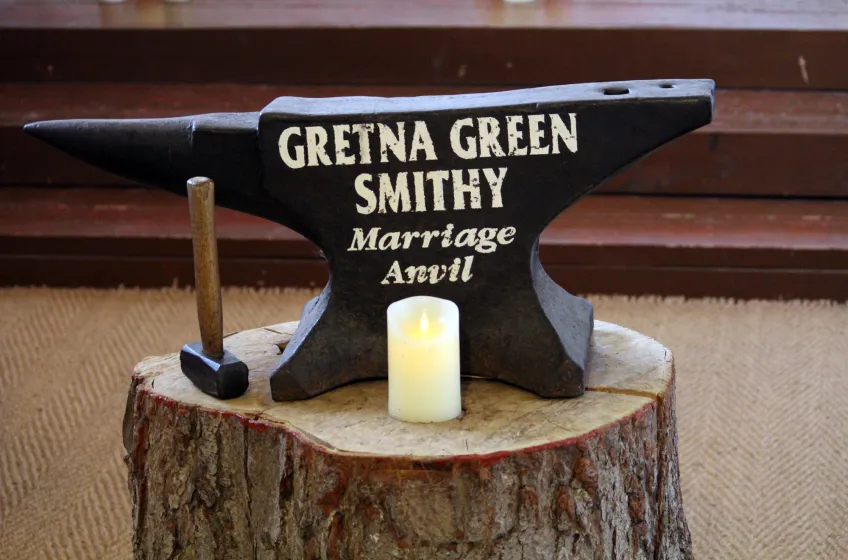
The site tells a distinctive story about marriage law, mobility and popular culture. From 1754, when England tightened its marriage rules, countless couples crossed the border to marry quickly under Scottish law. Local blacksmiths, seen as village figures of authority, became “anvil priests”, with the anvil symbolising the forging of a union. Today, the Old Blacksmith’s Shop preserves that narrative with original rooms and artefacts, while remaining an active place to wed. Even without attending a ceremony, visitors can explore exhibitions, see the famous anvil, and enjoy the wider complex of shops, cafés and gardens that have grown around the historic core.
Old Blacksmith's Shop Highlights
The Original Marriage Room
Step into the atmospheric room where blacksmith-officiated ceremonies took place, with period furnishings and interpretive panels explaining how and why couples came to Gretna Green.
The Famous Anvil
The anvil is the emblem of the site. Staff explain its symbolism and how the “strike of the anvil” became part of the marriage ritual.
Museum Displays
Compact exhibits outline the 18th- and 19th-century cross-border trade in weddings, featuring documents, portraits, luggage and letters from couples.
Story of Marriage Law
Clear timelines set out key legal changes in England and Scotland and how they shaped Gretna Green’s role, from the 1750s through the 20th century.
Blacksmith’s Workshop Setting
The whitewashed buildings, cobbles and smithy details give a sense of the coaching-era village that once served travellers on the main route north.
Live and Scheduled Ceremonies
On many days you may witness couples arriving for photos or ceremonies, which adds a contemporary dimension to the historic narrative.
Courtship Maze and Gardens
A family-friendly hedge maze and landscaped areas offer a short stroll, seasonal planting and viewpoints for photos.
Sculpture and Photo Points
Wrought-iron pieces and dedicated backdrops make easy stops for souvenir pictures without intruding on private events.
Retail Courtyard
A cluster of shops carries Scottish food, whisky, knitwear, tweed, jewellery and wedding keepsakes, drawing on regional producers.
Dining Options
From sit-down meals to quick snacks, cafés and restaurants serve Scottish staples, home baking and lighter fare throughout the day.
Heritage Talks and Guides
Interpretive staff are on hand to answer questions about the blacksmiths, the village and the couples who travelled here.
Smiths and Gretna Hall Connections
The wider estate includes nearby hotels and additional ceremony spaces, extending the heritage theme into modern hospitality.
Facilities and services
Visitor Reception
A clearly signposted entrance provides maps, orientation and information on exhibitions, ceremony schedules and seasonal activities.
Parking and Coach Access
On-site car parking typically includes spaces for cars, motorcycles and coaches, with drop-off points close to the entrance.
Food and Drink
Cafés and a restaurant offer hot and cold meals, children’s options and vegetarian choices; opening hours vary by season and day.
Shops and Giftware
Multiple retail units stock local foods, clothing and gifts, with packaging suitable for travel.
Toilets and Baby Change
Modern washrooms, including accessible facilities, are located close to the main buildings.
Accessibility
Level routes, ramps and step-free entries are provided to key areas; some historic thresholds may be uneven, and staff can advise on the easiest paths.
Wedding Services
Dedicated teams arrange legal paperwork, celebrants, flowers, photography and small or larger gatherings across the site.
Photography Support
Professional photographers operate on site for weddings, and visitors are welcomed to take personal photos where permitted.
Dog-Friendly Areas
Dogs on leads are usually allowed in outdoor spaces; policies for indoor areas may differ between units.
Wi-Fi and Connectivity
Guest Wi-Fi is available in parts of the complex, useful for sharing photos or coordinating groups.
Nearby attractions
Gretna Green Village and Railway Station
A short walk from the site, the village retains its border-town character and provides rail links on the Carlisle–Glasgow line.
Carlisle
Roughly 10–15 miles south, Carlisle offers a medieval cathedral, an impressive castle and a compact city centre with museums and shops.
Solway Coast
The Solway Firth provides wide skies, birdlife and shoreline walks; look for viewpoints between Bowness-on-Solway and Annan.
Hadrian’s Wall Sites
Roman remains at Birdoswald and other forts present wall sections, museums and walks with expansive countryside views.
Annandale Distillery
Near Annan, this historic distillery combines guided tours with a café and shop focused on Lowland whisky.
Caerlaverock Castle
A distinctive triangular, moated castle south of Dumfries, notable for its red sandstone walls and wetland surroundings.
The Devil’s Porridge Museum
At Eastriggs, this museum tells the story of the First World War munitions factory and the local communities that powered it.
Lockerbie and Moffat
Nearby towns offer independent shops, walks and access to scenic routes into the Southern Uplands.
Caledonia Park (Outlet Village)
Modern outlet shopping on the edge of Gretna complements the heritage visit with fashion and homeware brands.
Local Gardens and Estates
Seasonal openings at estates in Dumfries and Galloway provide varied planting, woodland walks and tearooms.
Practical advice
Getting There
Gretna Green sits just off the M6/M74 corridor near the Anglo-Scottish border, with clear road signage. Trains run to Gretna Green station; taxis or a short walk link the station and attraction. Check current timetables before travelling.
Opening Times and Tickets
Hours can vary with weddings, seasons and holidays. Entry to the wider site is generally free, with charges for specific exhibits or experiences. Confirm current arrangements on the official website before you go.
Best Time to Visit
Mornings on weekdays are typically quieter. Weekends and peak wedding dates bring more visitors but also more atmosphere. Outdoor areas are pleasant in spring and summer; winter visits highlight the indoor displays.
Respecting Ceremonies
Parts of the building may be temporarily reserved for weddings. Staff will advise on access so ceremonies remain private while public areas stay open.
Accessibility Planning
If step-free routes or seating are important, mention this at reception. Surfaces can be uneven around the historic buildings; suitable footwear is useful.
Families with Children
The maze, gardens and open spaces make it easy to break up a journey. Keep an eye on youngsters near roads, car parks and any ceremonial activity.
Photography Etiquette
Personal photography is welcomed in public zones. Avoid flash or close-up shooting during ceremonies unless invited.
Weather Readiness
The site is partly outdoors. Bring layers and a waterproof in unsettled conditions; shaded areas can be cool even in summer.
Food and Breaks
Plan a meal or a short café stop to avoid peak queues. Dietary needs can usually be accommodated; ask staff for options.
Shortlist
- Your Shortlist is empty