
A Visitor's Introduction to New Lanark Mills
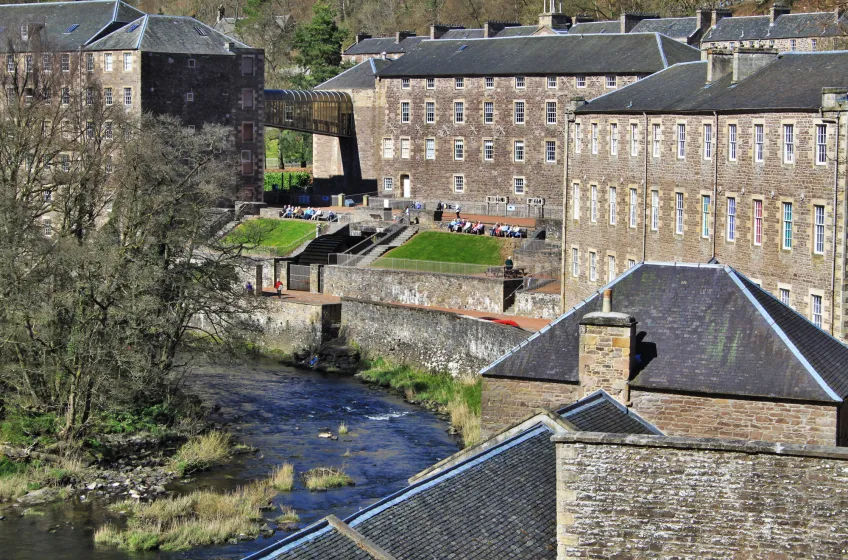
New Lanark Mills is a restored 18th- and 19th-century cotton mill village set in a steep wooded gorge on the River Clyde, just outside the market town of Lanark in South Lanarkshire. Founded in the 1780s and later managed by social pioneer Robert Owen, the village is renowned for its progressive approach to workers’ welfare and education. Today it is a UNESCO World Heritage Site that combines impressive industrial architecture, riverside scenery and well-curated exhibits. Visitors can explore the mill buildings, workers’ housing and schoolroom, learn how water power drove production, and walk out to the dramatic Falls of Clyde.
Recommended Lanark accomodation: Hotels Bed & Breakfasts
Pre-book South Lanarkshire Attractions, Tours & Experiences
Why is New Lanark worth a visit?
New Lanark offers a clear, authentic picture of how industrial communities worked and lived during the early factory age. Few sites present the full social story—from housing and schooling to leisure and reform—alongside the technology of production. The mills sit within a striking natural setting, with woodland paths leading upriver to waterfalls and viewpoints, so it suits both heritage enthusiasts and those looking for a day outdoors. Exhibitions, reconstructed interiors and working machinery demonstrations help make complex history tangible, while the village remains a living community with accommodation, café and shops.
New Lanark highlights
The historic mill buildings
A cluster of large stone mills lines the river, showing the scale and organisation of cotton spinning during the Industrial Revolution. Inside, exhibitions explain the origins of the village under David Dale, the partnership with Richard Arkwright’s methods and the later management of Robert Owen.
Working textile machinery
Selected frames and looms demonstrate the processes that turned raw cotton into yarn and cloth. Staffed displays show carding, spinning and weaving, linking technical detail to the daily rhythms and hazards of mill work.
Water power and the lade
A system of weirs, lades and wheelpits channelled the River Clyde to power the mills. Interpretive panels and viewing points explain how waterwheels and later turbines translated river flow into mechanical energy, and how the site subsequently adopted hydroelectric generation.
The Annie McLeod Experience
This immersive ride presents the village through the voice of a fictional mill girl, using projection and sound to place visitors in the working environment. It is a useful orientation to the site’s themes of labour, education and reform.
Robert Owen’s House
Rooms furnished to the early 19th century show how Owen lived and worked. Displays outline his ideas about shorter hours, fair prices in the village store, childcare and schooling, and the broader influence of New Lanark on social reform.
The School for Children and Institute
The schoolroom and Institute illustrate Owen’s emphasis on education, music and recreation. Period teaching materials, a reconstructed classroom and exhibits on early childhood education show how radical these ideas were at the time.
Millworkers’ Housing
Restored tenements present domestic interiors across different decades, revealing changes in sanitation, heating, furnishings and diet. This is one of the most direct ways to grasp everyday life in the village.
The Village Store
A recreation of the store demonstrates Owen’s model of selling quality goods at fair prices. It helps explain how wages, savings and consumption were managed within the community.
Roof Garden
A contemporary garden set atop one of the mills offers views over the village and river gorge. Its planting and layout provide a quiet pause between galleries and walks.
Yarn production and shop
New Lanark’s ongoing spinning enterprise produces yarn using traditional methods adapted to modern standards. The on-site shop stocks the mill’s yarns and knitwear, making a tangible link between heritage and current production.
Temporary exhibitions and events
Rotating displays draw on industrial history, local art and community projects. Seasonal events and talks add variety for repeat visitors and provide extra context to the core story.
Clyde Walkway and viewpoints
Paths from the village follow the river to a series of waterfalls and woodland lookouts. The route passes remnants of the power infrastructure and offers good opportunities for photography and wildlife watching.
Wildlife and the Falls of Clyde
The adjacent nature reserve supports species such as dippers, herons and, at times, peregrine falcons. The falls—most notably Corra Linn and Bonnington Linn—are impressive after rain and form part of the historic visitor landscape that early tourists also admired.
Architectural details and streetscape
Stone façades, cast-iron features, cobbles and bridges repay close inspection. Information boards tie specific buildings and corners to individual stories, from child workers’ routines to community entertainments.
Film, audio and oral history
Recorded testimonies and period footage complement the objects and reconstructions, giving voices to those who lived and worked here and tracing the village’s decline and restoration in the late 20th century.
Facilities
Visitor centre and ticketing
The main entrance provides tickets, maps and orientation. Staff can advise on route choices, timed entries for certain exhibits and any temporary closures. Multilingual materials may be available.
Food and drink
A café in the village serves hot meals, drinks and cakes, with additional seasonal kiosks at busy times. Seating is available indoors, with some outdoor tables overlooking the river or mills when weather allows.
Accommodation
New Lanark Mill Hotel and self-catering “Waterhouses” on the riverbank make it possible to stay within the World Heritage Site. Rooms and apartments suit different budgets and lengths of stay, useful for combining heritage visits with walking.
Shops
Alongside the yarn shop, a gift shop stocks books on industrial history, local crafts and children’s items. Basic supplies and snacks are usually available.
Parking and transport
Parking is provided on the plateau above the village, with a steep road or path descending to the mills. Spaces for Blue Badge holders are closer to the main entrance. Public transport options include rail to Lanark and local buses or taxis to the site.
Toilets and baby changing
Toilets with baby-changing facilities are located near the visitor centre and at other signed points around the village. Family rooms and bottle-warming facilities are typically provided.
Accessibility
Level access, lifts in key buildings and ramps are provided where possible, though the historic fabric and cobbled areas can be uneven. The approach from the main car park is steep; accessible drop-off points and assistance options are available on request.
Learning and group visits
Education rooms, worksheets and guided tours cater for schools, colleges and adult groups. Advance booking is recommended for groups to secure entry times and learning sessions.
Wi-Fi and connectivity
Wi-Fi is generally available in the hotel and some public areas. Mobile reception can vary in the river gorge; download tickets or maps in advance if needed.
Health and safety
Riverside paths, steep drops and wet surfaces require care, especially in poor weather. Fenced areas and signage indicate restricted zones around the power infrastructure.
Nearby attractions
Falls of Clyde Nature Reserve
Immediately upstream from the village, this Scottish Wildlife Trust reserve protects the gorge and waterfalls. Waymarked trails lead to viewpoints such as Corra Linn and Bonnington Linn, with seasonal wildlife interpretation.
Lanark town centre
Lanark’s high street, St Nicholas Church and local heritage trail provide a compact historic core. The town offers additional cafés, shops and services, and hosts periodic markets and events.
Chatelherault Country Park
Near Hamilton, this country park features woodland walks, river views and the restored 18th-century hunting lodge designed by William Adam. It is a good complement for those interested in landscape history.
Clyde Valley tourist route
The lower Clyde Valley is known for orchards, farm shops and garden centres. It is suitable for a gentle drive with stops for produce, nurseries and short walks.
Craignethan Castle
A dramatic early 16th-century castle in a rural setting managed by Historic Environment Scotland. Its towers and earthworks give insight into late medieval defence and Renaissance domestic life.
Biggar and Upper Clydesdale museums
The nearby town of Biggar hosts small museums that explore social history, costume and local trades, offering another angle on everyday life in the region.
Tinto Hill
A prominent hill with a straightforward path to the summit, rewarding walkers with wide views across the Clyde Valley and Southern Uplands on clear days.
Practical advice
Planning and tickets
Check current opening arrangements, exhibit availability and any timed entries before you travel. Buying tickets in advance can help with busy periods and group visits, and ensures access to popular experiences.
Getting there
By car, follow signs to Lanark and the World Heritage Site; final access is down a steep approach road to the village. By rail, travel to Lanark station and continue by local bus or taxi. Allow extra time for the walk from the upper car park to the mills.
Time required
A thorough visit, including the main exhibitions and a walk to at least one waterfall viewpoint, comfortably fills half a day; with the ride, housing exhibits and time in the café and shop, a full day is easily spent.
What to wear
Paths and cobbles can be uneven and slippery, especially after rain. Sturdy footwear and weatherproof layers are advisable year-round. Bring binoculars if you plan to watch wildlife along the gorge.
Accessibility and terrain
The site works hard to provide lift access and step-free routes, but gradients and historic surfaces remain. Visitors with limited mobility may wish to arrange drop-off closer to the entrance and consult accessibility maps on arrival.
Families with children
The immersive ride, schoolroom and machinery displays tend to engage younger visitors. Baby-changing and high chairs are available, and there is space for prams, though some buildings have tight corners where folding a buggy helps.
Food and breaks
The café can be busy at midday; earlier or later visits often mean shorter queues. Picnics are possible in designated outdoor areas, but please avoid eating inside exhibition spaces.
Weather and river conditions
The falls are most dramatic after wet weather, but mist and spray can make viewpoints slick. In dry spells the gorge remains attractive for woodland walks, with shade in summer and good leaf colour in autumn.
Photography
Photography is allowed in most outdoor areas and many exhibits; look for signs where restrictions apply, particularly around working machinery and ride interiors. Tripods may be restricted indoors.
Dogs
Assistance dogs are welcome in buildings. Pet dogs are generally permitted in outdoor areas on leads; check local signage regarding access to the nature reserve and sensitive wildlife zones.
Combining visits
Pair New Lanark with a loop to the Falls of Clyde or a short drive to Chatelherault or Craignethan for a balanced day of industrial heritage, landscape and medieval history.
This overview should help you plan a visit that balances the industrial story with the natural setting. New Lanark remains a rare place where ideas about work, welfare and education can be explored within the original village and landscape that shaped them.
Shortlist
- Your Shortlist is empty