
A Visitor's Introduction to The Lost Gardens of Heligan
The Lost Gardens of Heligan is one of the most popular botanical sites in the UK, situated near Mevagissey in Cornwall. Covering over 200 acres, it is a historically significant estate garden that was once neglected and overgrown, only to be rediscovered and carefully restored in the early 1990s. The gardens now offer a wide-ranging experience, blending history, horticulture, wildlife, and landscape in a way that is both educational and visually engaging. The estate is part of the Tremayne family's ancestral home, and the gardens provide a rare glimpse into Victorian garden design and practices. The restoration project has become a landmark in British horticulture, highlighting the value of heritage gardens and the cultural importance of landscape conservation.
Recommended South Cornwall accommodation: Hotels Bed & Breakfasts Pub Accommodation
Pre-book Cornwall Attractions, Tours & Experiences
Why Are The Lost Gardens of Heligan Worth a Visit?
The Lost Gardens of Heligan are worth visiting for several compelling reasons. Firstly, it is a living example of a historic garden that had been lost to time and reclaimed, giving it a unique atmosphere that combines natural beauty with a sense of discovery. The scale and variety of the gardens are impressive, encompassing formal gardens, productive gardens, subtropical jungle, woodland walks, and farmland. Visitors can explore over two centuries of horticultural history through spaces that have been carefully restored using original plans and period techniques. In addition to its horticultural significance, Heligan is also home to a range of wildlife, rare plant species, and traditional farming practices. Its landscape tells the story of social history, particularly the lives of the estate's gardeners and workers, many of whom left to fight in the First World War. The garden’s reawakening has become a symbol of cultural renewal and environmental stewardship, attracting a wide audience from garden enthusiasts to families and history buffs.
Lost Garden Highlights
The Jungle
One of the most striking features of Heligan is the Jungle, a microclimate area situated in a steep-sided valley. This part of the garden supports an extraordinary collection of subtropical plants, including giant rhubarb (Gunnera manicata), towering tree ferns, and bamboo tunnels. A series of raised boardwalks and paths guide visitors through this lush environment, crossing over water features such as Burmese rope bridges and waterfalls. The Jungle offers a dramatic contrast to the more formal areas of the garden, showcasing the diversity of plant life possible within Heligan’s landscape.
The Pleasure Grounds
These restored ornamental gardens reflect the aesthetic tastes of the Georgian and Victorian periods. The Pleasure Grounds include themed areas such as the Italian Garden, the Sundial Garden, and the Northern Summerhouse. These gardens feature decorative planting schemes, sculpture, and carefully restored architectural elements. The Pleasure Grounds were historically used for recreation and social gatherings, and today they offer tranquil spaces for visitors to relax while enjoying ornamental horticulture.
The Productive Gardens
Heligan’s Kitchen Garden, Flower Garden, and Melon Yard collectively form the Productive Gardens, which exemplify traditional Victorian horticultural practices. These gardens produce fruit, vegetables, herbs, and cut flowers, many of which are used in the on-site cafés. The gardens are laid out in original formats with restored glasshouses, cold frames, and period tools. The working nature of these gardens means there is always seasonal activity, from planting and harvesting to training fruit trees and maintaining composting systems.
The Lost Valley
This peaceful, semi-wild area features a combination of native woodland, ponds, and pastures. The Lost Valley is a place where visitors can experience a quieter side of Heligan, with less formal landscaping and more naturalistic planting. It is also home to a range of wildlife, including dragonflies, frogs, and a wide variety of bird species. Boardwalks and rustic paths meander through the valley, offering an immersive experience in nature.
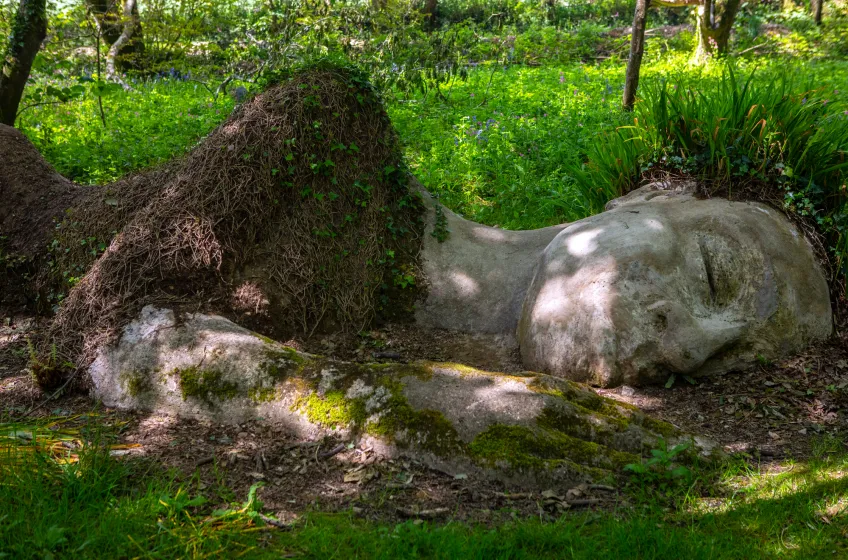
The Mud Maid and Giant's Head
These two iconic sculptures, created by artists Sue Hill and Pete Hill, have become symbolic of the gardens. Constructed from natural materials such as earth, plants, and stone, they blend into the landscape and reflect the garden’s themes of decay and renewal. The sculptures are particularly popular with children and photographers and provide a memorable focal point within the woodland area.
The Insect Hotel and Wildlife Projects
Heligan has developed a number of habitats to support native wildlife, including an extensive Insect Hotel, bird boxes, and pollinator-friendly planting schemes. The Wildlife Hide near the Lost Valley provides a chance to observe birds and small mammals, and information boards offer insight into the biodiversity supported by the estate. These initiatives make Heligan a good example of how historic gardens can engage with contemporary conservation priorities.
The Northern Gardens
These areas include features such as the Walled Garden, the Pineapple Pit, and the Peach House. They reflect the ambition and experimentation of Victorian horticulture, including the use of microclimates and hotbeds to grow exotic fruits. Restoration of these features has been guided by original estate records, and the results are both historically faithful and horticulturally impressive.
Heligan Farm and Rare Breeds
A working part of the estate, Heligan Farm maintains traditional livestock such as pigs, sheep, and poultry. The farm focuses on rare and heritage breeds, and visitors can learn about traditional animal husbandry and sustainable farming practices. Seasonal events and demonstrations, such as lambing or apple pressing, enhance the educational value of the farm.
Woodland Walks
Beyond the cultivated garden areas, Heligan’s extensive woodland paths offer a peaceful retreat and a chance to see the estate’s broader landscape. These routes are interspersed with sculptures, wildlife observation points, and panoramic views over the Cornish countryside. The woodlands are managed to encourage biodiversity and provide habitats for local fauna.
The Stewards’ House and Garden History Exhibition
The Stewards’ House contains displays and artefacts related to the garden’s history, the estate’s workforce, and the restoration process. A timeline of the garden’s development, photographic archives, and stories of the people who worked the land add context to the visitor experience. This interpretive element helps to connect the physical landscape with its historical and social narratives.
Nearby Attractions
The Lost Gardens of Heligan is located in a region of Cornwall that offers a wide range of other attractions. The nearby fishing village of Mevagissey is a short drive away and features a picturesque harbour, small shops, and boat trips along the coast. The Eden Project, another major horticultural attraction, is approximately 25 minutes away by car and provides a contrasting experience with its futuristic biomes and global plant collections. Caerhays Castle and Gardens, a historic estate overlooking Porthluney Cove, offers seasonal access to its extensive magnolia and camellia collections. Pentewan Beach, known for its sandy shoreline and water sports, is also close by. For those interested in local history, the Charlestown Shipwreck and Heritage Centre explores Cornwall’s maritime past. Together, these attractions make the Heligan area an excellent base for a longer visit to the south coast of Cornwall.
Facilities
Heligan offers a comprehensive range of visitor facilities. The main entrance houses a Visitor Centre with information services, ticketing, and a well-stocked gift shop that features garden-related books, tools, and local crafts. The Heligan Kitchen and Bakery provide on-site dining using produce from the gardens and farm. A plant sales area allows visitors to take home plants cultivated on the estate. Toilets, baby changing facilities, and picnic areas are available throughout the site. The garden is partially accessible to wheelchair users, though some areas such as the Jungle and woodland paths involve uneven terrain and gradients. A mobility scooter hire service is available upon booking, and accessible parking is provided near the entrance.
Practical Advice
Visitors should allocate at least half a day to explore the Lost Gardens of Heligan, although a full day is recommended to appreciate the variety and detail of the site. Sensible footwear is essential, especially in the Jungle and woodland areas where paths may be steep or uneven. The gardens are open year-round, but opening hours and facilities may vary seasonally, so checking the official website before travelling is advisable. Tickets can be purchased online in advance, which may help reduce waiting times during busy periods. Dogs are welcome on leads, making Heligan a good option for visitors with pets. While public transport links are limited, the gardens are easily reached by car and well signposted from nearby towns. Parking is free. Visitors interested in garden history, heritage landscapes, or biodiversity will find Heligan particularly rewarding, and the site caters well to families, with seasonal events, child-friendly trails, and hands-on experiences. Those combining a visit with nearby attractions may wish to consider staying locally, with a range of accommodation available in Mevagissey, St Austell, and the surrounding countryside.
Shortlist
- Your Shortlist is empty