
A Visitor's Introduction to V&A East Storehouse
The V&A East Storehouse is a major new cultural attraction located in the Queen Elizabeth Olympic Park in Stratford, East London. Developed as part of the Victoria and Albert Museum's expansion into East London, it offers a unique approach to museum experiences by opening up the behind-the-scenes world of museum collections and conservation. Unlike traditional exhibition spaces, the Storehouse invites visitors into the heart of museum operations, providing access to objects, archives, and practices that are usually hidden from public view.
Occupying part of the former Olympic Broadcasting Centre, the V&A East Storehouse sits adjacent to the V&A East Museum, which is scheduled to open shortly after. Together, these two institutions form a central component of East Bank, a new creative and educational district that includes partners such as Sadler’s Wells, BBC Music, University College London (UCL), and the London College of Fashion. The Storehouse is designed not only as a place for preservation and research, but also as a space for interaction, creativity, and learning, reinforcing the V&A’s mission to make art, design, and performance more accessible and relevant to the public.
Recommended accommodation near V&A East Storehouse: Hotels Bed & Breakfasts
Pre-book London Attractions, Tours & Experiences
Why Is V&A East Storehouse Worth a Visit?
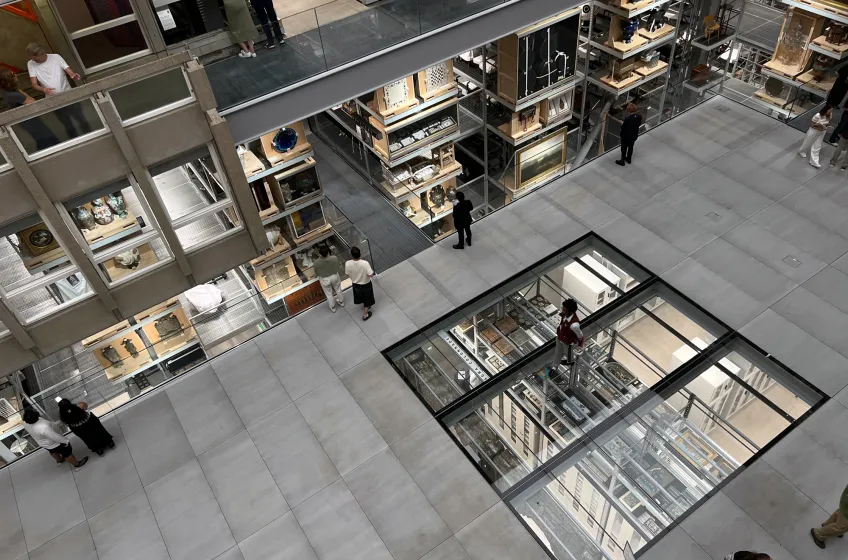
The V&A East Storehouse offers an unparalleled opportunity to explore the inner workings of one of the world’s leading museums. Rather than presenting a fixed set of curated exhibitions, it functions as a working store where over 250,000 objects are kept in accessible conditions. Visitors can view these collections in open storage, observe conservation in action, and gain insights into how museums operate day-to-day.
This behind-the-scenes model encourages curiosity and exploration, allowing for a deeper engagement with the V&A’s vast and varied holdings. From fashion and photography to furniture, sculpture, ceramics, and digital media, the objects span centuries and continents. The Storehouse also makes use of digital tools and interactive displays to help interpret these objects in their historical and contemporary contexts.
Furthermore, the space is designed to support dialogue and collaboration, with opportunities for the public to engage with curators, conservators, and researchers through public tours, workshops, and residencies. This makes it not only a place for passive observation but an active centre for learning and cultural exchange.
V&A East Storehouse Highlights
Open Access Collections Storage
One of the defining features of the V&A East Storehouse is its open storage model, which allows visitors to view objects on rolling racks, open shelving, and through glazed panels. This approach is both practical and innovative, ensuring that stored items are visible and accessible rather than hidden away. The experience is akin to wandering through the back rooms of the museum, offering a rare glimpse into the breadth of the V&A’s collection.
Visible Conservation Studios
The conservation studios at the Storehouse are integrated into the visitor experience. Through viewing windows and scheduled demonstrations, the public can observe the painstaking work of conserving textiles, paintings, ceramics, and other fragile artefacts. These studios highlight the essential, often invisible work involved in maintaining a world-class museum collection.
Archives and Research Spaces
The V&A holds extensive archives relating to art, design, and performance, including the archives of key designers, manufacturers, and cultural institutions. At the Storehouse, much of this material is available to view in person, either as part of displays or by appointment in dedicated reading rooms. These archives support scholarly research while also being open to the wider public.
Themed Installations and Rotating Displays
While the Storehouse is not an exhibition-led venue in the traditional sense, it includes curated installations that bring together objects around specific themes or ideas. These displays rotate periodically, highlighting different aspects of the collection and encouraging return visits.
Interactive and Digital Interpretation
Digital technology is used extensively throughout the Storehouse to enhance interpretation. Screens, touch panels, and augmented reality tools help visitors delve deeper into the stories behind the objects, understand their construction, and see how they connect across time and geography. These tools also provide context for stored items that are not on full display.
Public Tours and Curator Talks
Regular tours led by museum staff offer visitors an in-depth introduction to the Storehouse’s purpose and contents. These tours often focus on particular collection areas, such as costume or photography, and provide opportunities to ask questions and hear behind-the-scenes stories from curators and conservators.
Learning Studios and Creative Labs
Education and engagement are central to the Storehouse’s mission. On-site learning spaces cater to schools, families, students, and adult learners. Workshops cover a wide range of topics from design thinking to material science, and the labs also host artist residencies and public programmes that explore contemporary design challenges.
Environmental Sustainability in Museum Practice
The V&A East Storehouse is designed with environmental responsibility in mind. Its systems for climate control, lighting, and materials handling reflect current best practices in sustainable museum storage. Interpretation within the space also addresses how museums are adapting to climate challenges and how design can support sustainable futures.
Community Engagement Programmes
The Storehouse maintains strong links with East London communities through co-created displays, local partnerships, and community-led projects. These initiatives ensure that the Storehouse is not just a passive repository, but a space where diverse perspectives are welcomed and reflected in the programming.
Access to the National Collection Centre
The Storehouse is part of a wider strategy by national museums to improve public access to stored collections. It complements other major initiatives like the British Museum’s new storage facility and the Science Museum’s National Collections Centre. As such, it contributes to a broader shift towards transparency and access in UK museums.
Facilities
The V&A East Storehouse is fully equipped to accommodate a wide range of visitors. It offers step-free access throughout, with lifts and ramps where needed. There are accessible toilets, baby-changing facilities, and quiet spaces available for those who need them. Seating areas are provided at regular intervals, and the entire site is designed to be wheelchair-friendly.
On-site amenities include a café serving drinks, snacks, and light meals, with options for different dietary requirements. A gift shop offers a range of books, design-led products, and souvenirs inspired by the V&A’s collections. The Storehouse also has lockers and cloakroom facilities, as well as Wi-Fi throughout the building.
Visitor information desks are staffed by knowledgeable guides who can assist with wayfinding, information about the collections, and booking for public programmes. Printed guides and digital apps are available to support self-guided exploration.
Nearby Attractions
The V&A East Storehouse is located within Queen Elizabeth Olympic Park, which offers a wide array of attractions for visitors to enjoy before or after their visit. The nearby V&A East Museum, scheduled to open soon, will be a natural companion to the Storehouse, offering traditional gallery spaces with major exhibitions and immersive displays.
Also within the park is the ArcelorMittal Orbit, the UK’s tallest sculpture, which offers panoramic views of London and a thrilling slide experience. The London Aquatics Centre, with its striking architecture by Zaha Hadid, welcomes public swimmers as well as hosting sporting events. The London Stadium, now home to West Ham United and used for major concerts and events, is just a short walk away.
For those interested in contemporary art and fashion, the nearby East Bank development includes the London College of Fashion and Sadler’s Wells East, a new venue for dance and performance. Just outside the park, Westfield Stratford City offers extensive shopping and dining options.
Nature lovers can explore the park’s wetlands, gardens, and walking trails, while those interested in architecture and urban planning will find the entire site a compelling case study in regeneration and sustainable design.
Practical Advice for Visitors
The V&A East Storehouse is easily accessible by public transport. Stratford station, served by National Rail, London Underground, Overground, DLR, and multiple bus routes, is approximately a 10–15 minute walk from the Storehouse. Signage throughout Queen Elizabeth Olympic Park directs visitors to the major cultural venues.
Entry to the Storehouse is free, although some events, tours, and workshops may require booking or carry a small fee. It’s advisable to check the V&A website in advance for the latest opening hours, programme details, and any special visitor requirements.
Due to the nature of the building, temperatures inside may vary slightly, so dressing in layers is recommended. Photography is generally permitted, but flash and tripods may not be allowed in some areas, particularly near conservation work or archival materials.
To make the most of a visit, consider joining a guided tour or attending a public talk, which offer valuable context and background. Visitors with specific research interests can arrange access to archives or request information from curators via the V&A’s research enquiry service.
For families, the Storehouse is child-friendly, with hands-on activities, scavenger trails, and programmes designed to engage younger visitors. School groups and educational visits are welcomed, with prior booking recommended.
With its innovative approach, rich collections, and integration into the vibrant East Bank cultural quarter, the V&A East Storehouse offers a fresh and engaging way to experience one of the UK’s most important museum collections.
Shortlist
- Your Shortlist is empty