
A Visitor's Introduction to The London Transport Museum
The London Transport Museum is situated in Covent Garden, in the heart of central London. Dedicated to the history and development of transport in the capital, the museum offers a comprehensive and engaging look at how public transport shaped the growth, design, and social fabric of London. Housed in a Grade II-listed former flower market building, the museum combines historical displays with interactive exhibits to appeal to visitors of all ages.
Originally founded in the 1920s, the museum moved to its current site in 1980 and underwent a major refurbishment in 2007. It is operated by the London Transport Museum charity and works in partnership with Transport for London (TfL). The museum's mission is to conserve and present the story of London's transport system through its extensive collections of vehicles, photographs, maps, posters, uniforms, and design artefacts.
Pre-book London Transport Museum Tickets & Tours
Recommended Covent Garden Accommodation: Hotels Bed & Breakfasts
Why Is The London Transport Museum Worth a Visit?
The London Transport Museum offers an insightful and accessible way to understand how transport has influenced the city’s development, from Victorian horse-drawn carriages to the modern Underground network. As London grew into a major global city, its transport infrastructure played a central role in enabling economic expansion, urban planning, and social mobility. The museum explores these themes through carefully curated exhibits and engaging storytelling.
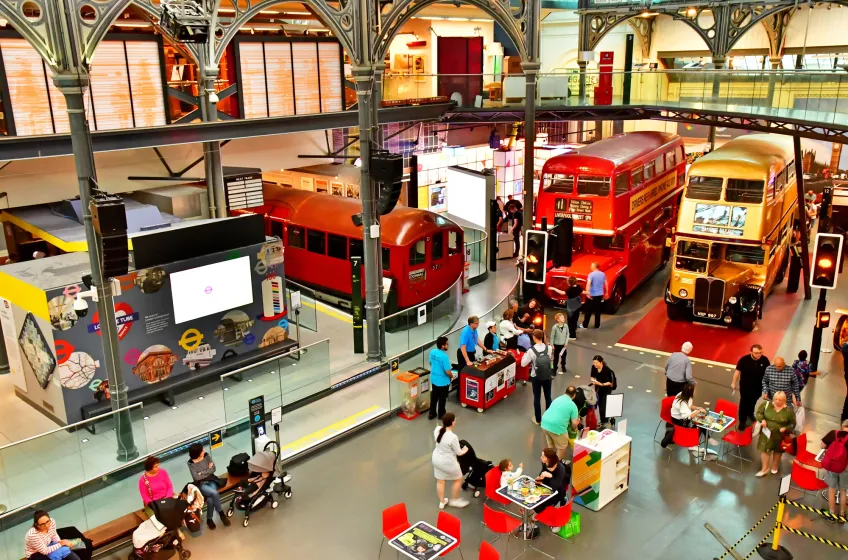
Visitors can trace the evolution of the capital’s buses, trains, trams, and taxis, with real historic vehicles on display, many of which can be entered or explored up close. Beyond the technical aspects, the museum highlights the human side of transport, examining the experiences of passengers, workers, and communities shaped by transport innovation. With its emphasis on design, safety, accessibility, and sustainability, the museum also explores how past solutions inform present challenges.
London Transport Museum Highlights
The Original 1863 Metropolitan Railway Carriage
One of the centrepieces of the museum is a restored wooden carriage from the original Metropolitan Railway—the world’s first underground railway, which opened in 1863. Built for first-class passengers, the carriage is a tangible link to the early days of the Tube and represents the ingenuity that helped transform urban travel in the 19th century.
Vintage Buses and Trams
The museum houses a wide selection of historic road vehicles, including double-decker buses, electric trams, horse-drawn omnibuses, and trolleybuses. Among the highlights is a 1920s London General Omnibus Company (LGOC) double-decker, showcasing the early development of the bus network. Visitors can board several of these vehicles to experience their interior layouts and design.
Tube Train Collection
From steam-powered early carriages to modern aluminium stock, the museum displays a range of Underground trains that illustrate the evolution of engineering, safety, and passenger comfort. A 1938 Stock train—famed for its sleek Art Deco-inspired design—is among the most popular with visitors. Interactive exhibits explain the challenges of building and maintaining an underground rail network.
Design and Poster Gallery
The London Transport Museum holds one of the most important collections of 20th-century graphic design in the UK. This includes advertising posters by celebrated artists such as Edward McKnight Kauffer, Dora Batty, and Abram Games. The gallery explores the distinctive visual identity of London Transport, including its typefaces, map designs, and promotional campaigns.
Harry Beck’s Tube Map
A key exhibit is the original 1931 diagram of the London Underground by Harry Beck, whose innovative, circuit-style layout became a blueprint for transport maps worldwide. The museum charts the development of Beck’s design and the logic behind his abstraction of geographical space to prioritise clarity and usability.
Interactive Displays for Children
Designed with families in mind, the museum features numerous hands-on exhibits that allow children to play, climb, and explore transport themes through role play and interactivity. The All Aboard play zone is a dedicated space for younger visitors aged 0–7, with child-sized buses, trains, and uniforms, as well as a pretend repair workshop and ticket office.
World War and Transport
Dedicated sections explore the impact of the First and Second World Wars on London’s transport systems, with exhibits covering the role of women in the workforce, the Blitz, and wartime evacuation. Personal stories, archival footage, and period posters help illustrate how London Transport adapted during times of crisis.
The Future of London Transport
The museum also looks ahead with exhibits about sustainable transport, accessibility improvements, and the changing face of commuting. Case studies on projects like Crossrail (the Elizabeth Line), cycling infrastructure, and electric buses provide insight into how London is planning for future mobility challenges.
Facilities
The museum offers a full range of amenities to support visitors, including a café on the mezzanine level that serves sandwiches, cakes, and hot and cold drinks. There is also a well-stocked gift shop featuring transport-themed merchandise, books, prints, and souvenirs, many inspired by the museum’s poster and design collections.
The building is fully accessible, with lifts to all floors and step-free entry via the main entrance on Covent Garden Piazza. Accessible toilets and baby changing facilities are provided, and assistance dogs are welcome throughout the site. The museum offers sensory backpacks and visual guides for visitors with autism or sensory sensitivities.
For families, the museum runs regular storytelling sessions, creative workshops, and holiday activities. There are lockers and cloakroom facilities available, although space for large bags may be limited. Free Wi-Fi is provided throughout the building.
Educational visits and group bookings are accommodated with pre-arranged tours and workshops, and the museum also hosts talks and evening events, including after-hours access and specialist lectures on transport history and design.
Nearby Attractions
The London Transport Museum is centrally located in Covent Garden, an area known for its vibrant atmosphere, street performances, restaurants, and shopping. Directly outside the museum is the Covent Garden Market, a historic covered market offering artisan goods, boutiques, and food stalls.
A short walk from the museum brings visitors to the Royal Opera House, home to the Royal Ballet and Royal Opera. The building is partially open to the public during the day and offers guided tours, exhibitions, and a rooftop restaurant.
Also nearby is the National Gallery in Trafalgar Square, housing a major collection of European paintings from the 13th to the 20th century. The British Museum in Bloomsbury is about a 15-minute walk and offers a broader historical perspective with artefacts from around the world.
For those interested in theatre, London’s West End surrounds Covent Garden, with a wide selection of shows and performances taking place daily. Families might also enjoy a visit to SEA LIFE London Aquarium, Shrek’s Adventure! London, or the London Eye, all within walking distance along the South Bank.
Practical Advice
The London Transport Museum is open daily, typically from 10:00 to 18:00, with last entry around 17:00. Unlike many of London’s public museums, it charges an entry fee, although children under 18 enter for free. Adult tickets are generally valid for unlimited visits over a 12-month period if registered online.
Tickets can be purchased in advance through the museum’s website, and booking ahead is recommended during school holidays and weekends. The museum is located on the south side of Covent Garden Piazza, with the entrance on the corner of Wellington Street and Tavistock Street.
The closest Underground station is Covent Garden (Piccadilly Line), although due to the lift-only access, some visitors prefer Leicester Square or Holborn stations, which are within a 10-minute walk and offer escalator access. Numerous bus routes serve the area, and it is easily reached on foot from nearby attractions.
Allow around two hours for a standard visit, though families with young children may wish to spend longer in the interactive play areas. The museum is particularly popular during rainy weather, school holidays, and weekends, so quieter visits can usually be enjoyed on weekday mornings.
Photography for personal use is allowed throughout most of the museum, although tripods and professional equipment require permission. Visitors interested in research or access to the museum’s archives should contact the London Transport Museum’s library and collections centre in Acton, which is open by appointment.
The museum is a suitable destination for solo travellers, couples, families, and school groups alike. Its blend of history, design, and interactivity offers something for a wide range of interests and age groups, making it a worthwhile stop on any central London itinerary.
Shortlist
- Your Shortlist is empty