
Discover Kew Gardens | A Visitor's Introduction to Kew Gardens
The Royal Botanic Gardens, Kew—commonly known as Kew Gardens—is a renowned botanical garden located in southwest London. Spread over 300 acres in the borough of Richmond upon Thames, Kew Gardens houses one of the most diverse collections of living plants in the world. Established in 1759 and designated a UNESCO World Heritage Site in 2003, the gardens combine historic buildings, formal gardens, woodland areas, greenhouses, and scientific institutions. Operated by the Royal Botanic Gardens, Kew, the site serves both as a major visitor attraction and a leading global centre for botanical research and conservation.
Kew Gardens welcomes over two million visitors annually and appeals to a wide audience, including horticultural enthusiasts, families, students, researchers, and tourists. With an extensive calendar of exhibitions, seasonal displays, and educational activities, the gardens provide a rich and varied experience throughout the year.
Kew Gardens current opening times and tickets
Recommended Kew Gardens Accommodation: Hotels
Why Are Kew Gardens Worth a Visit?
Kew Gardens are worth visiting for their unique combination of horticultural excellence, architectural interest, and environmental importance. The attraction offers an exceptional opportunity to explore plant life from across the globe, all within a carefully curated and accessible landscape. The scale and quality of the collections—both living and preserved—are unparalleled in the UK and rival botanical institutions internationally.
The site also plays a significant role in global plant science and biodiversity research. Visitors can witness the interplay between conservation and education, understanding how Kew’s work supports endangered species and promotes sustainable practices worldwide. In addition, the gardens provide a peaceful, expansive green space within London, offering a welcome contrast to the pace of urban life.
Kew Gardens Highlights
The Palm House
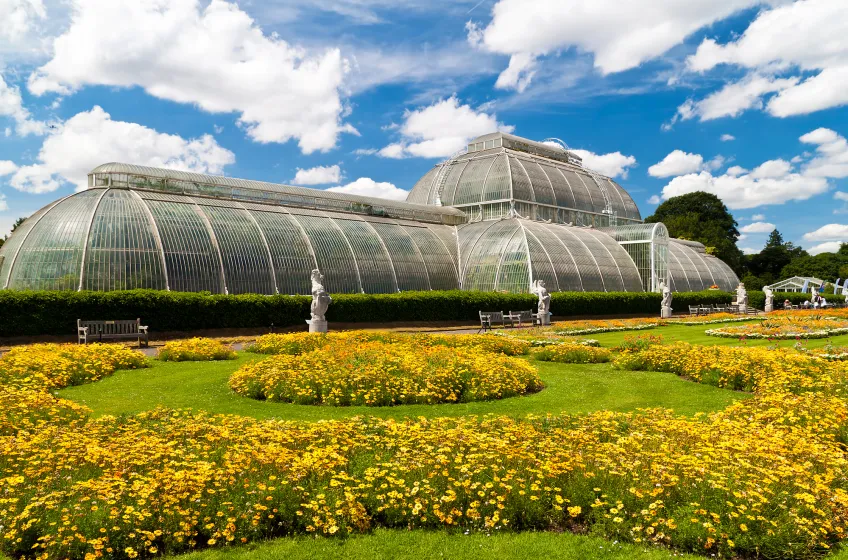
The Palm House is one of Kew Gardens’ most iconic structures, completed in 1848. This Victorian glasshouse, with its elegant wrought-iron frame and high curved roof, houses a collection of tropical plants from Africa, the Americas, Asia, and the Pacific. The humid interior recreates rainforest conditions and contains towering palms, rare cycads, and economically significant plants like bananas and cocoa.
The Temperate House
Reopened in 2018 after a major restoration, the Temperate House is the world’s largest surviving Victorian glasshouse. It shelters an extensive collection of temperate-zone plants from Africa, Australia, New Zealand, the Americas, and Asia. The structure itself is a remarkable piece of architecture, and the interior planting showcases endangered species and biodiverse habitats under threat.
The Princess of Wales Conservatory
This modern glasshouse, named after Princess Augusta—mother of King George III and founder of the original botanic garden—was opened in 1987. It contains ten different climate zones, including arid deserts and tropical rainforests, housing succulents, orchids, carnivorous plants, and other species requiring specific environmental conditions. Interactive displays and informative signage help interpret the adaptations of these plants.
The Great Pagoda
Originally completed in 1762, the Great Pagoda stands at 50 metres tall and offers panoramic views over the gardens and surrounding London. The structure, recently restored to include the original decorative dragons on each level, is open to the public during certain times of year. A climb to the top provides historical context and a rewarding visual overview of Kew's landscape.
The Arboretum
The expansive arboretum covers two-thirds of Kew Gardens and includes over 14,000 trees, representing more than 2,000 species. Highlights include ancient and rare specimens such as the Turner’s oak and the Japanese pagoda tree. The diversity of the arboretum allows for seasonal interest, from spring blossom to autumn colour.
The Treetop Walkway
This steel walkway, 18 metres above ground and stretching 200 metres, offers a different perspective on the arboretum. Visitors walk among the canopy of mature oaks, sweet chestnuts, and limes while learning about forest ecology and the role of treetops in supporting biodiversity.
Kew Palace
Kew Palace is the smallest of the royal palaces and a former residence of King George III. It provides insight into Georgian royal life and is open to visitors during the summer months. The palace includes restored rooms, historic kitchens, and the Royal Kitchens exhibition, giving a glimpse into 18th-century domestic life.
The Waterlily House
This compact but striking glasshouse near the Palm House features aquatic plants from tropical regions. The centrepiece is the giant Amazon waterlily (Victoria amazonica), whose floating leaves can reach over a metre in diameter. Surrounding the pond are other exotic species such as lotus and papyrus.
The Davies Alpine House
Built in 2006, this energy-efficient glasshouse is designed to mimic the cool, dry conditions of high-altitude environments. It displays alpine plants from around the world, many of which are adapted to extreme climates and brief growing seasons. The surrounding rock garden complements the interior planting.
The Japanese Landscape
Kew’s Japanese Landscape consists of three areas: the Garden of Peace, the Garden of Activity, and the Garden of Harmony. These areas feature traditional elements such as raked gravel, stone lanterns, and Japanese maples. The nearby Chokushi-Mon, a replica of a gateway from Kyoto, adds cultural depth and architectural interest.
The Marianne North Gallery
This Victorian gallery is dedicated to the botanical art of Marianne North, who travelled the world in the 19th century documenting plant species through detailed paintings. The gallery contains over 800 works, arranged by region, and offers a rare combination of scientific record and artistic expression.
The Shirley Sherwood Gallery of Botanical Art
This is the first gallery in the world dedicated solely to botanical art. It hosts rotating exhibitions of works by contemporary and historic artists, combining aesthetics with scientific accuracy. The gallery often features themes related to plant conservation and global biodiversity.
The Herbarium and the Library
Though not generally open to the public, these research facilities support Kew’s scientific work. The herbarium holds over seven million preserved plant specimens, and the library contains rare books and botanical illustrations. Guided tours or special events occasionally provide access to these collections.
Facilities
Kew Gardens is well equipped to accommodate visitors of all ages and needs. There are several cafés and restaurants offering meals, snacks, and drinks, including the Pavilion Bar and Grill, Victoria Plaza Café, and Orangery Restaurant. Picnic areas are also available. Toilets, baby-changing facilities, and water fountains are located throughout the site.
Accessibility is a priority at Kew, with level paths, ramps, and lifts in place across the gardens. Mobility scooters and manual wheelchairs are available for hire, and many buildings are fully accessible. Guided tours and self-guided trails are offered, and interpretation boards provide clear information in multiple languages.
The on-site shops sell a wide range of books, seeds, gardening tools, and gifts. Educational workshops, seasonal family activities, and school group programmes take place regularly, supported by dedicated visitor centres.
Nearby Attractions
Kew Gardens is located within a culturally rich area of southwest London, making it easy to combine a visit with other attractions. Immediately adjacent to the gardens is the village of Kew, known for its independent shops, riverside pubs, and Georgian architecture. The National Archives, home to over 1,000 years of British history, is within walking distance and offers free admission.
Richmond Park, one of London’s largest Royal Parks, is a short journey away and provides opportunities for wildlife spotting, particularly its resident deer. The nearby Syon Park features landscaped gardens and a stately home belonging to the Duke of Northumberland. Also within reach is Chiswick House and Gardens, a fine example of neo-Palladian architecture surrounded by landscaped grounds.
For those interested in exploring the River Thames, riverboat services operate between Kew Pier and central London, stopping at locations such as Richmond, Hampton Court, and Westminster.
Practical Advice for Visitors
Kew Gardens is open year-round, although opening hours vary by season. It is advisable to check the official website before visiting for up-to-date times, ticket prices, and event listings. Tickets can be purchased in advance online to avoid queues and may include optional donation.
The gardens are accessible by public transport, with Kew Gardens station (served by the London Overground and District Line) only a few minutes’ walk from the entrance. There is limited on-site parking and no coach parking, so public transport is generally recommended. Cyclists can use the bike racks near the entrances.
Weather-appropriate clothing and comfortable footwear are recommended, as much of the site is outdoors and involves walking. Visitors should allow at least half a day to explore the gardens, although a full day is preferable for those wishing to see multiple areas in depth.
Food and drink are available on-site, but visitors are welcome to bring their own. Dogs are not permitted in the gardens, with the exception of assistance dogs. Some attractions within Kew, such as the Great Pagoda and Kew Palace, may have separate entry charges or seasonal opening times.
Conclusion
Kew Gardens stands as a unique destination that combines botanical heritage, scientific research, and public engagement in one of London’s most scenic settings. Whether viewed as a horticultural landmark, a peaceful escape, or an educational resource, Kew offers a multifaceted experience that appeals to a broad spectrum of visitors. Its rich collections, architectural features, and commitment to biodiversity make it not just a place of beauty but of global importance.
Shortlist
- Your Shortlist is empty