
Discover Llanrwst | A Visitor's Introduction to Llanrwst
Llanrwst is a charming market town set in the lush Conwy Valley of North Wales, just a few miles from the boundary of Snowdonia National Park. With its iconic stone bridge, centuries-old buildings, riverside setting, and deep Welsh roots, Llanrwst is a scenic and culturally rich destination that offers a quieter, more authentic alternative to nearby tourist hubs. Whether you're passing through or using it as a base for exploring Snowdonia, Llanrwst promises warm hospitality, history, and easy access to both mountain and valley landscapes.
Recommended Llanrwst Accommodation: Hotels Bed & Breakfasts
Why is Llanrwst Worth a Visit?
Llanrwst is worth visiting for its rich heritage, riverside beauty, and strong connection to Welsh culture. It’s a town where Welsh is still widely spoken, local businesses thrive, and the pace of life feels refreshingly unhurried. The surrounding landscape is truly picturesque — green hills, tumbling rivers, and ancient woodland stretch in every direction — and the town itself is steeped in medieval, Tudor, and Victorian history.
While less busy than nearby Betws-y-Coed, Llanrwst has plenty to offer in its own right: historic buildings, cosy cafés, independent shops, and access to spectacular walks. It also boasts one of the most photographed tea rooms in Wales and an impressive 17th-century bridge that has become a symbol of the town.
For those seeking a relaxed but culturally rich stay with easy access to Snowdonia’s great outdoors, Llanrwst is a hidden gem waiting to be explored.
Llanrwst Highlights: Things to See and Do in Llanrwst
Pont Fawr (Llanrwst Bridge)
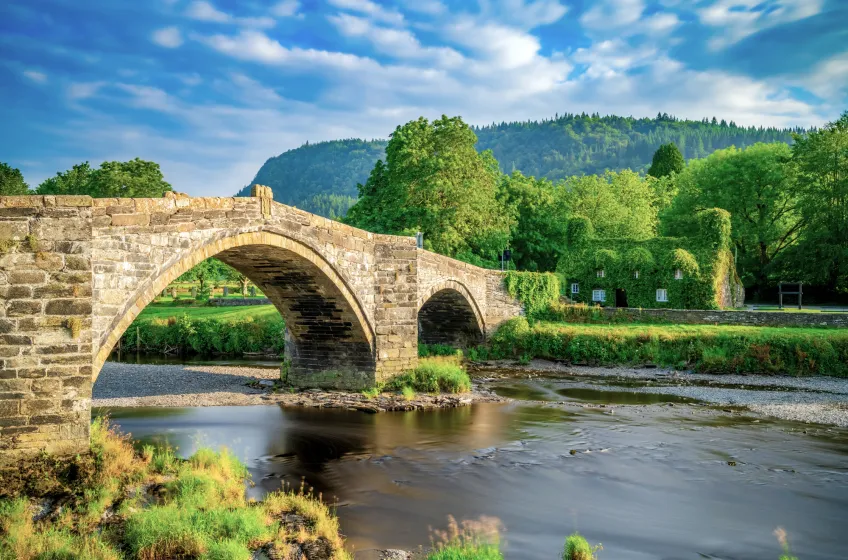
Arguably the most iconic feature of Llanrwst, Pont Fawr is a beautiful three-arched stone bridge built in the 1630s by Sir John Wynn of Gwydir. It spans the River Conwy and connects the town to the historic tea room and Gwydir estate.
Moss and ivy cling to the old stones, giving it a fairytale look, especially when the river reflects the arches. It's a favourite spot for photographers and a must-see when visiting the town.
Tu Hwnt i’r Bont Tearoom
Just over Pont Fawr sits Tu Hwnt i’r Bont, a 15th-century stone cottage that now houses one of Wales’ most picturesque tea rooms. Draped in Virginia creeper that turns brilliant red in autumn, the building is a favourite on Instagram and postcards alike.
Inside, you’ll find traditional Welsh cakes, scones, teas, and hearty lunches served in a homely setting. Whether you’re looking for a full afternoon tea or just a cup and a view, this place is a delight.
Gwydir Castle
A short walk from the town centre lies Gwydir Castle, a 16th-century fortified manor house and former seat of the powerful Wynn family. Lovingly restored, the castle is full of period furnishings, carved panelling, and historical intrigue.
It’s said to be one of the most haunted houses in Wales, but ghost stories aside, its walled gardens and riverside grounds make it a serene and fascinating place to visit. Open seasonally, with guided tours and a real sense of history.
St Grwst’s Church and Gwydir Chapel
In the centre of town, St Grwst’s Church is a peaceful and atmospheric spot with over 500 years of history. The Gwydir Chapel, added in 1633, contains the ornate stone sarcophagus of Sir John Wynn and impressive stained glass.
A major restoration has brought the building to life as a community venue as well as a place of worship, and it's well worth stepping inside to admire the woodwork and craftsmanship.
Llanrwst Almshouses
Built in 1610 by Sir John Wynn, the Llanrwst Almshouses provided shelter for the poor and elderly of the parish. Today, they are beautifully preserved and open to visitors as part of a local heritage project.
The building offers a glimpse into the town’s social history and early forms of welfare, all within a traditional timber-framed building typical of the area.
Gwydir Forest Walks
Llanrwst is a great base for exploring Gwydir Forest, which lies just west of the town and stretches into the foothills of Snowdonia. The forest is criss-crossed with walking trails, cycle routes, and former mining tracks.
You can explore abandoned mine buildings, peaceful lakes like Llyn Parc and Llyn Elsi, and enjoy views of Moel Siabod and the Conwy Valley. Trails range from gentle riverside strolls to more challenging woodland hikes.
River Conwy and Waterside Walks
The River Conwy meanders through the town and provides a beautiful backdrop for walking and wildlife watching. There are paths leading north and south along the riverbanks, ideal for a quiet stroll or a picnic.
Anglers will also appreciate the opportunity to fish in the river (with permits), which is known for salmon and trout.
Visit Betws-y-Coed
Just a ten-minute drive or short train journey from Llanrwst, Betws-y-Coed is the gateway to Snowdonia and offers further shopping, dining, and outdoor gear options. You can also catch the scenic Conwy Valley Railway between the two towns.
Many visitors stay in Llanrwst for a quieter, less commercial experience and head into Betws-y-Coed for day trips, walks, or a change of pace.
Explore Local Markets and Events
Llanrwst has a long tradition as a market town, and its local markets and fairs are still an important part of village life. The Llanrwst Farmers Market is held monthly and showcases local produce, crafts, and home-baking.
Check notice boards and community websites for live music, Welsh-language events, and seasonal festivals that give a flavour of life in the town.
Practical Advice for Visitors
Getting There
Llanrwst is located on the A470, the main road that runs north to south through the Conwy Valley, connecting it easily with Llandudno, Conwy, and Betws-y-Coed. From the A55 coastal road, it’s a 30-minute drive inland from Junction 19.
The town has two train stations: Llanrwst (closer to the centre) and North Llanrwst, both served by the Conwy Valley Line, which links to Llandudno Junction and mainline services from Manchester and London.
Regular buses also serve the town from Betws-y-Coed, Conwy, and other valley towns.
Parking
There are several small car parks around the town, including near the bridge, the church, and the town square. Parking is generally inexpensive, and you’ll often find free spaces on quieter weekdays. Summer weekends and events may require an early arrival for the best spots.
Walking around Llanrwst is easy, as most attractions are within a 10–15 minute stroll.
Dining
For a small town, Llanrwst punches well above its weight in terms of food. In addition to Tu Hwnt i’r Bont, there are several pubs and restaurants worth trying:
-
The Eagles Hotel – a traditional coaching inn with good pub meals and a warm atmosphere.
-
Llew Glas Deli – a café and deli offering breakfasts, lunches, and local produce to take away.
-
Y Berllan Tea Room – another lovely spot for tea and light bites in a charming setting.
In nearby Betws-y-Coed, you’ll find more choices, including fine dining, pizza, Indian, and vegetarian options.
Shopping
Llanrwst has a number of small independent shops, including a butcher, bakery, bookshop, and craft stores. You’ll also find local artisan products, from Welsh honey to handmade pottery.
For gifts and souvenirs, check out Siop Sioned for crafts and Cae Du Designs for locally inspired artwork.
If you're staying in self-catering accommodation, there are convenience stores and a Co-op supermarket in town for all essentials.
When to Visit
Llanrwst is lovely year-round. Spring brings blossoms and mild weather ideal for walking. Summer is the busiest season, but still relatively peaceful compared to bigger tourist centres. Autumn is particularly beautiful, as the Virginia creeper on Tu Hwnt i’r Bont turns bright red and the woodlands glow with colour.
Winter is quiet and atmospheric, with crisp air, riverside mists, and the occasional dusting of snow on the hills. Some attractions may have reduced hours, but cosy pubs and indoor sites like Gwydir Castle remain a draw.
Local Events
-
Llanrwst Eisteddfodau – the town has a proud tradition of Welsh cultural festivals and has hosted the National Eisteddfod, the most significant cultural event in Wales.
-
Llanrwst Agricultural Show – a local country show held each August, celebrating rural life with livestock displays, food stalls, and crafts.
-
Christmas Market – featuring local produce, crafts, and seasonal cheer in the heart of the town.
Local choirs, music evenings, and Welsh-language theatre productions are also frequently held – keep an eye out for posters or ask in local shops and cafés.
Exploring Beyond Llanrwst
Llanrwst makes a perfect base for exploring the wider Conwy Valley and Snowdonia. Within a short drive you can visit:
-
Bodnant Garden – a stunning National Trust garden (15 minutes north).
-
Conwy – a walled medieval town with a castle and harbour (30 minutes).
-
Snowdon (Yr Wyddfa) – summit routes begin from Pen-y-Pass, about 40 minutes away.
-
Llyn Crafnant and Llyn Geirionydd – peaceful lakes in the hills above the valley, ideal for picnics and gentle watersports.
Llanrwst may not shout for attention like some of Snowdonia’s better-known towns, but that’s part of its charm. It’s a place of stories, stone, and river, where Welsh culture thrives and the scenery soothes. Whether you’re crossing the famous bridge, sipping tea under ivy-covered walls, or wandering through ancient woodland, Llanrwst invites you to slow down, explore gently, and savour the quieter side of North Wales.
Shortlist
- Your Shortlist is empty