
Discover Le Tréport | A Visitor's Introduction to Le Tréport
Le Tréport is a lively seaside town on the Alabaster Coast in Normandy, France, known for its soaring white cliffs, working fishing port, and nostalgic charm. Located near the border of Normandy and Hauts-de-France, it’s part of the so-called "Three Sisters" trio, along with neighbouring Mers-les-Bains and Eu. With its dramatic coastal setting, Belle Époque architecture, and authentic maritime atmosphere, Le Tréport offers a quintessential French seaside escape that balances natural beauty, local heritage, and relaxed holiday fun.
Recommended Le Tréport Accommodation: Hotels Bed & Breakfasts
Why is Le Tréport Worth a Visit?
Le Tréport is worth visiting for its spectacular natural setting, historic funicular railway, and timeless feel. Towering chalk cliffs, a bustling harbour, and a pebble beach create a striking backdrop, while the town’s vibrant fishing culture and Belle Époque villas tell of its 19th-century heyday as a fashionable resort.
Unlike glitzy tourist hotspots, Le Tréport retains an unpolished, authentic charm. You can watch fishermen haul in their daily catch, wander cliff-top trails, or indulge in freshly cooked seafood on the quayside. It’s a family-friendly, wallet-friendly destination that feels welcoming and lived-in—ideal for those seeking sea air, cultural curiosity, and scenic beauty in equal measure.
Le Tréport Highlights: Things to See and Do in Le Tréport
The Funicular and Cliff Views
Le Tréport’s most famous attraction is its free funicular railway, which links the beach and town centre to the cliff-top neighbourhood above. The ride takes you through a tunnel inside the cliff and emerges with panoramic views of the Channel, port, and town rooftops. At the top, viewing platforms and walking trails lead to stunning lookouts along the chalk cliffs.
The Fishing Port and Quayside
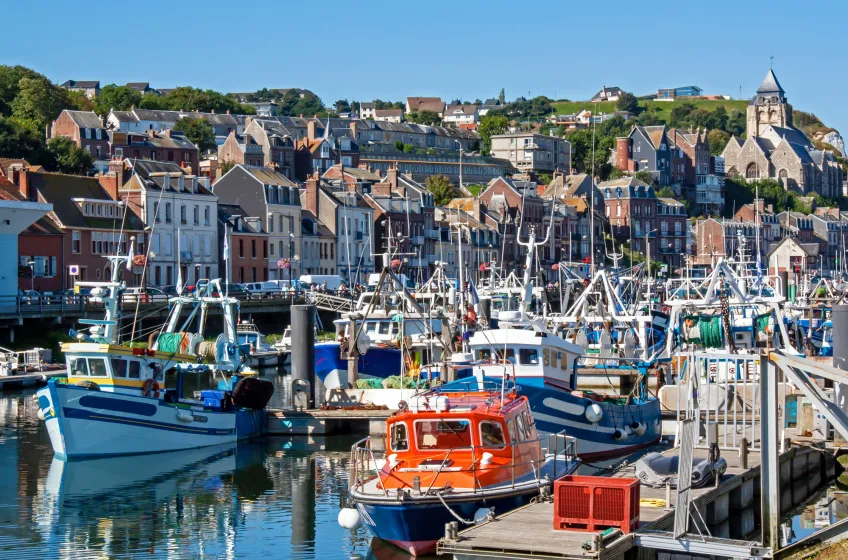
Le Tréport is a working fishing town, and the harbour is always full of life. You can stroll along the quays and watch the colourful boats come and go or chat with local fishmongers selling the day's catch straight from the stalls. The quayside also hosts seafood restaurants and open-air cafés where you can enjoy moules-frites, grilled fish, or a classic plateau de fruits de mer.
The Beach and Promenade
The pebble beach stretches along the foot of the cliffs, backed by a wide promenade perfect for walking, cycling, or relaxing with a view. During summer, beach huts dot the shoreline, and families enjoy picnics or rides on the seafront carousel. The water can be brisk, but swimming is popular in warm weather, and the beach is great for rock pooling or sunbathing.
Casino de Le Tréport
A reminder of the town’s Belle Époque past, the casino adds a touch of old-school glamour. Set near the seafront, it includes slot machines, gaming tables, and occasional entertainment. Even if you don’t gamble, the building’s façade and setting are worth a look.
Saint-Jacques Church
Dating back to the 14th century, this Gothic-style church survived wars and storms and still serves as a local landmark. Its stained glass windows, stone columns, and peaceful interior offer a quiet retreat from the seaside buzz. It also reflects the town’s religious and architectural history.
Museum of Old Le Tréport (Musée du Vieux Tréport)
Located in the old Cordiers’ Quarter, this small local museum presents life in Le Tréport through photographs, models, and maritime artefacts. It’s a charming place to learn about the town’s fishing traditions, wartime experiences, and development as a seaside resort.
Lighthouse and Jetty Walk
The green-and-white lighthouse marks the end of a long pier that stretches out into the sea. Walking along the jetty offers great views back toward the town and cliffs. It’s especially atmospheric at sunset or when the sea is choppy, and waves crash against the rocks.
Markets and Local Specialities
Le Tréport’s regular markets (held on Tuesday and Saturday mornings) bring local farmers, bakers, and fishmongers to the town square. It’s the best place to pick up Norman cheeses, apple cider, pastries, and handmade goods. Don’t miss teurgoule (a local spiced rice pudding) or fresh scallops in season.
Practical Advice for Visitors
Getting There
Le Tréport is about 2.5 hours from Paris by car, via the A16 motorway. There is also a train service from Paris to Le Tréport-Mers station, changing at Beauvais or Abancourt. The station is centrally located, just a short walk from the harbour and beach. The town is very walkable, and bikes are a great way to explore.
Parking
Free and paid parking is available in town, with large car parks near the beach, funicular, and casino. Parking can be busy during summer weekends and holidays, so it’s wise to arrive early or use the cliff-top car parks and descend via the funicular.
Dining
Le Tréport is a paradise for seafood lovers. Head to Le Saint-Louis or Le Homard Bleu for elegant harbour-side dining, or try more casual spots like Les Mouettes or Le P’tit Bouchon for generous portions and great views. Look out for daily specials on fresh sole, mussels, herring, and scallops. For dessert, visit a local pâtisserie for tarte aux pommes or crêpes flambées.
Shopping
The town offers a mix of seaside souvenir shops, fishmongers, and independent boutiques. You’ll find locally made items like pottery, sea salt, cider, and liqueurs, as well as nautical-themed décor and gifts. The covered market near the church is a good place to browse regional products.
When to Visit
Le Tréport is at its best between May and September, when the weather is mild and most attractions are in full swing. July and August are the busiest months, with open-air concerts, night markets, and beach activities. Spring and autumn offer cooler temperatures and fewer crowds, perfect for walkers and photographers. The cliffs are beautiful in all seasons, even when stormy skies add drama to the views.
Local Events
Le Tréport hosts several seasonal festivals, including:
-
Fête de la Mer (Sea Festival): A summer event with boat blessings, music, and seafood feasts.
-
Herring and Scallop Festival (Fête du Hareng et de la Coquille): Held in November, celebrating local seafood with tastings and entertainment.
-
Summer concerts and outdoor cinema along the beach or at the funicular terrace.
Exploring Beyond Le Tréport
Le Tréport is part of a trio of towns known as the Three Sister Towns. Just across the river is Mers-les-Bains, with its colourful Belle Époque villas and seaside charm. Inland, Eu boasts a beautiful château, Gothic church, and rich royal history. The trio is easily explored on foot or bike.
Further afield, the Alabaster Coast stretches west with more cliffside wonders at Veules-les-Roses, Saint-Valery-en-Caux, and Étretat. Inland, the Pays de Bray offers rolling countryside, apple orchards, and pretty villages like Gerberoy and Neufchâtel-en-Bray.
Shortlist
- Your Shortlist is empty