
Discover Le Havre | A Visitor's Introduction to Le Havre
Le Havre is a vibrant port city on the Normandy coast of northern France, situated where the River Seine meets the English Channel. Known for its unique post-war architecture, UNESCO World Heritage status, and strong artistic and maritime heritage, Le Havre offers a surprising blend of modernism, history, and seaside charm. Once heavily bombed during World War II, the city rose from the rubble under the vision of architect Auguste Perret, whose innovative reconstruction gave Le Havre its distinctive and now-celebrated look.
Recommended Le Havre Accommodation: Hotels Bed & Breakfasts
Why is Le Havre Worth a Visit?
Le Havre is worth visiting for its one-of-a-kind architectural identity and cultural depth. Rebuilt almost entirely in concrete by Perret and his team, the city stands as a bold and beautiful example of post-war urban planning. Far from grey or dull, Le Havre’s wide boulevards, geometric façades, and light-filled apartments are now recognised by UNESCO as a modernist masterpiece.
But Le Havre is not just about concrete and geometry. It has a thriving arts scene, fantastic museums, and a dynamic waterfront. With a long beach, laid-back seaside vibe, and easy access to coastal highlights like Étretat and Honfleur, the city is full of energy and contrasts. From its role as an industrial port to its blossoming status as a cultural hotspot, Le Havre is one of France’s most intriguing and underrated destinations.
Le Havre Highlights: Things to See and Do in Le Havre
The City Centre and UNESCO Architecture
The heart of Le Havre, redesigned by Auguste Perret after World War II, is a fascinating place to explore. Wide, open streets, modular buildings, and innovative use of concrete create a unique urban landscape. The Place de l’Hôtel de Ville (Town Hall Square) and the surrounding grid of streets give a sense of the city's architectural philosophy—light, function, and symmetry. Don’t miss Rue de Paris for a good walk through the city's core.
Saint-Joseph Church
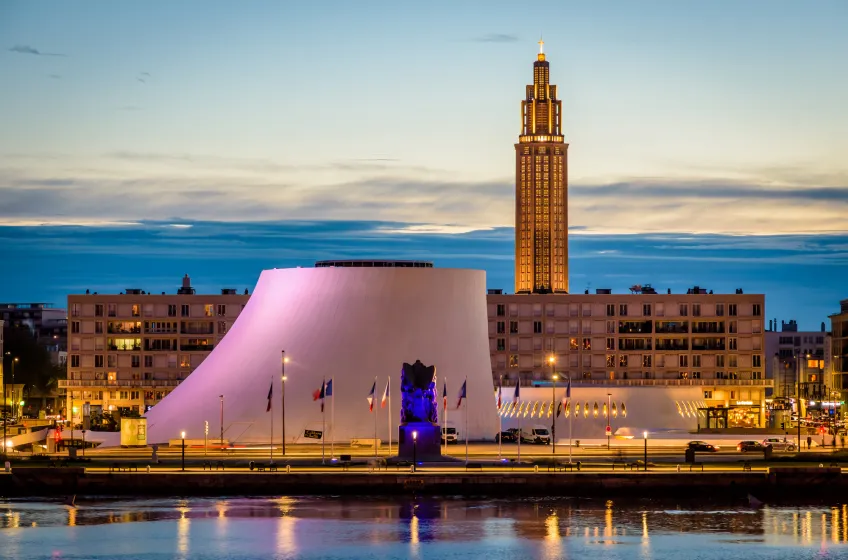
Perhaps Le Havre’s most iconic building, Saint-Joseph Church is a towering 107-metre structure built entirely of reinforced concrete. Its lighthouse-like tower is filled with multicoloured stained glass, which bathes the interior in an ever-shifting palette of light. It’s both a place of worship and a monumental work of modern architecture—sublime and spiritual.
MuMa (Musée d’art moderne André Malraux)
Le Havre’s art museum is one of the best in France for Impressionist and post-Impressionist art. Overlooking the sea, MuMa houses works by Monet, Boudin, Dufy, Renoir, and Courbet, among others. Its light-filled modernist design perfectly complements the collection and offers fantastic views over the harbour.
Le Volcan
This cultural centre and theatre complex, designed by Brazilian architect Oscar Niemeyer, adds another layer to Le Havre’s modernist identity. Known locally as "the volcano" due to its white, curved form, it houses a media library and concert hall. Even if you're not catching a show, it’s worth a look for its striking design and public square.
Le Havre Beach and Seafront Promenade
Just a short walk from the city centre, Le Havre’s long pebble beach is a local favourite. With beach huts, sailing schools, volleyball courts, and open-air cafés, it’s a great spot for relaxing or people-watching. In summer, the promenade comes alive with events and temporary art installations. The sunsets over the Channel are stunning, especially with a drink in hand from one of the beach bars.
Les Jardins Suspendus (Hanging Gardens)
Set within a 19th-century fort above the city, these botanical gardens offer a peaceful escape and panoramic views of Le Havre and the sea. Divided into sections representing different continents, the gardens are great for a leisurely stroll and include a greenhouse, aromatic herbs, and tropical plants. It’s a hidden gem for nature lovers and photographers.
The Shipping and Maritime Quarter
Le Havre is France’s second-largest port, and its working docks are an impressive sight. Head to the Quartier Saint-François, a historic area of narrow streets and seafood restaurants that survived the war. Nearby, the port area offers harbour cruises, giving a glimpse of container ships, ferries, and the sheer scale of maritime trade.
Maison de l'Armateur (Shipowner’s House)
Step back into 18th-century Le Havre with a visit to this beautifully preserved merchant’s house. It’s a fascinating contrast to the modern city and offers insight into life in the port during its heyday. The house features elegant wood panelling, period furnishings, and an impressive octagonal central staircase.
Bains des Docks
Designed by famed architect Jean Nouvel, this ultra-modern aquatic complex is a favourite with locals. It offers indoor and outdoor pools, saunas, Turkish baths, and family-friendly water play zones. It’s a great spot to relax after a day of sightseeing or to escape the occasional rainy day.
Local Street Art and Sculptures
Le Havre has embraced contemporary art, and you’ll find murals, sculptures, and installations dotted around the city. Keep an eye out for quirky statues along the waterfront and large-scale pieces during the summer’s Un Été au Havre art festival, when international artists transform the city into an open-air gallery.
Practical Advice for Visitors
Getting There
Le Havre is well connected by train, with regular services from Paris Saint-Lazare (around 2 hours). It’s also easily reached by car via the A13 motorway. Ferries from Portsmouth in the UK arrive at Le Havre’s port, making it a convenient entry point for British visitors. There’s a local bus and tram network, but the city centre is very walkable.
Parking
Street parking is available throughout the city, with several underground and open-air car parks near the town hall, beach, and shopping areas. Most offer affordable hourly or daily rates. During peak times or festivals, consider parking on the outskirts and walking or using public transport to avoid congestion.
Dining
Le Havre boasts a diverse and growing food scene. Fresh seafood is a highlight—don’t miss moules-frites (mussels and chips), local oysters, or grilled fish at one of the portside restaurants in Saint-François. Le Grignot and Jean-Luc Tartarin offer excellent dining, the latter holding a Michelin star. For casual eats, try one of the beach cafés or grab a crêpe from a street vendor.
Shopping
The city centre has a mix of high street and independent shops, particularly around Rue de Paris and Place de l’Hôtel de Ville. Markets offer regional products, cheeses, and seafood. For something unique, visit the creative shops and galleries in the Saint-Vincent district, where local artists and designers showcase their work.
When to Visit
The best time to visit Le Havre is from late spring to early autumn (May to September), when the weather is pleasant and outdoor activities are in full swing. July and August are especially lively with festivals and events. Autumn is quieter but still enjoyable, while winter is mild, with indoor attractions like MuMa and Saint-Joseph Church offering good options for cooler days.
Local Events
Un Été au Havre (A Summer in Le Havre) is the city’s flagship cultural event, running from June to September. It features outdoor art installations, concerts, theatre, and pop-up exhibitions. In October, the city celebrates its port history with maritime-themed events and a seafood festival. The Christmas market in December adds festive flair to the central square.
Exploring Beyond Le Havre
Le Havre is perfectly placed for exploring Normandy’s coastal gems. Étretat, with its famous cliffs, is just a 30-minute drive away. Honfleur, the charming harbour town with colourful quays and art galleries, is also close by—reached via the dramatic Pont de Normandie bridge. The Pays de Caux countryside and the Normandy beaches are within easy reach for day trips.
Shortlist
- Your Shortlist is empty