
Discover The Isle of Mull | A Visitor's Introduction to The Isle of Mull
The Isle of Mull, part of the Inner Hebrides off Scotland’s west coast, is a captivating island known for its wild beauty, colourful harbour towns, ancient castles, and extraordinary wildlife. As the second-largest island of the Inner Hebrides, Mull offers a perfect blend of dramatic landscapes, Gaelic culture, and relaxed island life. Whether you’re exploring Tobermory’s postcard-perfect waterfront or spotting sea eagles and otters in remote corners, Mull is a truly enchanting destination.
Recommended Isle of Mull Accommodation: Hotels Bed & Breakfasts
Why is the Isle of Mull Worth a Visit?
The Isle of Mull is worth visiting for its stunning variety of scenery, from moody moorlands and rugged mountains to quiet beaches and deep sea lochs. It’s one of the best places in the UK for wildlife watching, with golden eagles, puffins, dolphins, and even whales frequently spotted. Mull is also rich in history, home to ancient standing stones, medieval castles, and strong Gaelic traditions that remain woven into everyday island life.
The island is surprisingly accessible yet feels a world away from the mainland. With quiet roads, friendly locals, and a laid-back pace, Mull is perfect for road trips, coastal walks, and days spent exploring charming villages and hidden bays.
Isle of Mull Highlights: Things to See and Do on the Isle of Mull
Tobermory
Tobermory is Mull’s capital and most famous town, with its iconic row of brightly painted buildings curving around a sheltered harbour. It’s a delightful place to wander, with independent shops, seafood restaurants, a whisky distillery, and a friendly, artistic vibe. Look out for local crafts, sea safaris, and freshly landed fish and chips by the waterfront.
Duart Castle
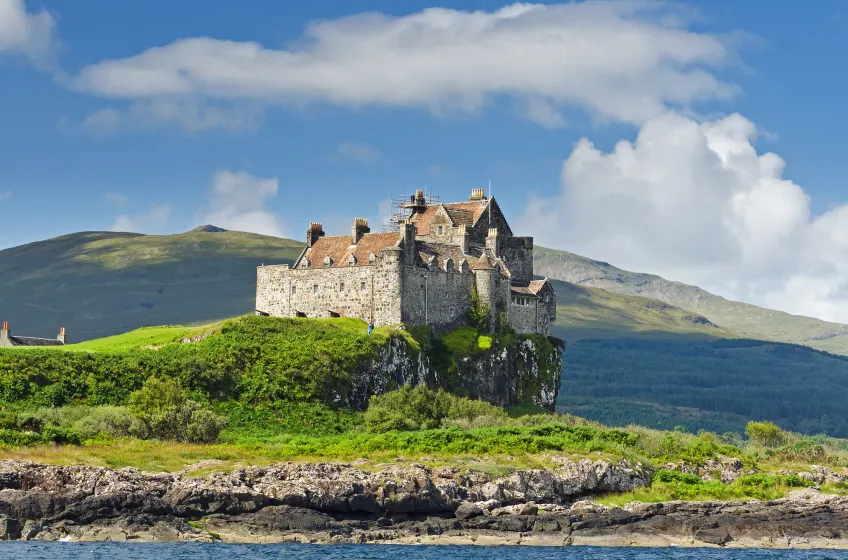
Perched on a rocky outcrop overlooking the Sound of Mull, Duart Castle is the ancestral seat of Clan Maclean. This 13th-century fortress has been beautifully restored and offers visitors a glimpse into clan history, period interiors, and panoramic views across the water. There’s also a café and gift shop on site.
Wildlife Watching
Mull is one of the UK’s top spots for wildlife. Join a guided tour to see white-tailed sea eagles, golden eagles, red deer, otters, seals, and more. Boat trips from Tobermory or Fionnphort offer the chance to see whales, basking sharks, and dolphins. Spring and summer are the best times to spot puffins on nearby islands.
Iona
Just off the southwestern tip of Mull, the Isle of Iona is a short ferry ride from Fionnphort and steeped in spiritual and historical significance. Iona Abbey, founded by St Columba in 563 AD, is one of the oldest Christian religious centres in Western Europe. The island’s tranquillity, white-sand beaches, and ancient graveyards make it a must-visit.
Calgary Bay
One of Mull’s best beaches, Calgary Bay is a sweeping curve of white sand with turquoise water and a backdrop of cliffs and machair grassland. It’s perfect for a picnic, swim, or simply soaking up the peaceful surroundings. There’s also a nearby café and art gallery.
Staffa and Fingal’s Cave
Staffa is a tiny uninhabited island known for its dramatic basalt columns and the incredible Fingal’s Cave, whose natural acoustics inspired Mendelssohn’s "Hebrides Overture." Boat trips from Mull take visitors to Staffa, often via the Treshnish Isles, which are home to large colonies of puffins in summer.
Salen and Dervaig
Salen is a central village with good facilities and a tranquil setting by the loch. It’s a great base for exploring the island, with access to forest walks and scenic viewpoints. Dervaig, further west, is a smaller village known for its whitewashed cottages, ancient chapel ruins, and proximity to Loch Tuath and the coast.
Loch na Keal and Ben More
Ben More is Mull’s only Munro (a Scottish mountain over 3,000 feet) and offers a rewarding challenge for walkers. The climb offers spectacular views across the island and nearby sea lochs. Loch na Keal, at the base of the mountain, is a serene and picturesque loch that often delivers stunning reflections and wildlife sightings.
Practical Advice for Visitors
Getting There
The most common route to Mull is by ferry from Oban to Craignure, with several sailings daily. There are also smaller ferry services from Lochaline and Kilchoan. Oban is well connected by train and road to Glasgow and Edinburgh. Booking your ferry in advance is recommended, especially in summer.
Getting Around
Having your own car is the easiest way to explore Mull, as public transport is limited and best suited for getting between major villages. The roads are mostly single-track with passing places, so drive cautiously. Bike hire is available in Tobermory and Salen, and local taxis and tours can be arranged for those without a car.
Accommodation
Mull offers a wide range of accommodation, from cosy B&Bs and remote cottages to eco-lodges, campsites, and hotels. Tobermory is a popular base with the most facilities, but rural spots like Fionnphort, Salen, and Dervaig offer peaceful alternatives and great access to nature.
Dining
Seafood is a highlight, with fresh langoustines, scallops, mussels, and crab regularly on menus. Try The Mishnish or Café Fish in Tobermory for a memorable meal. Many cafés and pubs across the island serve hearty local fare, while farm shops and roadside stalls sell fresh produce, venison, and homemade baking.
Shopping
Look out for local crafts, pottery, artwork, and island-made skincare products in shops and galleries, particularly in Tobermory. Mull’s own Tobermory Whisky is a great souvenir, and other local treats include preserves, chocolate, and smoked fish.
When to Visit
May to September is the best time to visit for wildlife, good weather, and open attractions. July and August are busiest, so book accommodation and ferries well in advance. Spring and autumn are quieter but still beautiful, with wildflowers or autumn colours and plenty of wildlife activity. Winter brings peace and solitude, though many businesses close for the season.
Local Events
-
Mull Music Festival (April): A weekend of traditional music across pubs and venues in Tobermory.
-
Mull Highland Games (July): A celebration of Scottish sport and culture held in Tobermory.
-
West Over Sea Book Festival (varies): A literary event exploring Scotland’s literary and Gaelic traditions.
Exploring Beyond Mull
Mull makes a perfect hub for exploring the wider Hebrides. Take the short ferry to Iona for spirituality and serenity, or join a boat trip to the Treshnish Isles and Staffa for dramatic scenery and wildlife. Oban and the mainland are just a short ferry ride away, opening up even more of Argyll and Bute’s beautiful landscape.
The Isle of Mull is an unforgettable destination—wild, welcoming, and wonderfully diverse. From peaceful beaches and windswept hills to vibrant villages and historic treasures, Mull offers something for every traveller and leaves a lasting impression long after the ferry has sailed.
Shortlist
- Your Shortlist is empty