
Highgate Cemetery | A Visitor's Introduction to Highgate Cemetery
Highgate Cemetery, located in north London, is one of the most historic and atmospheric burial grounds in the United Kingdom. Established in 1839 as part of the "Magnificent Seven" garden cemeteries designed to address overcrowding in central London graveyards, it is now widely recognised for its impressive Victorian architecture, notable burials, and tranquil woodland setting. The cemetery is divided into two sections — the East and West — and both are notable for their unique character and array of famous residents. While still a working cemetery, it also serves as a heritage site, attracting thousands of visitors each year who come to explore its pathways, monuments, and stories.
Recommended Highgate accommodation: Hotels Bed & Breakfasts
Pre-book London Attractions, Tours & Experiences
Why is Highgate Cemetery Worth a Visit?
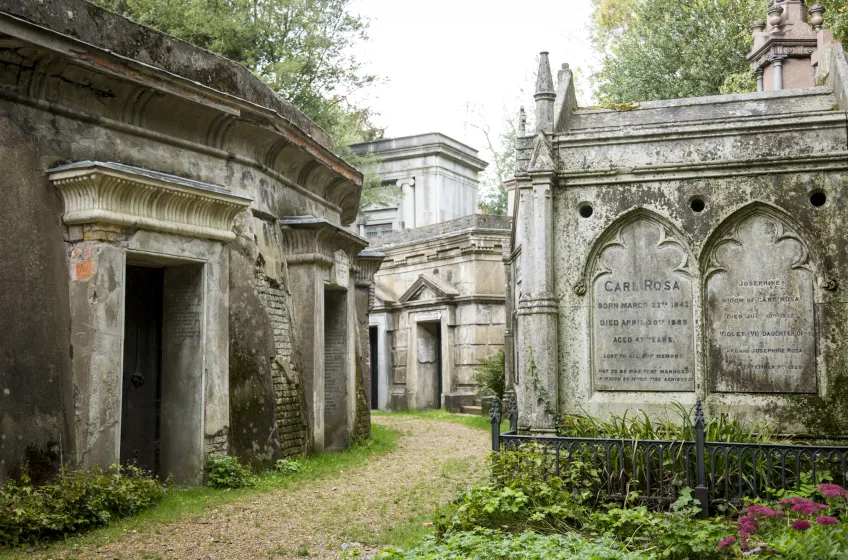
Highgate Cemetery offers a compelling mix of history, architecture, nature, and biography. Its appeal lies in the intersection of these elements — visitors are drawn not just to the people buried there, but to the atmospheric quality of the place itself. The cemetery reflects Victorian attitudes to death, mourning, and memorialisation, and it contains a rich variety of funerary architecture, from simple headstones to elaborate Gothic tombs. The East Cemetery can be visited independently, while the West Cemetery is accessible via guided tour only, offering insights into its most impressive features, including the Egyptian Avenue and the Circle of Lebanon. Highgate is also known for its links to literature and folklore, which have helped sustain public fascination over the decades. In addition to its cultural significance, the cemetery is home to a diverse range of flora and fauna, making it a peaceful green space within an urban setting.
Highgate Cemetery Highlights
Egyptian Avenue
Located in the West Cemetery, the Egyptian Avenue is one of Highgate's most iconic architectural features. Constructed in the 19th century during the height of Egyptomania in Victorian Britain, this grand walkway is flanked by obelisks and monumental stone columns, leading into a sunken path that gives the impression of a hidden necropolis. The tombs lining the avenue are carved into the walls, many sealed behind ornate iron doors. Access to the avenue is included in guided tours of the West Cemetery.
Circle of Lebanon
At the heart of the West Cemetery lies the Circle of Lebanon, a dramatic arrangement of catacombs built around a large cedar tree. The tree predates the cemetery and has been incorporated into the design of this circular crypt, which is one of the most atmospheric parts of the site. The vaults here were originally purchased by wealthy Victorian families, and their inscriptions and carvings are still clearly visible. The surrounding area contains some of the most architecturally elaborate tombs in the cemetery.
Karl Marx Memorial
Arguably the most famous grave in the East Cemetery, the Karl Marx memorial is marked by a large bronze bust mounted on a stone plinth bearing his most famous quote: "Workers of all lands, unite." Installed in 1956 to replace the original simple headstone, it has since become a site of international pilgrimage. The grave often attracts political visitors and those interested in socialist history.
George Eliot’s Grave
The renowned novelist Mary Ann Evans, better known by her pen name George Eliot, is also buried in the East Cemetery. Her grave is more modest than Marx’s but remains a site of literary interest. Unlike many prominent Victorians, she was buried in unconsecrated ground due to her views on religion and her unconventional personal life, which included a long-term partnership without marriage.
Douglas Adams’ Grave
Fans of science fiction and humour often seek out the grave of Douglas Adams, author of The Hitchhiker’s Guide to the Galaxy, who is buried in the East Cemetery. His understated headstone is accompanied by a small collection of pens left by visitors — a tradition that has grown over the years as a tribute to his literary contributions.
Architectural Tombs and Mausoleums
Throughout both the East and West Cemeteries, visitors will find a wide range of 19th- and 20th-century funerary architecture. These include Gothic spires, Egyptian-style columns, and classical porticos. Many tombs were designed by leading architects of the time and reflect the fashion for elaborate and individualised monuments.
Nature and Wildlife
Highgate Cemetery is as much a nature reserve as it is a burial ground. Its wooded paths are home to foxes, squirrels, and a variety of bird species. Wildflowers, ivy, and mature trees give it a peaceful, secluded atmosphere. Seasonal changes add to its charm, with autumn leaves and spring blooms creating a changing visual experience throughout the year.
Conservation and Restoration Work
The cemetery is managed by the Friends of Highgate Cemetery Trust, a charitable organisation responsible for its upkeep and preservation. Visitors can see ongoing conservation efforts, especially in the West Cemetery, where crumbling monuments are stabilised and pathways maintained. The Trust also offers educational events, talks, and volunteering opportunities.
Famous Residents
In addition to Marx, Eliot, and Adams, Highgate Cemetery is the final resting place of numerous notable individuals, including artist Patrick Caulfield, physicist Michael Faraday (memorial only), historian Eric Hobsbawm, and pop star George Michael (grave not marked on the official map and located in a private area). The diverse list of interments reflects the cemetery’s continuing role in London’s cultural life.
Guided Tours
The guided tours of the West Cemetery are among the most informative and rewarding ways to experience Highgate. Tours are led by knowledgeable volunteers and typically last around 70 minutes, providing access to areas not open to the public otherwise. Topics covered include architectural features, cemetery history, and biographical details of notable figures.
Literary and Folklore Connections
Highgate has featured in literature and popular culture, including Gothic novels and ghost stories. In the 1970s, rumours of a “Highgate Vampire” circulated widely, contributing to its eerie reputation. Though dismissed by historians and cemetery staff, the stories have become part of the site’s folklore and occasionally feature in thematic tours or talks.
Nearby attractions
Highgate Cemetery is situated in a culturally rich part of north London. Just across Swain’s Lane lies Waterlow Park, a public green space donated to the public in 1889 by Sir Sydney Waterlow. The park offers walking paths, gardens, and excellent views over London from its upper slopes. Adjacent to the park is Lauderdale House, a restored 16th-century building now functioning as an arts and heritage centre, with exhibitions, performances, and a café.
A short walk south leads to Parliament Hill on Hampstead Heath, a popular spot for panoramic views of the city skyline. The Heath itself is one of London’s largest open spaces and offers woodlands, swimming ponds, and a number of historic buildings, including Kenwood House — an English Heritage property with free entry and a fine art collection.
Also nearby is Highgate Village, a charming historic district with Georgian architecture, independent shops, pubs, and eateries. It retains a village atmosphere and has several sites of historical interest, including St Michael’s Church, where the architect of Highgate Cemetery, Stephen Geary, is buried.
Practical advice
Visitors should be aware that the East and West Cemeteries operate separately in terms of access. The East Cemetery is open daily and can be explored independently for a small entry fee, while the West Cemetery is only accessible via pre-booked guided tours. Tickets for both can be booked in advance through the Highgate Cemetery website, which is recommended during weekends and holidays when demand is higher.
Comfortable footwear is advisable, as paths can be uneven and, in wet weather, muddy in places. Photography is permitted in most areas for personal use but subject to a fee in the West Cemetery, particularly for professional or commercial purposes.
The site has a small shop and information centre, though there are no catering facilities on site. Nearby cafés and restaurants in Highgate Village or around Archway provide options for refreshments. Toilets are available near the entrance to the East Cemetery.
Public transport links are good. The closest Underground station is Archway (Northern Line), followed by a short uphill walk or bus ride to the cemetery entrance. Highgate station is also within reach, though slightly further away. Several bus routes run along Highgate Hill and nearby streets, making access relatively straightforward from other parts of London.
Visitors with mobility issues should note that much of the site consists of sloping paths and uneven ground, especially in the West Cemetery, which may be challenging to navigate. Some accessibility adaptations have been made, and the staff are generally helpful, but full access is not guaranteed in all areas.
Highgate Cemetery remains an active burial ground, and visitors are expected to behave respectfully. While photography and guided tours are welcome, the cemetery is primarily a place of remembrance. It's best visited with a spirit of reflection and interest in history, architecture, and the stories of those who came before.
Shortlist
- Your Shortlist is empty