
Discover Hever Castle | A Visitor's Introduction to Hever Castle
Hever Castle is a moated country house and gardens in the village of Hever, near Edenbridge in Kent. Parts of the site date back to the medieval period, and it is best known as the childhood home of Anne Boleyn, later Queen of England. Today it offers a mix of historic interiors, Tudor associations and a large estate of gardens and parkland shaped in the early 20th century.
Pre-book Hever Castle Tours
Search Accommodation Near Hever Castle
Why Is Hever Castle Worth a Visit?
Hever Castle is rewarding because it combines a well-known Tudor story with a day out that extends far beyond the rooms of the castle. The Boleyn connection gives the place historical weight, while the wider estate provides a varied experience: formal gardens, waterside scenery, longer walks and family-friendly activities that make it easy to tailor the visit to your interests and the season. It works particularly well if you like pairing heritage with time outdoors rather than spending the whole day inside a single building.
Hever Castle Highlights
The castle and its Tudor story
The castle is closely linked with the Boleyn family, and the Anne Boleyn connection is central to how many visitors understand the site. Touring the rooms gives context for domestic life in a fortified manor and for the political world that shaped the Tudor court.
The moat and medieval character
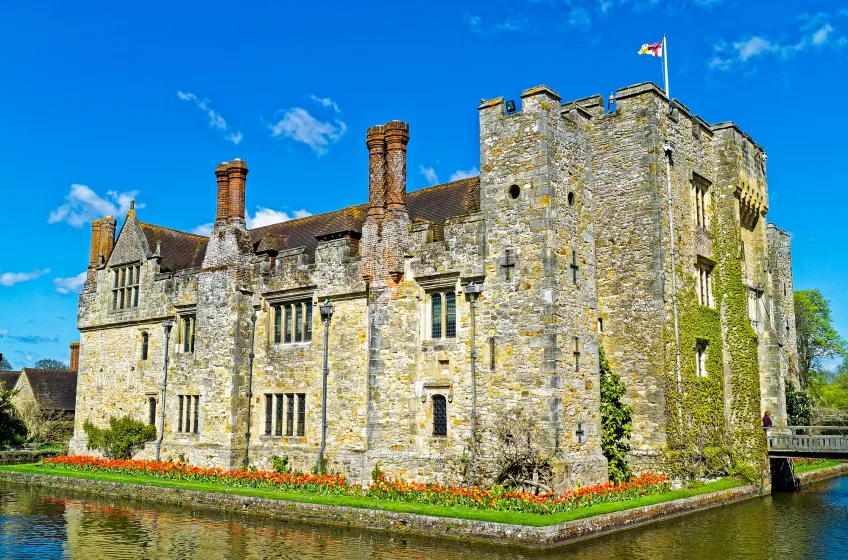
Hever’s moat and outer approach help set the scene before you even step inside. It is one of the defining visual features of the property and a good starting point for appreciating how the building evolved over time.
The Italian Garden and Loggia
A major highlight of the grounds is the Italian Garden, created to display a collection of Italian sculpture. Architectural details, formal planting and the Loggia’s viewpoint make this one of the most distinctive areas of the estate.
The lake and waterside views
Beyond the formal gardens, the estate opens out to a large lake. The shift from enclosed garden spaces to open water and broad views is a big part of what makes a full-day visit feel varied.
The Lake Walk and woodland routes
If you enjoy walking, the longer routes around the lake and through woodland are a good way to see the estate at a slower pace. These sections can be particularly appealing in spring and autumn when colour and wildlife activity are more noticeable.
The Tudor Garden and smaller “garden rooms”
Closer to the castle you will find smaller themed areas and garden rooms that break up the space into different atmospheres. They are well suited to short loops if you are visiting with children or mixing garden time with the castle interior.
The Yew Maze and Water Maze
The mazes are a popular part of the family offer. The traditional yew maze is a classic feature, while the water maze provides a more playful challenge when it is operating.
Boating from the boathouse
On days when it is available, hiring a rowing boat or pedalo adds a different perspective on the grounds and can be a relaxing way to spend part of the afternoon.
Children’s play areas
Families often build their day around the outdoor facilities, and the play areas provide a useful break between the more “grown-up” parts of the visit such as the castle rooms and formal gardens.
Miniature Model Houses
This exhibition is an unusual addition that can be a nice change of pace, especially if the weather turns. It focuses on detailed miniature interiors and craftsmanship.
KSY Military Museum
If you are interested in military history, the on-site museum adds depth to the day and gives you something more interpretive and object-based alongside the castle’s domestic story.
Seasonal events and performances
Hever frequently runs seasonal programming that can change the character of a visit, from family-focused activities to outdoor performances. If you enjoy planned events, it is worth timing your trip around what is on.
Facilities and Services
Food and drink
You will find on-site catering, with options that suit anything from a quick drink to a sit-down meal. Picnic areas and outdoor seating make it straightforward to bring your own food if you prefer.
Shops
There is an on-site shop for gifts and souvenirs, and it can be a useful stop for practical items on the day as well as local and heritage-themed products.
Toilets and visitor amenities
Facilities are spread around the main visitor areas, making it easier to manage a long day that includes the gardens, lake and activities.
Accessibility and support for disabled visitors
The estate provides accessibility information and support for visitors with disabilities, including policies around carers. As with many historic houses, the most challenging aspects tend to be within older parts of the castle and on some outdoor surfaces, so it helps to plan routes in advance.
Parking
Parking is available on site, which makes Hever straightforward for a day trip by car as well as for combining with other nearby places.
Dogs
Dogs are generally welcome in outdoor areas on a lead, but restrictions typically apply in the castle interior and certain activity zones. If you are visiting with a dog, plan your route around the outdoor estate and check what is permitted on the day.
Nearby Attractions
Chartwell
Chartwell is a well-known historic house in Kent associated with Winston Churchill and makes a natural pairing with Hever if you are building a heritage-focused itinerary.
Knole
Knole, near Sevenoaks, offers a very different kind of great house experience and is a strong option if you are interested in large estates, collections and deer park landscapes.
Ightham Mote
Ightham Mote provides another moated site in Kent and can be a good comparison with Hever, particularly if you are interested in how defensive domestic architecture developed.
Penshurst Place and village
Not far away, Penshurst is another location with deep links to English history and a characterful village setting, making it a good add-on for the same general area.
Gardens and countryside in the Kent Weald
If the gardens are your main motivation, this part of Kent is rich in country walks, seasonal displays and additional garden visits, so it is easy to extend the day with another outdoor stop.
Practical Advice
When to go and how long to allow
A half-day suits a focused visit on the castle plus one or two garden areas, while a full day is best if you want to include the lake, longer walks and activities. Spring and early summer tend to be strongest for garden colour, while autumn can be excellent for walks and atmosphere. Check the Hever Castle website for current opening hours and ticket prices
Getting there
Hever is easiest by car, but it is also possible by train to nearby stations, with the final stretch either a walk or a taxi depending on where you arrive. If you are travelling by public transport, plan the last mile carefully as rural options can be limited.
Tickets and planning your route
Different ticket types may apply depending on whether you want the castle interior, the gardens, or additional activities. If you have specific priorities (for example boating, a particular exhibition, or an event), check availability and timings before you travel.
What to prioritise if time is limited
If you only have a few hours, prioritise the castle rooms and the Italian Garden area for the most distinctive blend of history and design. If you have longer, add the lake and a woodland walk to experience the estate’s full variety.
Weather, footwear and comfort
Even in good weather, much of the day can involve walking on outdoor surfaces, so comfortable footwear makes a big difference. In wet conditions, focus on the castle interior and indoor exhibitions first, then use breaks in the weather for the gardens.
Visiting with children
A successful family visit often alternates between the castle, open spaces and play areas. Building in time for the maze and outdoor activities can help keep the pace enjoyable for different ages.
Visiting with a dog
If you bring a dog, plan around the outdoor estate and be prepared for areas where dogs are not permitted. A lead is usually required, and it is sensible to bring water and towels for muddy sections in winter.
Shortlist
- Your Shortlist is empty