
Discover Hereford Cathedral | A Visitor's Guide to Hereford Cathedral
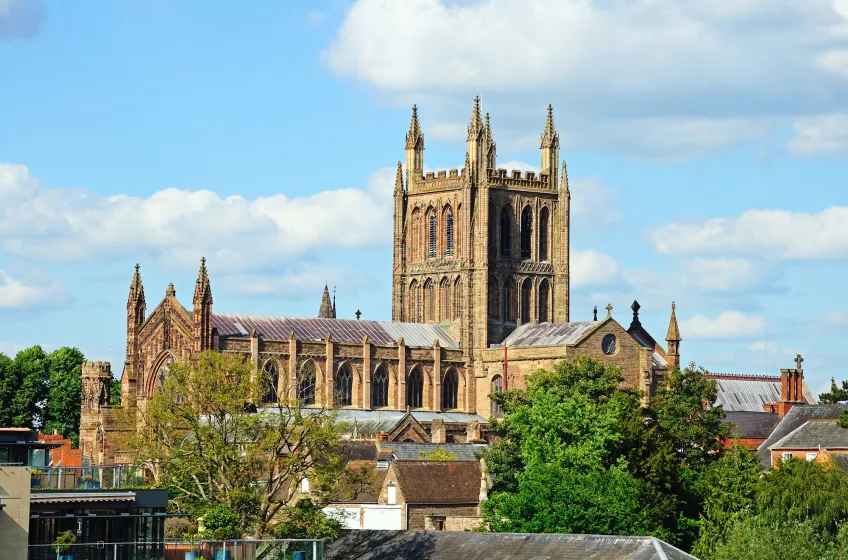
Hereford Cathedral is a historic Anglican cathedral situated in the heart of the city of Hereford in the West Midlands of England. Officially known as the Cathedral Church of the Blessed Virgin Mary and St Ethelbert, it has been a centre of Christian worship for over 1,300 years. The current structure dates largely from the 11th to the 14th centuries, although evidence of earlier ecclesiastical buildings on the site can be traced back to Saxon times. The cathedral is renowned not only for its impressive architecture but also for housing the famous Mappa Mundi, one of the world’s most significant medieval maps, and the largest surviving chained library.
With a blend of Romanesque and Gothic architecture, a rich collection of historical artefacts, and a vibrant programme of worship and music, Hereford Cathedral offers a compelling visit for those interested in history, religion, art, and English heritage. Set within quiet cloisters and close to the banks of the River Wye, it also provides a peaceful atmosphere for reflection and exploration.
Hereford Cathedral visitor information & opening times
Recommended Hereford Accommodation: Hotels Bed & Breakfasts Pub Accommodation
Why Is Hereford Cathedral Worth a Visit?
Hereford Cathedral is worth visiting for its unique combination of spiritual, architectural, and historical significance. Its roots stretch back to the 7th century, and the building has developed over time into an impressive example of Norman and Gothic ecclesiastical design. It offers a rare opportunity to view the Mappa Mundi, created around 1300, which represents a medieval European understanding of the world and is designated as a UNESCO Memory of the World item.
In addition to the Mappa Mundi, the cathedral houses the Chained Library, a remarkable and rare example of a secure library system from the 17th century. Visitors can explore manuscripts and printed texts that span centuries, including works from before the Reformation. The building itself is an active place of worship and a centre for Anglican music, featuring a renowned choir and a vibrant programme of concerts and services throughout the year.
The cathedral also plays a central role in the local community and hosts regular exhibitions, educational programmes, and seasonal events. The surrounding Close and gardens offer tranquil spots for rest, while the on-site café and gift shop enhance the overall visitor experience.
Hereford Cathedral Highlights
The Mappa Mundi
The Mappa Mundi is one of the cathedral’s most important and well-known treasures. Drawn on a single sheet of vellum around the year 1300 by Richard of Haldingham, it presents the known world from a European medieval perspective, with Jerusalem at the centre. Far from a simple map, it includes biblical stories, historical events, mythical creatures, and geographical features. The map is both a religious document and an artefact of cultural history, offering deep insight into how medieval Europeans viewed the world.
The Chained Library
Hereford Cathedral's Chained Library is one of the largest and most complete of its kind in the world. In the days before mass printing and public libraries, books were expensive and vulnerable to theft, so many were secured with chains. This system allowed the books to remain accessible to scholars while ensuring their safety. The library includes over 1,500 rare books and manuscripts, some dating back to the 8th century. Visitors can walk among the original chains and oak furniture, with guided tours available to explain its historical importance.
The Cathedral Nave and Architecture
The cathedral’s architectural structure is a combination of Norman and Gothic styles. The nave features massive Norman columns supporting rounded arches, while the 14th-century Lady Chapel and the chapter house illustrate later Gothic developments. The overall effect is a visual journey through the architectural styles of medieval England. Restoration in the 19th century, notably by Sir George Gilbert Scott, helped preserve its integrity while remaining sensitive to its original design.
The Shrine of St Thomas of Hereford
Thomas Cantilupe, Bishop of Hereford in the 13th century, was canonised in 1320 and his shrine became a popular destination for pilgrims. Though the original medieval shrine was destroyed during the Reformation, a 20th-century reconstruction now stands in its place in the North Transept, and remains a place of pilgrimage. The shrine holds an important role in the cathedral's religious life and provides a focal point for those interested in medieval spirituality and sainthood.
The Chapter House Garden and Cloisters
The Chapter House Garden and cloisters offer a peaceful area for visitors to sit and enjoy the quiet beauty of the cathedral grounds. The cloisters date from the 15th century and provide access to various parts of the cathedral, including the café and gift shop. The gardens are carefully maintained and often feature floral displays and quiet seating areas, ideal for rest and reflection.
The Cathedral Tower
The central tower of Hereford Cathedral stands nearly 50 metres tall and dominates the skyline of the city. While the tower itself is not usually open to the general public due to conservation concerns, it remains a key architectural feature. The tower contains a peal of ten bells, some dating back to the 17th century, which can often be heard during services and on special occasions.
Music and Choir
Hereford Cathedral has a distinguished choral tradition and maintains a full programme of services with choral music, including Evensong and Eucharist. The cathedral choir includes choristers from the Hereford Cathedral School, and visiting choirs often take part in services during term breaks. The cathedral is one of the hosts of the annual Three Choirs Festival, the world’s oldest classical music festival, which rotates between Hereford, Gloucester, and Worcester cathedrals.
The Lady Chapel
The 14th-century Lady Chapel, located at the eastern end of the cathedral, is one of its most beautiful and atmospheric spaces. Dedicated to the Virgin Mary, it features early Gothic architecture, delicate tracery, and several medieval features including a piscina and sedilia. The chapel often hosts smaller services and is a place for private prayer.
The Stained Glass Windows
Throughout the cathedral are numerous examples of stained glass from different periods, ranging from medieval fragments to Victorian-era works. Of particular note is the East Window, installed in the late 19th century, which contains a series of biblical scenes in richly coloured glass. The windows provide not only artistic beauty but also tell stories from scripture and church history.
The Crypt and Treasures Exhibition
Below the cathedral, the crypt space has been adapted to display artefacts from the cathedral’s long history. This includes rare documents, liturgical items, and ecclesiastical vestments. The Treasures Exhibition is an evolving display that allows visitors to learn more about the daily life, worship, and history of the cathedral through objects not often seen by the public.
Events and Exhibitions
Hereford Cathedral regularly hosts temporary exhibitions, lectures, and community events, often focusing on religious, historical, or artistic themes. Past exhibitions have included displays on pilgrimage, book-making, and the First World War. Educational programmes for schools and visiting groups are also available, enhancing the experience for younger visitors.
Nearby Attractions
Hereford is a compact city with several other sites of interest within walking distance of the cathedral. Immediately nearby is the Old House Museum, a timber-framed Jacobean house showcasing domestic life in the 17th century, located in the heart of High Town. This building provides a sharp contrast to the grandeur of the cathedral and adds historical depth to a visit.
A short walk across the River Wye is Hereford Museum and Art Gallery, which offers exhibitions relating to local history, archaeology, and fine art. In the same area is the Black and White House Trail, guiding visitors through the historic market town architecture that characterises much of the region.
For those with more time, Berrington Hall, a National Trust property designed by Capability Brown, lies about 15 miles to the north and offers a well-preserved Georgian house and landscaped gardens. Alternatively, Hampton Court Castle, located near Leominster, provides another opportunity to explore a grand historic home and extensive gardens.
Practical Advice for Visitors
Hereford Cathedral is open to visitors throughout the year, with no admission fee for general entry, although donations are encouraged to help support maintenance and conservation. Charges apply for entry to the Mappa Mundi and Chained Library Exhibition. Tickets for this can be purchased from the Welcome Desk, and guided tours are available at scheduled times throughout the week.
The cathedral is accessible from Hereford train station, approximately a 15-minute walk away. The station has regular connections to Cardiff, Birmingham, and London. Car parking is available in various public car parks in the city centre, though it is advisable to check for any restrictions or charges in advance.
A café on the cathedral grounds offers light meals, snacks, and hot drinks, and a well-stocked gift shop includes religious items, books, and locally produced crafts. Public toilets, including accessible facilities, are located on site.
Photography is permitted in many areas of the cathedral for personal use, but restrictions may apply during services or in the exhibition areas. Visitors should check the cathedral's official website for up-to-date information on opening hours, special events, and service times.
For those wishing to attend a service, the cathedral offers a full programme of worship open to the public, including daily Eucharist, Choral Evensong, and Sunday services. Seating is generally unreserved and open to all.
The city centre location of the cathedral means it is easily combined with other attractions, shops, and restaurants, making it a convenient and rewarding destination for a half-day or full-day visit.
Shortlist
- Your Shortlist is empty