
Discover Hastings | A Visitor's Introduction to Hastings
Recommended places to visit, places to stay and things to do in and around Hastings
Hastings is a historic seaside town on the south coast of England in East Sussex, best known for its connection to the famous Battle of Hastings in 1066. Once a thriving fishing port and later a fashionable Victorian resort, Hastings today blends its rich heritage with a lively arts scene, independent shops, and a dramatic seafront. With its Norman castle ruins, picturesque Old Town, and links to one of the most pivotal moments in English history, Hastings is a destination that appeals to history buffs, beachgoers, and culture lovers alike.
Recommended Hastings Accommodation: Hotels Bed & Breakfasts Pub Accommodation
Why is Hastings Worth a Visit?
Hastings is worth visiting for its rare combination of medieval history, coastal charm, and vibrant cultural life. Few towns in England can claim such an iconic place in the national story, yet Hastings is not just about the Battle of 1066. Its Old Town retains a quirky, almost timeless atmosphere with narrow “twittens” (alleys), half-timbered houses, and working fishing huts still in use today. The modern town has reinvented itself as a hub for the arts, with independent galleries, street festivals, and a growing reputation for creative talent.
The seafront has seen a resurgence in recent years, with the award-winning Hastings Pier and a mix of traditional seaside amusements and contemporary eateries. Beyond the beaches, the surrounding cliffs and nature reserves offer spectacular walking opportunities. Whether you’re keen to delve into history, stroll along the prom with fish and chips, or explore unique shops and galleries, Hastings offers a characterful escape by the sea.
Hastings Highlights: Things to See and Do in Hastings
Hastings Castle
Standing on the West Hill overlooking the town, Hastings Castle is one of the earliest Norman castles built by William the Conqueror following his invasion of 1066. Although partially ruined due to coastal erosion, it remains an atmospheric site to explore. The castle grounds also include the “1066 Story” attraction, which uses multimedia displays to bring the events of the Battle of Hastings to life. The views from the castle grounds stretch across the town, sea, and surrounding countryside.
The Old Town
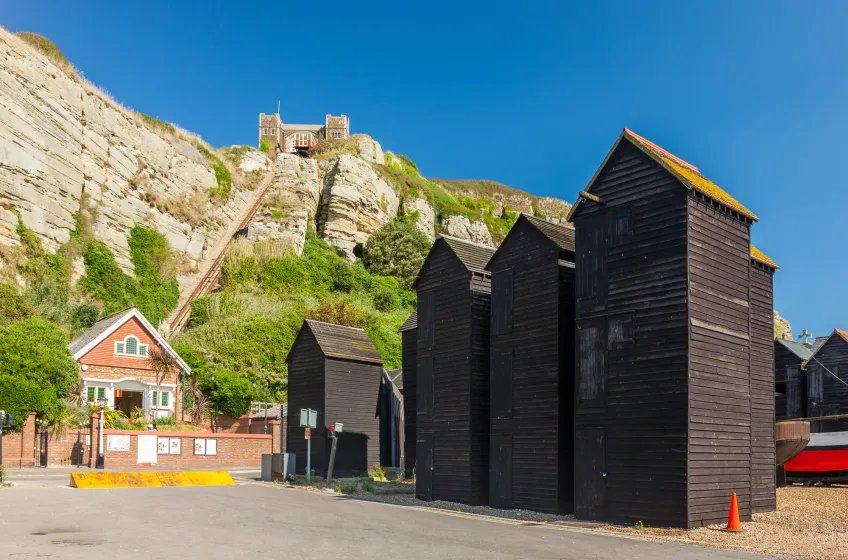
Hastings Old Town is a must-see, with its medieval street plan, timber-framed houses, and hidden alleys. George Street and High Street are the main hubs, lined with quirky shops, art galleries, traditional pubs, and cafés. Look out for the distinctive black net huts near the beach, tall wooden sheds used by local fishermen for centuries to dry their nets. The Old Town also hosts regular markets and events, making it one of the liveliest parts of Hastings.
Hastings Pier
Rebuilt and reopened in 2016 after a devastating fire, Hastings Pier has become a symbol of regeneration. It offers sweeping sea views, live events, pop-up food stalls, and a family-friendly atmosphere. Unlike many piers, it has been designed as a versatile open space, so it often hosts concerts, markets, and community events. On a sunny day, it’s the perfect place for a stroll or to relax with an ice cream.
Hastings Fishermen’s Museum
Hastings has one of the oldest beach-launched fishing fleets in Europe, and the Fishermen’s Museum celebrates this proud tradition. Housed in a former church in the Old Town, the museum showcases fishing boats, nets, photographs, and personal stories of the fishing community. It’s a small but fascinating place that gives insight into the town’s working heritage.
East Hill and Hastings Country Park
For breathtaking views, take the funicular railway up to East Hill, where you’ll find Hastings Country Park. This vast nature reserve offers clifftop walks, wildlife spotting, and panoramic views of the Channel. On clear days you can even see across to France. It’s a wonderful spot for walking and picnicking, and the contrast between the busy seafront below and the peaceful countryside above is striking.
Smugglers Adventure
Hidden beneath West Hill are miles of atmospheric caves that once provided shelter for smugglers. Smugglers Adventure is an underground attraction that tells the tales of contraband and piracy on the Sussex coast. Interactive displays and life-sized figures bring to life the dramatic history of smuggling, making it an engaging experience for families and history enthusiasts alike.
Hastings Museum and Art Gallery
This eclectic museum is often overlooked but well worth visiting. It covers local history, world cultures, and natural history, with highlights including an exhibition on the American West and displays of artefacts from the town’s past. Its art gallery hosts changing exhibitions, with a focus on local and regional artists.
Alexandra Park
Inland from the seafront lies Alexandra Park, a beautifully landscaped Victorian park with ornamental gardens, ponds, and woodland walks. It’s an ideal place for a leisurely stroll, a family picnic, or simply escaping the bustle of the town. The park also hosts open-air events, including music performances in the summer.
Jerwood Gallery (now Hastings Contemporary)
On the edge of the Old Town sits Hastings Contemporary, a striking modern gallery overlooking the sea. It showcases modern British art, with a strong emphasis on works by contemporary and local artists. The gallery’s architecture, with its black-tiled exterior, makes it a landmark on the seafront.
Hastings Miniature Railway and Blue Reef Aquarium
For families with young children, the seafront offers traditional attractions such as the Hastings Miniature Railway, which has been running since the 1940s, and the Blue Reef Aquarium, home to tropical fish, sharks, and seahorses. Together they make for a fun and relaxed day out by the sea.
Practical Advice for Visitors
Getting There
Hastings is well connected by train from London, with direct services from Charing Cross, London Bridge, and Victoria taking around 90 minutes to two hours. Trains also run from Brighton and Ashford International, linking the town with the wider south-east. By car, Hastings can be reached via the A21 from London or the A259 coastal road. Coaches also serve the town from London and other major cities.
Parking
Parking can be tricky in the Old Town due to narrow streets, but there are several car parks nearby, including Rock-a-Nore Road (by the fishing huts) and Pelham Place (on the seafront). Pay-and-display parking is common, and it’s worth arriving early on summer weekends when demand is high.
Dining
Hastings has a diverse food scene, from traditional fish and chips by the sea to stylish restaurants. Webbe’s Rock-a-Nore specialises in fresh local seafood, while The Crown in the Old Town offers seasonal dishes and craft ales. For something casual, The Pelican serves excellent fish suppers. Café culture thrives in George Street, where you’ll find a mix of bohemian coffee shops and bakeries. Don’t miss the chance to try local catch such as plaice, sole, and scallops.
Shopping
The Old Town is the best place for shopping, especially if you like independent stores. You’ll find antique shops, vintage boutiques, record stores, and artisan craft shops. George Street in particular is lined with quirky finds, from retro clothing to handmade jewellery. On weekends, Hastings often has pop-up markets and craft fairs. Priory Meadow Shopping Centre caters for high-street names.
When to Visit
Hastings is a year-round destination, but spring and summer are the most popular times, especially if you want to enjoy the beaches and outdoor events. The town is lively in July and August, though it can be busy. Autumn offers quieter streets and often mild weather, while winter has a windswept charm, with fewer crowds and atmospheric walks along the seafront.
Local Events
Hastings is famous for its unique and often eccentric festivals. The Jack in the Green Festival in May marks the arrival of spring with colourful parades, music, and dancing. Bonfire Night in November is one of the biggest in Sussex, with torchlit processions and fireworks. The Hastings Seafood and Wine Festival in September is a must for foodies, showcasing the best local produce. Hastings Pirate Day, usually in July, has even set world records for the largest gathering of pirates.
Exploring Beyond Hastings
If you have more time, Hastings makes a great base for exploring East Sussex and beyond. Just a few miles away is Battle, where the Battle of Hastings actually took place, with its evocative abbey and battlefield. The nearby town of Rye, with its cobbled streets and medieval charm, is another gem. For nature lovers, the cliffs of Beachy Head and the South Downs National Park are within easy reach by car. The wider 1066 Country offers castles, historic villages, and unspoilt coastline to explore.
Shortlist
- Your Shortlist is empty