
Hampstead Heath | A Visitor's Introduction to Hampstead Heath
Hampstead Heath is one of London’s most significant green spaces, covering over 800 acres (approximately 320 hectares) of varied natural landscape. Located in the north of the city, it stretches from Hampstead to Highgate and provides an exceptional contrast to the more formal parks of central London. With its ancient woodlands, wide open grasslands, undulating terrain, natural ponds, and panoramic viewpoints, Hampstead Heath serves as both a sanctuary for wildlife and a recreational space for Londoners and visitors alike. The Heath has a deep historical and cultural significance, with roots stretching back to medieval times, and it continues to be a place of inspiration, activity, and quiet reflection.
Recommended Hampstead accommodation: Hotels Bed & Breakfasts
Pre-book London Attractions, Tours & Experiences
Why Is Hampstead Heath Worth a Visit?
Hampstead Heath is worth visiting for its diversity of natural environments and the sense of escape it offers from the urban environment. Unlike manicured gardens and structured parks, the Heath retains a more rugged, organic character, making it one of the most naturalistic green spaces in London. Visitors can walk, run, swim, picnic, or simply sit and enjoy the surroundings. It offers something for all seasons: vibrant greens in spring and summer, spectacular foliage in autumn, and atmospheric landscapes in winter. The Heath’s role in London's cultural, artistic and social history further enhances its appeal, as does its status as a Site of Metropolitan Importance for Nature Conservation. With a strong sense of community, long-established traditions such as wild swimming, and connections to literary and artistic figures, Hampstead Heath offers not just scenery, but substance.
Hampstead Heath Highlights
Parliament Hill
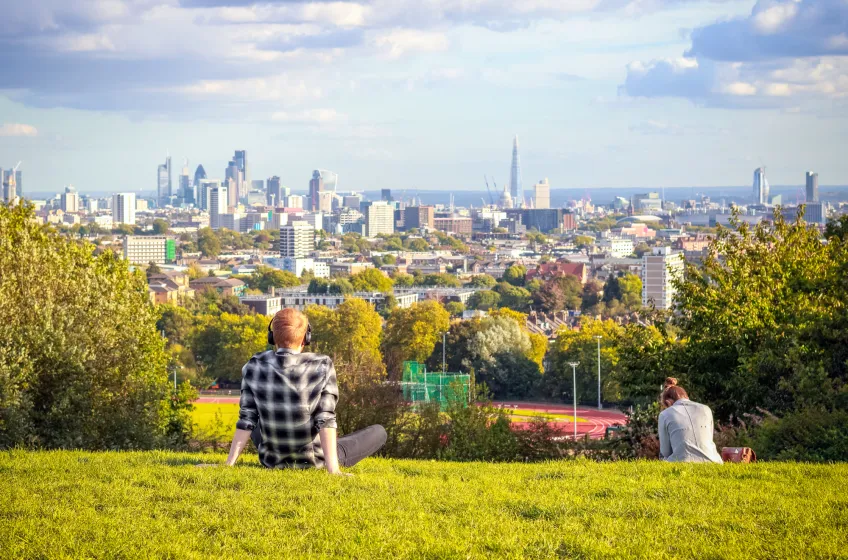
One of the most iconic features of Hampstead Heath is Parliament Hill, located at the southern end of the park. It offers one of the best natural viewpoints in London, with clear vistas across the city skyline. From here, visitors can see landmarks such as St Paul's Cathedral, The Shard, the London Eye, and Canary Wharf on a clear day. The hill is popular with kite flyers and walkers, and provides an impressive setting for sunrise and sunset views.
The Swimming Ponds
Hampstead Heath is renowned for its three freshwater swimming ponds: the Men's Pond, the Ladies' Pond, and the Mixed Pond. These are natural bathing spots that attract year-round swimmers, including a dedicated group of winter bathers. The ponds are fed by natural springs and managed by the City of London Corporation. Changing facilities, showers, and lifeguards are present, though the experience remains close to nature and somewhat rustic.
Kenwood House
Located on the northern boundary of the Heath, Kenwood House is a former stately home now managed by English Heritage. The neoclassical villa is free to enter and houses a notable collection of fine art, including works by Rembrandt, Vermeer, Turner and Gainsborough. The house itself is surrounded by landscaped gardens and woodland, and hosts open-air concerts in summer months. Kenwood offers a more formal contrast to the wilder areas of the Heath, blending art, history and nature.
The Hill Garden and Pergola
A lesser-known feature of the Heath is the Hill Garden and Pergola, situated on the western edge near Golders Hill. Originally built as a private Edwardian garden, it combines classical architecture with overgrown charm. The long, raised walkway is covered with climbing plants and offers views over landscaped gardens, creating a tranquil and slightly romantic atmosphere.
Golders Hill Park
Adjacent to the Heath and managed as part of the same green space, Golders Hill Park features manicured lawns, a small zoo, a duck pond, and a café. The park is more formal than the Heath proper and is particularly popular with families. During the summer, it hosts live music performances and other community events.
The Vale of Health
This small, secluded area within the Heath is historically significant and somewhat isolated. Originally a marsh, it was drained and developed in the 19th century and is now home to a small residential community. The Vale has been home to various artists, writers, and intellectuals, and retains a quiet, slightly mysterious charm.
Ancient Woodlands
Hampstead Heath includes several areas of ancient woodland, including North Wood, Ken Wood, and the area surrounding Sandy Heath. These woodlands are home to a diverse range of flora and fauna, including oak, hornbeam, and beech trees, as well as birds, bats, and invertebrates. Walking through these woods gives a sense of continuity with London’s natural past.
Bird Sanctuary Pond
This pond, located in the south of the Heath, is closed to the public but serves as a crucial habitat for wetland birds and other wildlife. Viewing points allow visitors to observe the pond from a distance without disturbing the ecosystem. It represents the Heath’s commitment to conservation alongside recreation.
Sports and Recreation Areas
Hampstead Heath supports a wide range of outdoor activities, from informal games of football to organised athletics. The Parliament Hill Fields area includes tennis courts, a running track, a cricket pitch, and playgrounds. Personal training sessions, bootcamps and yoga classes are also commonly held across the open grasslands.
Walking Trails and Nature Paths
A network of walking paths and informal tracks criss-cross the Heath, allowing for everything from short strolls to longer circular walks. Trails vary in difficulty due to the undulating terrain, but most are accessible with good footwear. In wetter weather, some paths can become muddy, especially in woodland areas.
Flora and Fauna
The Heath supports a rich biodiversity due to its varied habitats—grassland, woodland, scrub, and water. It is home to over 180 species of birds, including kestrels and owls, as well as foxes, hedgehogs, amphibians, and dragonflies. Botanically, it contains a mixture of native and introduced plant species, including rare fungi and wildflowers.
Facilities
Hampstead Heath is managed by the City of London Corporation and includes a wide range of visitor facilities. There are several public toilets across the park, including accessible options. The Heath has multiple cafés, including Parliament Hill Café, Kenwood Brew House, and Golders Hill Park Café, offering refreshments and light meals. There are designated picnic areas and bins are provided throughout the site, though visitors are encouraged to take litter home to support conservation efforts.
The Heath is accessible via multiple entrances and is well-connected by public transport. Cycling is allowed on certain designated paths, and dogs are welcome in most areas, though restrictions apply in sensitive ecological zones and swimming ponds. There is no general lighting after dark, so visitors are advised to plan accordingly, especially in winter.
Nearby Attractions
Hampstead Heath is surrounded by areas of historical and cultural interest that can easily be visited on the same day.
To the south lies Hampstead Village, a picturesque neighbourhood with Georgian streets, independent shops, bookshops, and historic pubs. The Freud Museum, former home of Sigmund Freud, is located nearby and houses a significant collection of psychoanalytic artefacts.
To the east, Highgate is home to Highgate Cemetery, one of London’s “Magnificent Seven” Victorian cemeteries. It is the resting place of notable figures such as Karl Marx, George Eliot, and Douglas Adams, and features dramatic Gothic architecture and guided tours.
To the north-west, Golders Green offers access to Golders Green Crematorium, the final resting place of many notable figures including Bram Stoker and Sigmund Freud. The area also serves as a cultural hub for London's Jewish community.
The nearby Camden Arts Centre and the Everyman Cinema in Hampstead offer additional cultural experiences. For those interested in modernist architecture, the nearby Isokon Building in Belsize Park is also worth a visit.
Practical Advice
Hampstead Heath is open year-round and there is no charge for general entry. Opening hours vary depending on the season and location within the Heath; however, most areas are accessible from early morning until dusk. Ponds and some facilities have more specific operating hours, particularly in winter.
The Heath is best accessed via public transport. Nearby stations include Hampstead Heath (Overground), Gospel Oak, Belsize Park (Northern Line), Hampstead (Northern Line), and Highgate. Several bus routes also serve the area. There is limited parking nearby and local restrictions apply, so using public transport is advised.
Wear sturdy shoes if planning to walk extensively, as the ground can be uneven or muddy. Bringing water and a picnic is recommended, particularly on warmer days, although cafés are available. If swimming, note that access to the ponds is subject to entrance fees, and sessions can fill up quickly in peak times, so booking in advance is advisable where possible.
Dogs should be kept under control, and owners should take note of restricted areas. Cyclists must adhere to designated paths, and horse riding is permitted with a licence in specific areas.
Maps of the Heath are available online and at entrance points. Mobile reception can be limited in some wooded areas, so downloading a map beforehand is advisable. Group activities, barbecues, and drone flying are not permitted without prior permission from the City of London Corporation.
Hampstead Heath combines natural beauty with a wealth of cultural and recreational offerings. Its rugged charm, rich biodiversity, and historical connections make it a unique and valuable part of London’s landscape. Whether visiting for a peaceful walk, a swim, or to explore its historic surroundings, the Heath offers a meaningful experience for all who venture into its leafy expanse.
Shortlist
- Your Shortlist is empty