
Greenwich Park | A Visitor's Introduction to Greenwich Park
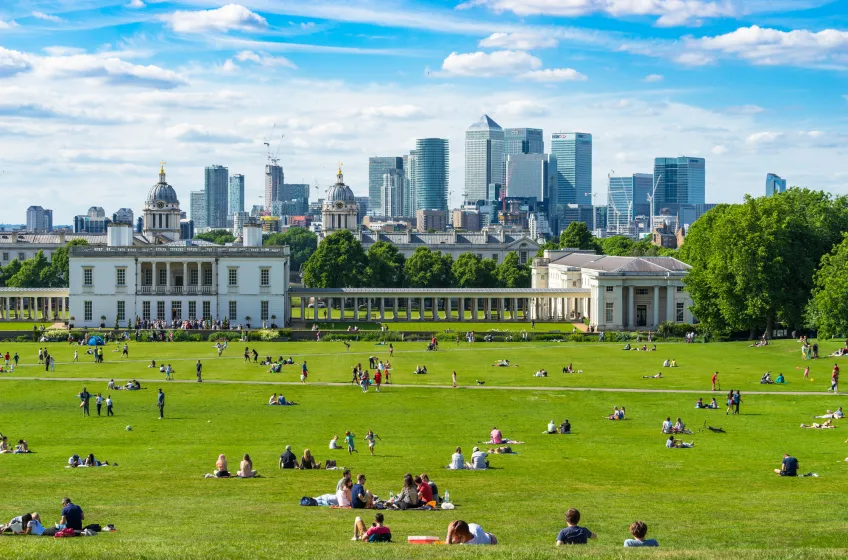
Greenwich Park is one of the oldest enclosed Royal Parks in London, located in the Royal Borough of Greenwich on the south bank of the River Thames. Spanning over 180 acres, the park is set on a hill that offers sweeping views across the capital, including the City of London and Canary Wharf. It forms part of the Maritime Greenwich UNESCO World Heritage Site, which includes several important historical and architectural landmarks. The park combines formal gardens, ancient trees, open grasslands and historic buildings, making it a multifaceted destination for both tourists and local residents.
Originally used as hunting grounds by the Tudors, Greenwich Park has evolved over centuries into a public space that caters to a variety of interests. It is also home to several notable institutions and attractions, including the Royal Observatory, the Prime Meridian Line, and the National Maritime Museum, all located either within or immediately adjacent to the park. The blend of natural beauty, scientific significance, and historical interest makes Greenwich Park a destination of enduring appeal.
Recommended Greenwich accommodation: Hotels Bed & Breakfasts
Pre-book Greenwich Attractions, Tours & Experiences
Why is Greenwich Park worth a visit?
Greenwich Park offers a rich combination of history, culture, and green space in one of London’s most scenic settings. Its position on a hill provides some of the best panoramic views in the city, especially from the area near the Royal Observatory, where visitors can see across the Thames to central London. The park is notable for its historical legacy, having been a royal hunting park since the 15th century, and it retains many features that reflect its past, such as the ancient oak trees and remnants of its original landscaping by André Le Nôtre, who also designed the gardens at Versailles.
The presence of key attractions such as the Royal Observatory and the Prime Meridian Line adds a scientific and educational dimension to a visit. Visitors can stand with one foot in each hemisphere or explore exhibitions that explain the development of timekeeping and navigation. The park is also a place for relaxation and recreation, with open lawns, flower gardens, a boating lake, and dedicated play areas. Whether interested in astronomy, royal history, or simply enjoying a tranquil walk in a scenic environment, Greenwich Park caters to a broad spectrum of interests.
Greenwich Park Highlights
The Royal Observatory
Located at the top of the park’s hill, the Royal Observatory was founded in 1675 by King Charles II and played a central role in the development of astronomy and navigation. The Prime Meridian of the World (0° longitude) runs through the site, marking the point from which all time zones are measured. The observatory includes historical instruments, interactive displays and the famous Time Ball, which drops daily at 1 p.m. to signal the time to ships on the Thames. The Flamsteed House, designed by Sir Christopher Wren, is also part of the complex and was the original home of the Astronomer Royal.
The Prime Meridian Line
Perhaps the park’s most photographed feature, the Prime Meridian Line marks the dividing point between the eastern and western hemispheres. Visitors can stand astride the line, which is marked in stainless steel across the courtyard of the Royal Observatory. Information panels explain its significance and how Greenwich Mean Time (GMT) became the global standard for timekeeping.
The Queen’s House
Located just outside the park’s northern boundary, the Queen’s House is an architectural landmark designed by Inigo Jones in the 17th century. It was the first classical building in England and now forms part of the National Maritime Museum. The house contains a fine collection of art and historical artefacts, including portraits from the Royal Museums Greenwich collection and the Tulip Stairs, which are an early example of a cantilevered spiral staircase.
National Maritime Museum
Adjacent to Greenwich Park, the National Maritime Museum is the largest of its kind in the world and explores Britain’s maritime heritage through extensive exhibitions and artefacts. Highlights include displays on naval history, polar exploration, and the transatlantic slave trade. The museum is family-friendly and includes interactive galleries for children.
Greenwich Mean Time (GMT) Exhibits
Inside the Royal Observatory, exhibitions detail the evolution of timekeeping and the establishment of GMT as the global standard. Notable items include John Harrison’s marine timekeepers, which solved the problem of determining longitude at sea. These precision clocks had a transformative impact on naval navigation and remain among the observatory’s most important artefacts.
The Greenwich Park Hill and Viewpoint
One of the most iconic features of Greenwich Park is the hilltop viewpoint near the Royal Observatory. From here, visitors can enjoy a sweeping vista that takes in the Queen’s House, the National Maritime Museum, the River Thames, and the skyscrapers of Canary Wharf. On clear days, landmarks such as St Paul’s Cathedral and the Shard are also visible in the distance.
The Flower Garden
Located in the south-eastern section of the park, the Flower Garden is a formally landscaped area featuring seasonal displays, ornamental shrubs and a small pond. It is one of the quieter areas of the park, popular for picnicking and leisurely strolls. A small deer enclosure nearby houses a herd of red and fallow deer, maintaining a link to the park’s hunting past.
The Wilderness and Deer Park
This enclosed area in the south of the park contains an ancient herd of deer that are descendants of the animals kept by the Royal Family for hunting. Although the deer are fenced off, they are visible from several vantage points. The surrounding woodland paths offer a more secluded atmosphere, especially popular with walkers and nature enthusiasts.
Roman Remains
Greenwich Park contains the remains of a Roman temple, dating from the 1st to 4th centuries AD, located near the Vanbrugh Park entrance. Although only low foundations remain visible, the site is of archaeological significance and is accompanied by interpretive signage.
The Bandstand and Open Lawns
At the centre of the park, an ornamental bandstand occasionally hosts live music during the summer months. The surrounding open lawns are popular for sports, picnics and sunbathing, offering ample space for relaxation and informal recreation.
Children’s Playground and Boating Pond
Families are well catered for with a dedicated children’s playground near the park’s northern edge, featuring climbing structures, swings and sand pits. During warmer months, a small boating pond near the playground operates paddle boats for children, adding to the park’s family appeal.
The Park Café and Refreshments
Greenwich Park contains several food kiosks and a café offering refreshments, light meals, and hot drinks. The Pavilion Café, located near the Royal Observatory, has both indoor and outdoor seating and provides views over the park and London skyline. Additional food options are available just outside the park in Greenwich town centre.
Nearby Attractions
Greenwich Park is ideally located for visitors wishing to explore more of historic Greenwich and the surrounding area. Immediately to the north lies the Old Royal Naval College, an architectural masterpiece designed by Sir Christopher Wren and home to the Painted Hall, often called the ‘Sistine Chapel of the UK’ due to its elaborate ceiling.
A short walk from the park leads to the Cutty Sark, a preserved 19th-century tea clipper ship displayed in dry dock. Visitors can explore the ship’s decks and learn about its voyages and cargo. The nearby Greenwich Market is open daily and offers a variety of street food, crafts and antiques in a covered setting.
The Thames Path runs alongside the river and is ideal for a scenic walk or cycle. Alternatively, the Emirates Air Line cable car at nearby North Greenwich provides aerial views across the Thames and connects to the O2 Arena, a major venue for concerts and entertainment. The park is also close to the University of Greenwich, whose historic buildings and riverside location contribute to the area’s distinctive atmosphere.
Practical Advice
Greenwich Park is open year-round, with varying opening hours depending on the season. It is free to enter, although some attractions within the park, such as the Royal Observatory and the Queen’s House, may charge admission or require advance booking, especially during weekends and school holidays.
The park is well connected by public transport. The nearest stations are Greenwich (National Rail and DLR) and Cutty Sark (DLR), both around a 10-minute walk from the park’s northern entrances. Riverboat services also operate to Greenwich Pier, offering a scenic way to arrive from central London. Several bus routes serve the area, and there are cycle stands near the main entrances.
Visitors should be aware that Greenwich Park is set on a hill, with some steep paths leading to the Royal Observatory. There are accessible routes for those with limited mobility, and mobility scooters can be hired at certain attractions with prior arrangement. Public toilets, including accessible facilities and baby-changing areas, are located at several points within the park.
Dogs are welcome in most areas of the park but must be kept on a lead in certain zones, such as near the Flower Garden and the deer enclosure. Barbecues and open fires are not permitted. During busy periods, especially summer weekends, the park can become crowded, particularly around major landmarks, so visiting early in the day or on weekdays may offer a quieter experience.
In summary, Greenwich Park provides a rewarding visit that combines natural beauty with historic and scientific significance. Its proximity to a range of other attractions makes it a central part of any exploration of Greenwich and south-east London.
Shortlist
- Your Shortlist is empty