
A Visitor's Introduction to Glenfiddich Distillery
Founded in 1887 by William Grant and still family-owned, Glenfiddich Distillery sits on the edge of Dufftown in Speyside, one of Scotland’s most prolific whisky regions. Its name means “Valley of the Deer”, reflected in the stag emblem and the landscaped grounds framed by pagoda roofs and stone warehouses. As one of the world’s best-known single malts, Glenfiddich combines large-scale production with an unusually open visitor experience, offering tours, tastings and a well-presented exhibition area that explains how the spirit is made from spring water, malted barley and copper pot stills.
Recommended Moray accomodation: Hotels Bed & Breakfasts Pub Accommodation
Pre-book Moray Attractions, Tours & Experiences
Why is Glenfiddich Distillery worth a visit?
Glenfiddich is a chance to see a benchmark Speyside malt made at source, from mash tun to cask. The distillery’s scale allows you to observe traditional craftsmanship—such as wooden washbacks and dunnage warehousing—alongside modern control and quality assurance, giving context to flavours you may already recognise in the bottle. The site’s long continuity of family ownership, its use of the Robbie Dhu springs, and features like the Solera marrying process for the 15 Year Old offer specific points of difference you can see and taste. Add in a good on-site bar and café, seasonal exclusive bottlings and well-run tastings, and it’s a rounded visit whether you’re new to whisky or an enthusiast.
Glenfiddich Distillery Highlights
Distillery Courtyard and Stag Sculpture
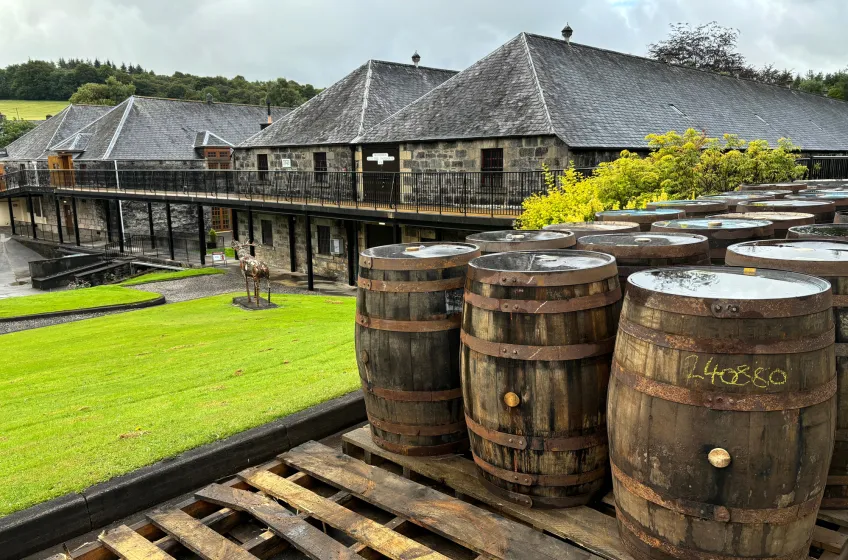
Arriving visitors pass through a landscaped courtyard dominated by a stag statue, a nod to the distillery’s name. It sets the scene for photos and gives a first sense of the site’s scale and heritage architecture.
Mash House and Mill
The tour typically begins with the milling of malted barley and the mash tun where hot water extracts fermentable sugars. Guides explain grist ratios, temperature steps and how these decisions influence body and fruit character in the eventual spirit.
Wooden Washbacks
Glenfiddich is known for using large wooden washbacks, traditionally made from Oregon pine or similar timbers. Seeing active fermentation up close, with foam caps and carbon dioxide venting, makes the shift from sweet wort to a beer-like wash very tangible.
Copper Pot Stills
The still house is the visual highlight, with ranks of onion-shaped copper stills. Each is carefully matched to replace its predecessor so that shape—and thus reflux and copper contact—remains consistent across generations. This continuity is key to Glenfiddich’s light, fruity new make style.
Spirit Safe and Cut Points
The spirit safe shows how the flow of distillate is monitored and diverted, with discussion of foreshots, heart and feints. Guides outline how precise cut points affect esters and congeners, shaping the orchard-fruit character for which the distillery is known.
Robbie Dhu Spring Water
Glenfiddich draws water from the nearby Robbie Dhu springs for mashing and reduction. You’ll hear how mineral composition and consistent supply underpin style and how the company protects the catchment.
Traditional Warehousing
The warehouses, with thick stone walls and earthen floors, maintain stable conditions for maturation. Visitors often get to nose cask samples and learn about the influence of American oak ex-bourbon barrels, European oak ex-sherry casks and longer secondary maturations.
The Solera Concept
A distinctive feature is the Solera marrying tun used for Glenfiddich 15 Year Old. Rather than a true sherry-style solera, it is a large vat that is never fully emptied, encouraging consistency and complexity when different cask types are married.
Specialised Tastings
After the production walk-through, guided tastings typically compare core expressions such as 12, 15 and 18 Year Old, sometimes alongside experimental or distillery-exclusive releases. Educators explain aroma wheels, nosing technique and how to add water without muting delicate volatiles.
Malt Barn Café and Bar
The Malt Barn serves light meals using local produce and offers whisky flights, drams by the measure and soft options for drivers. It’s a comfortable space to linger, with knowledgeable bar staff and pairing suggestions that show how different expressions work with food.
Distillery Shop and Exclusives
The shop stocks the core range and limited bottlings. Depending on current policy, there may be a cask from which you can fill your own bottle, complete with personalised labeling. Exclusive single casks or small-batch releases change over time, making the shop a good stop even for repeat visitors.
Heritage Displays and Archive Material
Interpretive panels chart Glenfiddich’s growth from a family project in the late 19th century to a global brand, including the post-Prohibition push into single malts when blends dominated. Period photographs and artefacts add context without overwhelming the technical side.
Grounds and Architecture
The pagoda kiln roofs, associated with architect Charles Doig, provide classic Speyside silhouettes. Paths through the grounds make it easy to take in the site between tour and tasting, with seasonal plantings adding colour.
Events and Festival Season
Glenfiddich often participates in the Spirit of Speyside Whisky Festival, with special tastings or one-off tours. Event availability varies, but the distillery’s capacity means it can host structured sessions that appeal to different knowledge levels.
Facilities
Visitor Reception and Ticketing
A clearly signposted reception handles tour bookings and check-ins. Staff can advise on tour tiers, durations and accessibility considerations before you commit.
Parking and Access
There is on-site parking for cars and spaces set aside for coaches. Surfaces around the visitor centre are generally paved; production areas and warehouses can include steps and uneven floors.
Accessibility
Parts of the tour route may involve stairs or narrow walkways. If step-free access is required, speak to the team when booking; adapted routes are sometimes available, though access to certain production spaces can be restricted for safety.
Food, Drink and Non-Alcohol Options
The café offers hot and cold dishes, coffee and tea, and non-alcoholic serves. Designated driver options, such as take-home tasting kits or soft pairings, may be available.
Restrooms and Baby Changing
Modern restrooms are located near the visitor centre, typically including accessible facilities. Baby changing may be available in specific cubicles.
Photography and Safety
Photography is often allowed in outdoor and some indoor areas, but restrictions can apply in the still house and warehouses due to flammable vapours and operational safety. Mobile phones may need to be kept in pockets in certain zones; always follow staff guidance.
Nearby attractions
The Balvenie Distillery, Dufftown
A short walk away, Balvenie offers a contrasting house style with extensive sherry influence and traditional floor maltings. Tours are limited and should be booked well ahead.
Balvenie Castle
The ruins of a medieval fortress sit on the edge of Dufftown, offering atmospheric stonework and views over the surrounding countryside. It pairs well with a morning distillery visit.
Speyside Cooperage, Craigellachie
An engaging visitor centre where you can watch coopers build and repair casks. It adds depth to what you’ll learn about maturation at Glenfiddich.
Glen Grant Garden and Distillery, Rothes
Known for its Victorian gardens and lighter whisky style, Glen Grant combines a peaceful walk with a compact distillery experience.
The Macallan Estate, Craigellachie
A striking modern distillery and visitor experience focused on architecture, cask policy and sherry-seasoned oak. Pre-booking is advisable.
Craigellachie Bridge and the River Spey
The cast-iron bridge is a local landmark, and riverside walks put you close to the landscape that shapes Speyside whisky.
The Speyside Way
A long-distance path with sections accessible from Dufftown and Craigellachie, useful for linking visits or enjoying a half-day walk.
Keith & Dufftown Railway
A heritage railway operating on selected dates, offering a leisurely connection through Speyside scenery when services run.
Practical advice
Booking and Timing
Tours often sell out, particularly in peak months and during the Spirit of Speyside Whisky Festival. Reserve in advance to secure preferred times and tour levels. Allow extra time for the shop and café; many visitors spend longer than they expect.
Getting There
Dufftown is easiest by car. Public transport is workable but limited; the nearest mainline rail stations are typically Elgin and Keith, with onward bus or taxi. If you’re planning tastings, consider a local driver or private tour.
What to Wear
Closed, flat footwear is recommended due to stairs, grating and sometimes damp floors in warehouses. Dress in layers; interiors can vary from warm still houses to cool maturation spaces.
Tasting Etiquette
Avoid strong perfumes or aftershaves, which can interfere with nosing. Adding a few drops of water can open aromas; staff will advise. Drivers should ask about take-away sample packs where offered.
Age Restrictions
Under-18s cannot be served alcohol, and younger children may be restricted from parts of the production areas. Check current policies if visiting as a family.
Photography and Devices
Assume that phones and cameras may be restricted in certain areas and follow instructions. Flash is usually discouraged around active operations.
Weather and Seasonality
Speyside weather changes quickly. In winter, daylight is short and opening hours may be reduced; in summer, long evenings make it easy to combine multiple stops.
Accessibility Arrangements
If you need step-free access or have sensory considerations, contact the visitor team ahead of time. Alternative tasting formats and adjusted routes may be available.
Purchasing and Shipping
The shop stocks travel-friendly sizes and, at times, exclusive bottlings. International shipping or packing materials may be available for an additional fee; ask at checkout.
Combining Distilleries
A realistic day might pair Glenfiddich with Balvenie or the Speyside Cooperage, leaving time for Craigellachie or Rothes the next day. Over-scheduling reduces the value of tastings.
Glenfiddich Distillery offers a thorough, well-presented introduction to Speyside whisky with enough depth for seasoned enthusiasts. The combination of production access, guided tastings, a comfortable visitor centre and strong links to nearby sites makes it a practical and rewarding stop on a Speyside itinerary.
Shortlist
- Your Shortlist is empty