
Discover Fréjus | A Visitor's Introduction to Fréjus
Recommended places to visit, places to stay and things to do in and around Fréjus
Fréjus is a sun-drenched town on the French Riviera, located in the Var department of southeastern France between Cannes and Saint-Tropez. Rich in Roman heritage, packed with sandy beaches, and flanked by the dramatic Esterel Mountains, Fréjus offers an irresistible blend of history, seaside relaxation, culture, and outdoor adventure. It’s one of the Côte d’Azur’s more underrated gems—perfect for travellers who want a taste of everything Provence has to offer without the price tag or crowds of the more famous Riviera hotspots.
Recommended Fréjus Accommodation: Hotels Bed & Breakfasts
Why is Fréjus Worth a Visit?
Fréjus is worth visiting for its unique mix of Roman ruins, medieval charm, and Mediterranean leisure. Once a major Roman port known as Forum Julii, the town still boasts some of the best-preserved ancient monuments in southern France, including an amphitheatre, aqueduct, and baths. But Fréjus isn’t just about the past—it’s also a modern coastal resort with long sandy beaches, a vibrant marina, and family-friendly attractions.
The town is divided into two main areas: Fréjus-Ville, the historical inland centre with its cobbled lanes and Roman architecture, and Fréjus-Plage, the beachside area perfect for sunbathing, dining, and strolling. Together, they offer a satisfying variety of experiences for history buffs, beach lovers, families, and adventurers alike.
Whether you're here for the heritage, the sunshine, or the proximity to both the coast and the countryside, Fréjus is an easygoing and rewarding destination.
Fréjus Highlights: Things to See and Do in Fréjus
Fréjus Amphitheatre (Arènes de Fréjus)
The Roman amphitheatre is one of the town’s top historic attractions and dates back to the 1st century AD. Once hosting gladiator fights and public spectacles, it’s now used for concerts and cultural events in summer. You can wander through the structure and imagine the roar of the crowds in ancient times.
It’s also a fantastic photo spot, especially at golden hour when the stone glows in the southern light.
Cathédrale Saint-Léonce and Cloître
In the heart of the old town sits the Cathedral of Saint-Léonce, part of a remarkable medieval complex including a 12th-century cloister and baptistery. The cloister, with its wooden-beamed ceiling and stone columns, is particularly atmospheric and often delightfully quiet.
Inside the cathedral, you’ll find Romanesque and Gothic architecture, religious artworks, and a peaceful space to reflect on the town’s long spiritual history.
Archaeological Museum (Musée Archéologique)
Housed in the bishop’s palace next to the cathedral, the Musée Archéologique is home to a fascinating collection of Roman artefacts, mosaics, and ceramics. The museum brings Fréjus’ ancient past to life, with well-presented displays and a short film about the town’s history.
If you enjoy Roman history, this is a must-visit and offers valuable context for everything else you’ll see around town.
Aqueduct of Fréjus
Stretching across the landscape just outside the centre, the Roman aqueduct is another reminder of Fréjus’ glory days. Built to supply water from the hills to the Roman city, parts of the aqueduct are still visible and accessible via walking trails.
For a closer look, head to the Val d'Esquières area, where you can admire the stone arches framed by pine trees.
Fréjus Plage
If you're here for the coast, Fréjus Plage delivers. This long sandy beach is perfect for swimming, sunbathing, and water sports. The water is shallow and calm, making it ideal for families, and the beach is backed by a promenade lined with cafés, restaurants, and shops.
You’ll also find beach clubs offering loungers and umbrellas for rent, as well as kiosks hiring out paddleboards, kayaks, and jet skis.
Port-Fréjus
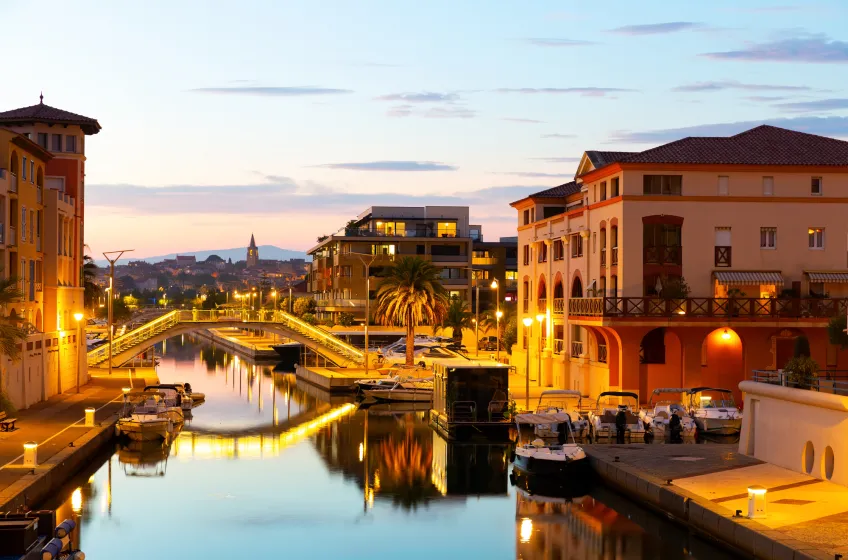
The town’s modern marina, Port-Fréjus, is a lively area packed with restaurants, ice cream parlours, boutiques, and yacht moorings. It's a lovely spot for an evening stroll, dinner by the water, or just watching boats bobbing in the harbour.
Boat excursions depart from here in summer to Saint-Tropez, Îles de Lérins, or along the Esterel coastline, known for its red cliffs and hidden coves.
Base Nature François Léotard
Just west of the marina lies the Base Nature, a massive public park (over 100 hectares) on the site of a former military air base. Today, it’s a multi-use recreational area with walking and cycling paths, sports facilities, a skate park, picnic zones, and a beach.
It’s perfect for families and outdoor lovers looking for a break from the bustle, and events like festivals, markets, and sports competitions are often held here.
Luna Park and Aqualand
Travelling with children or teens? Luna Park, a seasonal fairground near the Base Nature, opens in the summer evenings and offers rides, games, and snack stalls in a fun, festive atmosphere.
Next door is Aqualand Fréjus, the largest water park in the region, featuring slides, wave pools, and play areas. It’s great for cooling off and burning off some energy—expect queues in peak season.
Esterel Mountains
The Massif de l’Esterel, just to the east of Fréjus, is a playground for hikers, mountain bikers, and nature photographers. The red volcanic rock formations, Mediterranean vegetation, and panoramic sea views make it one of the most scenic areas in southern France.
Popular trails include Cap Roux, Pic de l’Ours, and the Corniche d’Or, a winding coastal drive with plenty of lay-bys for photos. This area offers a spectacular contrast to Fréjus’ flat beaches and urban centre.
Practical Advice for Visitors
Getting There
-
By train: Fréjus is served by a mainline train station with TER connections to Nice, Cannes, Marseille, and Toulon. High-speed TGV services also stop at nearby Saint-Raphaël, which is just 5 minutes away by local train or 10 minutes by car.
-
By car: Fréjus is well connected via the A8 motorway and is about 1 hour from Nice, 1 hour from Aix-en-Provence, and 30 minutes from Saint-Tropez (via inland routes).
-
By bus: Regional buses link Fréjus with nearby towns and villages. Bus 7601 runs between Fréjus and Saint-Tropez in summer.
Parking
Fréjus has ample parking, including:
-
Parking Paul Vernet (central, near old town)
-
Parking Bonaparte (close to Fréjus Plage and marina)
-
Parking Base Nature (free and spacious)
In summer, it’s best to arrive early or use public transport for beach visits, as seafront parking fills quickly.
Dining
Fréjus offers a wide range of dining options, from beachside brasseries to traditional Provençal bistros:
-
L’Apéronav: A floating bar-restaurant in Port-Fréjus offering sunset drinks and tapas.
-
La Brasserie du Port: Classic seafood and French cuisine with a lively atmosphere.
-
Le Boeuf sur le Quai: A favourite for meat lovers, also in the marina area.
-
Le Jardin de Jules: Tucked away in the old town, this refined spot serves creative Provençal cuisine.
-
Glacier La Passagère: Famous for generous, artisanal ice cream—perfect after a beach day.
Shopping
Fréjus has a good selection of shops, especially around the old town and marina. Look for:
-
Provençal fabrics and tableware
-
Handmade soaps and lavender products
-
Artisan olive oils, tapenades, and wines
-
Local crafts and artwork
Markets are held on:
-
Wednesdays and Saturdays in the town centre
-
Sunday at Port-Fréjus (seasonal)
-
Tuesday evenings: Summer night market along the seafront
When to Visit
-
Spring (April–June): Ideal weather for sightseeing and hiking, before the summer rush.
-
Summer (July–August): Peak season with a full events calendar, beach buzz, and family-friendly activities.
-
Autumn (September–October): Still warm with fewer crowds and perfect sea temperatures.
-
Winter: Mild weather, quieter atmosphere, and off-season charm—some attractions may close or reduce hours.
Local Events
-
Les Nuits Auréliennes (July): A summer theatre festival in the Roman theatre.
-
Fête de la Saint-Pierre (June): A maritime celebration honouring fishermen with processions and fireworks.
-
Les Bravades de Fréjus (May): Traditional Provençal parade with costumes, drums, and muskets.
-
Christmas Market: Held in the old town with lights, stalls, and festive entertainment.
Exploring Beyond Fréjus
Fréjus is an ideal base for exploring the Var and the eastern Côte d’Azur:
-
Saint-Raphaël (5 minutes): Seaside town with more nightlife and sandy beaches.
-
Roquebrune-sur-Argens (20 minutes): A hilltop village with character and countryside views.
-
Gorges du Verdon (1 hour 15 minutes): A must-see natural wonder for kayaking, hiking, and scenic drives.
-
Saint-Tropez (45 minutes via inland roads): Glamour, beach clubs, and a colourful old port.
-
Cannes (35 minutes): Film festivals, shopping, and coastal chic.
Final Thoughts
Fréjus is a town of many layers: ancient and modern, cultural and coastal, relaxed yet full of life. Whether you’re exploring Roman ruins, building sandcastles on the beach, sipping wine by the marina, or hiking through red rock cliffs, Fréjus offers something for everyone—and does it with warm, unpretentious charm.
Perfect for families, couples, history fans, and adventurers alike, Fréjus invites you to slow down, explore deeply, and enjoy the best of the Riviera without the rush.
Shortlist
- Your Shortlist is empty