Why is Exeter Worth a Visit?
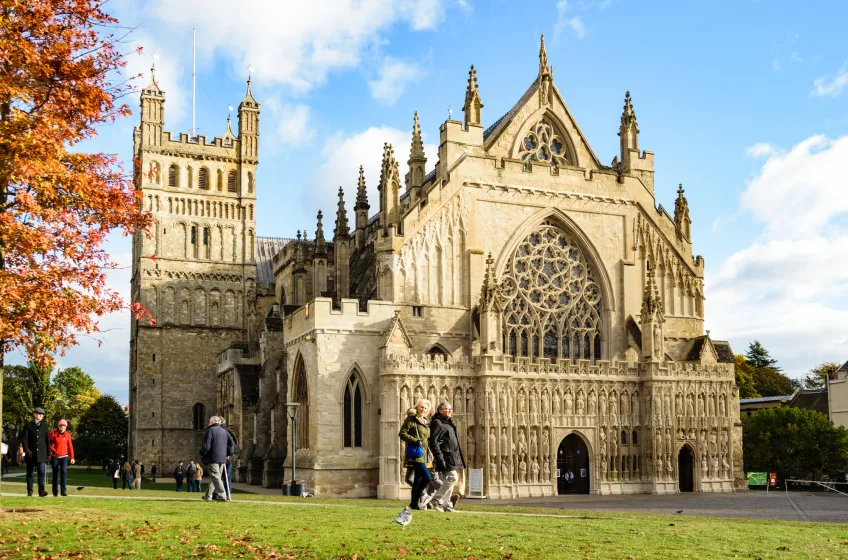
Exeter’s appeal lies in its rich history, beautiful landscapes, and cosmopolitan atmosphere. As one of the oldest cities in England, Exeter boasts Roman ruins, medieval churches, and Georgian townhouses that line its streets. The iconic Exeter Cathedral, which towers over the city, serves as the heart of its historic centre.
Beyond its heritage, Exeter offers excellent shopping, top-notch restaurants, and a thriving student scene thanks to the prestigious University of Exeter. The city's quayside is a hub for outdoor activities, live music, and artisan markets, while nearby Dartmoor and the South Devon coast offer plenty of opportunities for nature lovers.
Exeter Highlights: Things to See and Do in Exeter
1. Exeter Cathedral
Dominating the skyline, Exeter Cathedral is one of the finest examples of Gothic architecture in the UK. Dating back to 1133, the cathedral features the longest unbroken stretch of Gothic vaulting in the world. Visitors can explore its stained glass windows, medieval carvings, and intricate astronomical clock.
Don’t miss the chance to climb the cathedral tower for panoramic views over the city. The Cathedral Green is also a popular spot for picnics, festivals, and outdoor events throughout the year.
2. Exeter’s Underground Passages
Exeter is home to a unique network of medieval underground passages, originally built to bring fresh water to the city. These narrow tunnels date back to the 14th century and are the only ones of their kind in the UK. Guided tours offer a fascinating insight into Exeter’s medieval plumbing and engineering.
The passages are dark, mysterious, and steeped in history, making them a must-see for visitors looking to uncover Exeter’s secrets.
3. The Quayside
Exeter’s quayside is a vibrant area filled with cafés, restaurants, bars, and independent shops. The cobbled streets and converted warehouses create a unique atmosphere, perfect for a leisurely afternoon by the river.
Visitors can hire kayaks, paddleboards, or take a scenic boat trip along the River Exe. The Exeter Custom House, located on the quay, houses exhibitions and local history displays. In summer, the quay comes alive with street performers, live music, and artisan markets.
4. Royal Albert Memorial Museum (RAMM)
RAMM is Exeter’s award-winning museum, featuring exhibits on natural history, world cultures, and local heritage. The museum’s collection spans prehistoric artefacts to contemporary art, offering something for everyone.
The Exeter Roman Wall and mosaics are among the highlights, while the museum’s free admission makes it a popular stop for families and history lovers.
5. Exeter Castle and Rougemont Gardens
Perched above the city, Exeter Castle (Rougemont Castle) dates back to the Norman Conquest. The castle grounds are open to the public, offering scenic views and a peaceful place to walk. Rougemont Gardens, built around the ancient Roman walls, provide a tranquil setting to explore.
The castle plays host to weddings, festivals, and open-air concerts, contributing to Exeter’s lively cultural scene.
6. Exeter’s Historic Guildhall
Standing in the heart of the city, Exeter Guildhall is the oldest municipal building still in use in the UK, with origins dating back over 800 years. This historic landmark has hosted everything from royal visits to public debates. Visitors can tour the building and admire its medieval oak panels and hammerbeam roof.
7. Gandy Street
Gandy Street is one of Exeter’s quirkiest and most famous lanes. Believed to have inspired Diagon Alley in the Harry Potter series, the street is lined with independent shops, jewellery stores, and boutiques. It’s the perfect place to pick up unique souvenirs or enjoy a drink at one of the hidden pubs.
8. Northernhay Gardens
Adjacent to Rougemont Gardens, Northernhay Gardens is the oldest public open space in England. Originally laid out in the 17th century, the gardens feature statues, memorials, and winding paths. It’s a peaceful escape just moments from the bustling city centre.
9. The University of Exeter and Streatham Campus
The University of Exeter’s Streatham Campus is one of the most beautiful in the country, offering botanic gardens, lakes, and scenic walking paths. The campus often hosts lectures, performances, and art exhibitions open to the public.
10. Dartmoor National Park
A short drive from Exeter, Dartmoor National Park offers hiking, cycling, horse riding, and wildlife spotting across its rugged landscapes. The granite tors, ancient woodlands, and wild ponies make Dartmoor one of Devon’s most iconic outdoor destinations.
Practical Advice for Visitors
Getting There
Exeter is easily accessible by road, rail, and air. Exeter St David’s Railway Station connects the city to London Paddington (2 hours), Bristol, and Plymouth. Exeter is located just off the M5 motorway and is served by Exeter Airport, with flights to major UK and European destinations.
Parking
Exeter offers ample parking, with large multi-storey car parks near the city centre and Cathedral Green. Popular options include Guildhall Car Park and Princesshay Car Park. There are also park-and-ride services from the outskirts of the city.
Dining
Exeter’s food scene is thriving, with pubs, restaurants, and bistros offering a wide range of cuisines. Harry’s Restaurant and On the Waterfront are local favourites, while The Ivy Exeter provides fine dining in the city centre. Don’t miss The Fat Pig, a renowned gastropub serving locally sourced dishes and craft beers.
Best Time to Visit
Exeter is a year-round destination, but the best time to visit is during spring and summer (April to September), when the city hosts numerous festivals, markets, and outdoor events. The Christmas market at Cathedral Green is also a highlight during winter.
Exploring Beyond Exeter
From Exeter, visitors can easily explore Exmouth, Sidmouth, and the Jurassic Coast, as well as Tiverton, Dartmoor, and the English Riviera. The city’s location makes it the perfect base for discovering Devon’s coastline and countryside.