
Beachy Head | A Visitor's Introduction to Beachy Head, Near Eastbourne
Beachy Head is a striking chalk headland located in East Sussex, on the south coast of England, just to the west of the seaside town of Eastbourne. Rising to a height of approximately 162 metres (531 feet) above sea level, it is the highest chalk sea cliff in Britain and offers panoramic views of the English Channel. Its dramatic appearance, shaped by centuries of coastal erosion, along with its natural beauty and historical significance, makes it one of the most iconic landmarks along the South Downs. The headland forms part of the larger South Downs National Park and is managed for both conservation and public enjoyment.
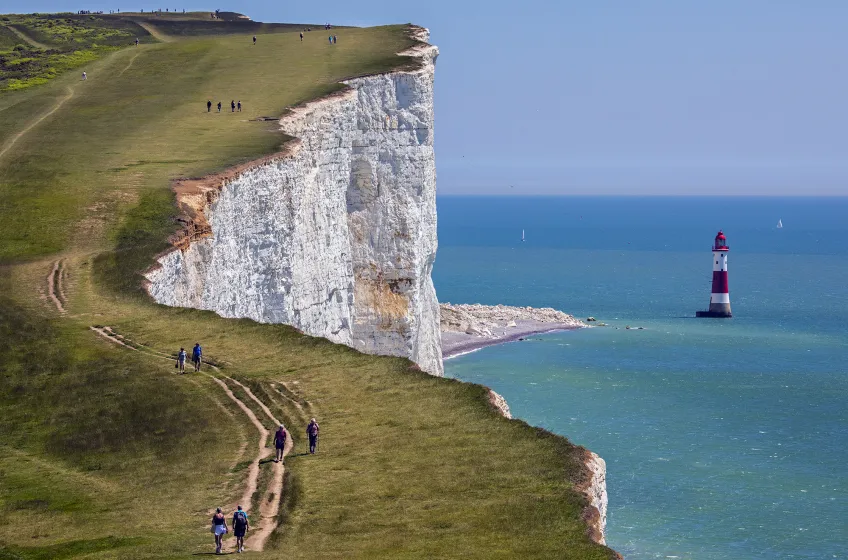
Known for its white chalk cliffs, rich biodiversity, and expansive coastal views, Beachy Head attracts visitors year-round. Whether walking the clifftop paths, admiring the famous red-and-white striped lighthouse below, or simply soaking in the sea air, the area provides a wide range of experiences. The site is accessible via road and public footpaths, and its openness to the elements adds to the sense of wilderness, despite its proximity to urban areas.
Recommended Eastbourne accommodation: Hotels Bed & Breakfasts Pub Accommodation
Why is Beachy Head worth a visit?
Beachy Head offers a rare combination of natural spectacle, geological interest, historical relevance and recreational opportunity, making it a compelling destination for a wide variety of visitors. The chalk cliffs, formed during the Late Cretaceous period, have been shaped over millennia by wind and sea, creating a distinctive coastline that is both beautiful and ecologically significant. Birdlife, wildflowers and changing weather conditions make every visit different, and photographers, walkers and naturalists alike will find something of interest.
One of the area’s main attractions is its extensive network of walking trails. The South Downs Way, a long-distance footpath, passes directly along the clifftop, providing views that extend as far as Dungeness to the east and the Isle of Wight on clear days to the west. The scenic route between Beachy Head and Birling Gap is particularly popular and includes a number of waymarked paths and viewpoints.
Historical and cultural interest further enhance the appeal. The headland has long held maritime significance, both for its navigational role and its more sombre reputation due to the numerous shipwrecks that have occurred nearby. It was also an important location during World War II, used as a strategic lookout and for defensive measures. In addition, Beachy Head has featured in numerous films, television series and literary works, adding cultural resonance to its physical prominence.
Beachy Head Highlights
The Cliffs and Lighthouse
The most visually iconic aspect of Beachy Head is the chalk cliff itself, which plunges vertically to the sea below. At its base stands the Beachy Head Lighthouse, constructed in 1902. This red-and-white striped tower is a familiar sight, especially at low tide when it is most visible. Though not open to the public, it remains a focal point for visitors and is best viewed from above on the clifftop paths.
Belle Tout Lighthouse
Just west of Beachy Head stands the Belle Tout Lighthouse, originally built in 1832 and now decommissioned. This lighthouse has an unusual history, including being moved inland in 1999 due to coastal erosion. Today, it operates as a private bed and breakfast, but the structure remains visible from the path and contributes to the maritime character of the area.
Walking and Hiking Trails
The South Downs Way and connecting local footpaths provide a wealth of walking opportunities, from short strolls to all-day hikes. The path from Eastbourne to Beachy Head is about 3 miles (5 km) and is popular with day visitors. Another frequently walked route is from Beachy Head to Birling Gap, and onward to the Seven Sisters cliffs, offering continuous views of the coastline.
Wildlife and Natural Environment
Beachy Head is part of the Eastbourne Downland Estate and supports a wide range of flora and fauna. Skylarks, kestrels and peregrine falcons are commonly seen overhead, while wildflowers, including orchids in spring and summer, add seasonal colour. The grassland areas are managed to maintain biodiversity, and grazing by sheep and cattle helps sustain the habitat.
Military History
During World War II, the area around Beachy Head was fortified against the threat of invasion. Remnants of bunkers, observation posts and other military installations can still be found. Some of these have been incorporated into interpretive trails and signage, offering insights into the site’s wartime past.
Visitor Centre and Beachy Head Pub
Near the main car park is the Beachy Head Story visitor centre, which includes exhibitions on local history, geology, and wildlife. Adjacent is the Beachy Head pub, offering meals and refreshments with views over the Downs. The centre provides orientation for those new to the area and has information on seasonal events and walks.
Birling Gap
Located about 3.5 km west of Beachy Head, Birling Gap is managed by the National Trust and provides direct access to the beach at low tide. It includes a visitor centre, café, and seasonal activities. The beach is popular for fossil hunting and photography, though access is dependent on tide times due to the risk of being cut off.
The Seven Sisters Cliffs
Continuing westward from Beachy Head and Birling Gap are the Seven Sisters, a series of chalk cliffs that are often mistaken for Beachy Head itself due to their visual similarity. The undulating cliffs form one of the most dramatic stretches of coast in southern England and are best appreciated on foot via the clifftop trail.
Eastbourne Seafront
Eastbourne, located to the east of Beachy Head, offers traditional seaside attractions including a Victorian pier, promenade, gardens and art galleries. Its close proximity makes it a convenient base for visitors who wish to explore Beachy Head while enjoying the amenities of a coastal town.
Nearby Attractions
In addition to Eastbourne and the South Downs, a number of other attractions lie within easy reach of Beachy Head.
The Seven Sisters Country Park, situated further west beyond Birling Gap, offers canoeing, cycling and birdwatching in the Cuckmere Valley. The visitor centre provides maps and information on walking routes that follow the Cuckmere River to the sea.
Redoubt Fortress, located on Eastbourne’s seafront, is a circular Napoleonic fort that now serves as a museum of local military history. It offers an alternative perspective on Eastbourne's defensive heritage.
Herstmonceux Castle, approximately 30 minutes by car from Beachy Head, is a 15th-century moated brick castle with formal gardens and a science centre. It appeals to families and those with an interest in medieval history or astronomy.
The Towner Eastbourne, a contemporary art gallery near Eastbourne’s Congress Theatre, hosts exhibitions from UK and international artists and contributes to the cultural life of the area.
Cuckmere Haven, just west of the Seven Sisters, is a scenic meeting point of the Cuckmere River and the sea, ideal for picnicking, walking or landscape photography. Its meandering river and marshland attract numerous bird species.
Practical Advice
Visitors to Beachy Head should be prepared for changeable weather, particularly due to the site’s exposed location. Even in summer, sea mist and strong winds can descend quickly, and appropriate clothing is advisable. The clifftop paths are mostly unprotected, and it is essential to stay well back from the edge due to risks of erosion and cliff falls.
Parking is available at several points along the clifftop road, including at the Beachy Head visitor centre and Belle Tout. Charges may apply during peak times. Public transport from Eastbourne includes seasonal bus services to the cliff area, particularly during summer months.
Footwear suitable for uneven and occasionally muddy terrain is recommended, especially after rainfall. The paths are generally well maintained but can be steep in places, so a moderate level of fitness is useful for those planning longer walks.
While there are no beaches directly accessible from Beachy Head itself, nearby Birling Gap provides access at low tide. Caution is needed due to slippery rocks and the risk of becoming trapped by the incoming tide.
The area is open year-round, and sunrise and sunset visits can be especially rewarding for photographers. However, visitors should take care during low light conditions and ensure they are familiar with return routes.
Visitors with mobility impairments may find access limited in places, though some viewpoints and the visitor centre are accessible by car. Dogs are allowed on most footpaths but should be kept on leads near livestock and cliff edges.
Beachy Head is also known for its association with mental health concerns, and support signage is visible in key areas. Visitors are encouraged to respect the landscape and the seriousness of its history.
Summary
Beachy Head offers an engaging blend of natural beauty, coastal walking, and historical interest, all within reach of a major town. Its dramatic chalk cliffs and sweeping views are complemented by access to trails, local wildlife, and nearby cultural attractions. Whether as part of a longer journey along the South Downs or as a day trip from Eastbourne or London, Beachy Head remains one of southern England’s most rewarding and distinctive coastal landscapes.
Shortlist
- Your Shortlist is empty