
Discover Dunvegan | A Visitor's Introduction to Dunvegan
Recommended places to visit, places to stay and things to do in and around Dunvegan
Dunvegan is a historic village on the northwest coast of the Isle of Skye, best known as the home of Dunvegan Castle, the seat of Clan MacLeod for over 800 years. Set between the craggy Cuillin Mountains and the wild Atlantic coast, Dunvegan offers a blend of ancient heritage, spectacular scenery, and peaceful island life. Though smaller and quieter than Portree or Broadford, Dunvegan has a strong sense of character and serves as an excellent base for exploring the west and north of Skye.
With its historic roots, lochs and sea views, craft shops, and nearby natural wonders, Dunvegan is ideal for visitors seeking a quieter, more atmospheric corner of the island — where history feels alive, and the land still whispers old Highland tales.
Recommended Dunvegan Accommodation: Hotels Bed & Breakfasts
Why is Dunvegan Worth a Visit?
Dunvegan is worth visiting for its extraordinary history, vibrant Highland identity, and its position near some of Skye’s most memorable landscapes. As home to the oldest continuously inhabited castle in Scotland, it’s a place where the island’s clan culture still feels close at hand.
Set on the edge of Loch Dunvegan, the village offers stunning views of sea lochs, mountains, and the nearby MacLeod’s Tables, two distinctive flat-topped hills rising to the south. From here, you can explore Skye’s wild western cliffs, visit seal colonies, and access some of the island’s finest dining and artisan shops — all while staying away from the busiest tourist routes.
Whether you come for castle-hopping, wildlife, food, or solitude, Dunvegan is one of Skye’s most authentic and rewarding destinations.
Dunvegan Highlights: Things to See and Do in Dunvegan
Dunvegan Castle and Gardens
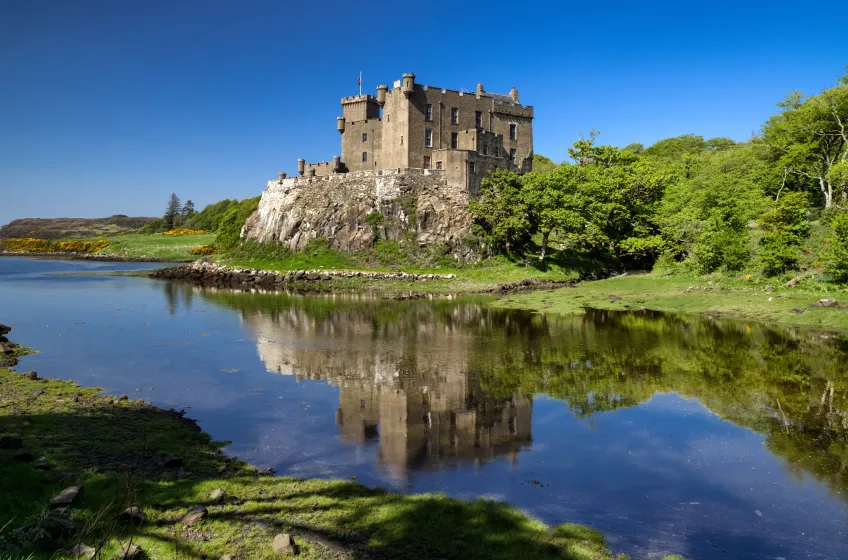
Undoubtedly the main attraction, Dunvegan Castle has been the ancestral seat of Clan MacLeod for over 800 years and is still lived in by the chief’s family. The castle is perched above Loch Dunvegan, surrounded by ancient woodland and beautifully landscaped gardens.
Inside, you can explore ornate drawing rooms, clan artefacts, and the legendary Fairy Flag — said to bring victory and protection in battle. The gardens include walled sections, waterfalls, and tropical plants, all sheltered from Skye’s often harsh weather.
From the castle grounds, you can also take a boat trip to the local seal colony, offering close-up views of grey and common seals in their natural habitat.
Coral Beach
About 4 miles north of Dunvegan lies Claigan Coral Beach, one of Skye’s most beautiful — and unusual — coastal spots. Made not from coral, but from crushed maerl, a type of sun-bleached seaweed skeleton, the beach shines almost white in the sunlight and contrasts dramatically with the clear turquoise waters.
It’s a relatively easy 25-minute walk from the car park, with stunning views across Loch Dunvegan and Isay Island. Perfect for photography, picnics, and paddling (if you're brave!).
MacLeod’s Tables
These two striking, flat-topped hills — Healabhal Mhòr and Healabhal Bheag — dominate the skyline south of Dunvegan. Known collectively as MacLeod’s Tables, legend says they were named after a banquet served to King James V on their summits.
Hiking the tables is challenging but rewarding, with panoramic views over Skye, the Outer Hebrides, and the Cuillin range. These walks are for the more experienced, but even from below, the tables add drama to the Dunvegan landscape.
Dunvegan Village and Pier
The village itself is small but friendly, with craft shops, galleries, bakeries, and a handful of well-regarded places to eat. The old stone pier is a peaceful spot for views across the loch and is often visited by seabirds and the occasional curious seal.
The Dunvegan Community Hall sometimes hosts local events, ceilidhs, and markets — check community boards or ask in shops for what’s on during your visit.
Giant MacAskill Museum
Dedicated to Angus MacAskill, the so-called “World’s Tallest True Giant”, this small museum celebrates the life of the Dunvegan-born man who stood 7 feet 9 inches tall and became a 19th-century circus celebrity. While modest in scale, the museum offers a quirky slice of local history and Highland storytelling.
It’s right on the main road through the village and makes a fun 15–20 minute visit, especially if you're interested in folklore and curiosities.
Wildlife and Birdwatching
Dunvegan’s location on a sheltered sea loch makes it a fantastic place for wildlife watching. Keep your eyes open for:
-
Seals (especially during boat trips)
-
Otters hunting at dawn and dusk
-
Sea eagles soaring overhead
-
Red deer in the nearby hills
-
Waders and seabirds along the shorelines
Many local guides offer wildlife tours, or you can simply explore the area’s quiet beaches and viewpoints on your own.
Dunvegan Loops and Walking Trails
Several easy-to-moderate walking routes loop through the countryside and coastline around Dunvegan. Try:
-
Loch Dunvegan loop – A low-level circular walk with loch views and wildlife.
-
Claigan to Coral Beach – A gentle coastal ramble.
-
Dunvegan Castle to Dunvegan Head – For dramatic sea views and coastal birdlife.
Paths are generally easy to follow, but some can be muddy after rain. Waterproof boots are always a good idea!
Practical Advice for Visitors
Getting There
-
By car: Dunvegan is about 40 minutes from Portree, following the A850 west across the island. From the Skye Bridge, it’s roughly a 1 hour 20 minute drive.
-
By bus: Local buses (Stagecoach) run from Portree to Dunvegan several times a day. Check schedules in advance, especially on weekends.
-
By bike: Popular with cyclists, the route from Portree to Dunvegan is scenic, with rolling hills and sea views.
Parking
Free parking is available in Dunvegan village, at Dunvegan Castle, and near Claigan Coral Beach. Most attractions have dedicated car parks, though they can fill up in summer.
Avoid parking on narrow roadside verges, as this can block access for locals and emergency services.
Dining
Dunvegan offers some of the best dining experiences on Skye, from relaxed cafés to Michelin-starred meals:
-
The Three Chimneys – World-renowned fine dining using local ingredients. Advance booking essential.
-
The Old School Restaurant – A welcoming bistro-style eatery in a converted schoolhouse.
-
Café Lephin – Charming café near Glendale with fresh baking and a cosy atmosphere.
-
Jann’s Cakes – Bakery and café offering cakes, sandwiches, and artisan chocolate.
There are also small pubs and takeaways for casual dining, and a local shop selling essentials, snacks, and local produce.
Shopping
For a village of its size, Dunvegan punches above its weight in terms of craft and gift shopping:
-
Dandelion Designs – Art, textiles, and handmade gifts from local artists.
-
Dunvegan Pottery – Beautiful ceramics inspired by Skye’s natural tones and textures.
-
Local food producers – Look for Skye Sea Salt, honey, and home baking at village shops and roadside stands.
When to Visit
-
May to September: Best weather and full access to attractions and dining. Expect more visitors in July and August.
-
Spring (April–May): Wildflowers, fewer midges, and quieter roads.
-
Autumn (September–October): Golden hills, dramatic skies, and thinning crowds.
-
Winter: Very quiet and atmospheric, with many businesses closed, but great for solitude and stormy coastlines.
Local Events
Dunvegan is a quiet place, but you might catch:
-
Local ceilidhs or live music nights in village halls or pubs.
-
Craft fairs during summer.
-
Skye Highland Games (held in Portree in August) — a short drive away but often attended by Dunvegan locals.
Exploring Beyond Dunvegan
Dunvegan makes a great base for exploring northwest Skye and beyond:
-
Neist Point Lighthouse – A dramatic clifftop walk to one of Skye’s most iconic lighthouses (30 mins by car).
-
Glendale – A peaceful crofting village with sea cliffs and art studios (20 mins).
-
Orbost and Harlosh – Remote sea lochs and trails with beautiful views.
-
Waternish Peninsula – Home to Skyeskyns, Loch Bay restaurant, and amazing sunsets (40 mins).
Dunvegan is a place of deep roots and big skies, where clan legends, wild beauty, and a slower pace of life come together in one of Skye’s most atmospheric settings. Whether you're tracing family history through castle corridors, wandering a white-sand beach, or gazing across the loch with a dram in hand, Dunvegan offers a soulful, authentic Skye experience — a timeless village with stories in its stones and magic in the air.
Shortlist
- Your Shortlist is empty