
Discover Deux-Sèvres | A Visitor's Introduction to Deux-Sèvres
Recommended places to visit, places to stay and things to do in Deux-Sèvres
Deux-Sèvres is a peaceful and unspoiled department in South West France, part of the Poitou-Charentes region. Named after the Sèvre Nantaise and Sèvre Niortaise rivers, it’s a land of rolling farmland, Romanesque churches, sleepy villages, and unexpected natural beauty. Often overlooked in favour of its coastal neighbours, Deux-Sèvres offers the perfect escape for travellers seeking authentic rural France, heritage towns, quiet countryside, and a slower pace of life.
With its quaint markets, scenic cycling routes, and watery wonderlands like the Marais Poitevin, Deux-Sèvres is ideal for walkers, cyclists, nature lovers, and families looking to discover a quieter corner of the French countryside.
Recommended Deux-Sèvres Accommodation: Hotels Bed & Breakfasts
Why is Deux-Sèvres Worth a Visit?
Deux-Sèvres is worth visiting for its understated charm and richly layered heritage. While it doesn’t boast the big-ticket attractions of France’s better-known regions, it more than makes up for it with peaceful beauty, genuine hospitality, and a deep connection to nature and tradition. The department’s landscape is characterised by gently undulating fields, wooded paths, hidden Romanesque gems, and waterways perfect for a lazy afternoon in a boat or on a bike.
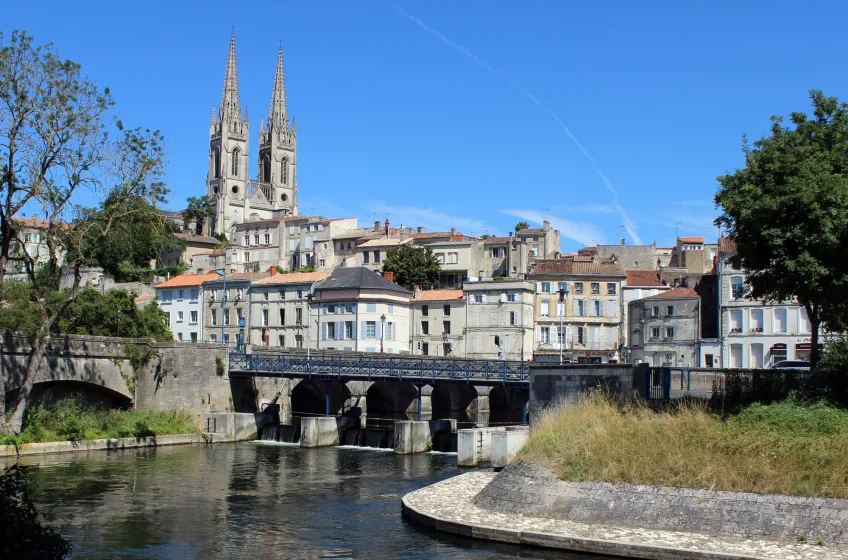
The area’s capital, Niort, is a thriving regional hub with medieval architecture, covered markets, and riverside promenades. Beyond the town, you’ll find a patchwork of medieval towns, traditional farms, and one of the most enchanting natural reserves in France—the Marais Poitevin, also called the “Green Venice”.
Deux-Sèvres is also blessed with good weather, mild winters, and long sunny summers, making it a fantastic year-round destination for nature and culture-focused travel without the crowds.
Deux-Sèvres Highlights: Things to See and Do in Deux-Sèvres
Niort
The lively capital of Deux-Sèvres, Niort is built along the River Sèvre Niortaise and offers an appealing mix of history, modern culture, and nature. Its star attraction is the Donjon de Niort, a twin-towered fortress built by Henry II and Eleanor of Aquitaine in the 12th century. The donjon now houses a museum and offers panoramic views over the town.
Niort also boasts excellent markets, particularly at the Halles de Niort, a striking 19th-century iron-and-glass building packed with fresh produce, cheeses, and local delicacies. The town’s riverbanks and footpaths offer pleasant walking and cycling, while the pedestrianised old quarter is great for shopping and relaxing in a café.
Marais Poitevin
This unique wetland landscape straddles Deux-Sèvres and neighbouring Vendée, and is often referred to as La Venise Verte or the Green Venice. The Marais Poitevin is a tranquil network of canals, dykes, meadows, and forests where visitors can explore by traditional flat-bottomed boat (barque), canoe, or bike.
Base yourself in the atmospheric village of Coulon, the unofficial capital of the marshes, where you can rent boats or join a guided cruise through the labyrinthine waterways. The Maison du Marais Poitevin in Coulon offers an excellent overview of the ecology and history of the marshes.
Wildlife lovers will be thrilled by the abundance of herons, kingfishers, frogs, and dragonflies. The peace of this green wonderland is perfect for families and couples alike.
Parthenay
Set high on a hill above the Thouet River, Parthenay is a picturesque medieval town with cobbled streets, ancient ramparts, and half-timbered houses. It was once an important stop on the Way of Saint James (Camino de Santiago) and retains much of its medieval layout.
The Porte Saint-Jacques, a 13th-century city gate, is particularly impressive, and the historic quarter is full of artisan shops, galleries, and cafés. Each July, Parthenay hosts the Festival Ludique International de Parthenay (FLIP)—one of Europe’s biggest gaming festivals—transforming the town into a giant outdoor playground.
Thouars
In the north of the department lies Thouars, a town with impressive heritage and grand architecture. Its centrepiece is the Château des Ducs de La Trémoïlle, a magnificent 17th-century château perched above the Thouet River.
The town also has an attractive market, peaceful parks, and a lively cultural scene. Don’t miss the Saint-Médard church, the old bridge (Pont des Chouans), and the Orangerie art gallery.
Melle
Melle is a small but striking town known for its trio of Romanesque churches, part of a UNESCO World Heritage site linked to the Santiago de Compostela pilgrimage. The Église Saint-Hilaire, in particular, is a masterpiece of Romanesque art, with intricately carved capitals and peaceful grounds.
Melle also has a quirky edge: it’s home to medieval silver mines, which you can explore on guided tours deep underground. There’s also a contemporary art trail and a lovely arboretum filled with labelled tree species from around the world.
Airvault
Another gem on the Thouet River, Airvault is a charming town with a beautiful Romanesque abbey church, a medieval bridge, and ancient streets perfect for wandering. The Saint-Pierre abbey is one of the best-preserved in western France, and the town’s Museum of Folk Traditions offers insight into local rural life.
The town has a particularly peaceful atmosphere, and its surrounding countryside is perfect for walking and cycling.
Romanesque Church Trail
Deux-Sèvres is filled with Romanesque churches, many modest in size but rich in sculpture and historic detail. This style, with its rounded arches and carved capitals, defines much of the region’s religious heritage.
Highlights include:
-
Église Saint-Eutrope in Saint-Etienne-la-Cigogne
-
Église Notre-Dame in Celles-sur-Belle
-
Église Saint-Pierre in Aulnay (technically just across the border in Charente-Maritime but well worth a visit)
Outdoor Activities and Greenways
The region is laced with signposted walking and cycling trails, often following rivers, canal towpaths, and disused railway lines turned into voies vertes (greenways). These routes are perfect for gentle, car-free exploration of the countryside, especially for families.
Popular routes include the Vélo Francette, which runs from Ouistreham on the Normandy coast all the way down to La Rochelle, passing through Deux-Sèvres and following the Sèvre Niortaise river valley.
Fishing, birdwatching, kayaking, and horse-riding are also popular in the area’s lakes, rivers, and forests.
Practical Advice for Visitors
Getting There
By Train: Niort is the main rail hub and lies on the TGV line from Paris to La Rochelle, with direct trains from Paris Montparnasse taking about 2 hours. Regional trains serve Parthenay, Thouars, and other towns, but service can be limited.
By Car: Deux-Sèvres is best explored by car, especially if you want to visit the smaller villages and rural attractions. The A10 motorway passes through the east of the department, connecting Paris to Bordeaux.
By Air: The nearest airports are La Rochelle (around 1 hour west), Poitiers, and Nantes, all of which offer domestic and seasonal international flights.
Parking
Parking is generally easy and free or inexpensive in most towns and villages. Even in Niort and Parthenay, you’ll find ample parking within walking distance of town centres.
During market days and summer events, arrive early to secure a spot.
Dining
Deux-Sèvres cuisine is rooted in rustic, country cooking. Expect dishes featuring:
-
Mogettes (white beans)
-
Chabichou du Poitou, the region’s famous AOP goat cheese
-
Locally raised lamb and duck
-
River fish, like trout and pike
-
Pineau des Charentes and regional wines from nearby Charente and Loire regions
Restaurants tend to be traditional, offering generous menus at very reasonable prices. Niort has a growing number of contemporary bistros and wine bars, while small towns like Melle and Coulon offer cosy auberges and family-run eateries.
Shopping
Markets are at the heart of Deux-Sèvres life. Visit the Niort market (open Tuesday, Thursday, and Saturday mornings) for fresh produce, flowers, cheese, and local delicacies. Most towns have weekly markets—check local tourism offices for times.
Pick up goat cheese, honey, walnut oil, local charcuterie, and handmade pottery or woven goods at village markets and fairs.
Craft shops and galleries in Parthenay, Melle, and Coulon are great for finding artisan gifts and locally made products.
When to Visit
The best time to visit Deux-Sèvres is from May to September, when the weather is warm and perfect for outdoor activities. June and September offer lovely weather without the peak crowds of July and August.
Spring (April–May) brings wildflowers and green landscapes, while autumn (October) is peaceful, with golden fields and mild temperatures. Winters are generally quiet, with occasional rain but rarely freezing.
Local Events
FLIP – Festival Ludique International de Parthenay (July): A huge open-air gaming festival taking over the medieval town of Parthenay for nearly two weeks.
Niort Jazz Festival (May): A growing music festival attracting jazz, soul, and blues artists to venues across Niort.
Medieval Festivals in Airvault and Bressuire (Summer): Reenactments, costumes, markets, and medieval games for the whole family.
Goat Cheese Fairs (Spring/Summer): Celebrations of Chabichou cheese in villages like Celles-sur-Belle, with tastings, music, and local crafts.
Exploring Beyond Deux-Sèvres
Deux-Sèvres sits at the crossroads of several rich regions:
-
La Rochelle and the Atlantic coast are just over an hour west, perfect for a day by the sea.
-
Futuroscope near Poitiers (an hour north-east) is a top family attraction mixing technology, education, and entertainment.
-
Puy du Fou, a spectacular historical theme park in the Vendée, is also within easy reach.
-
The wine regions of Saumur and Cognac are just beyond the department’s borders and make for excellent day trips.
Deux-Sèvres may not make many travel bucket lists, but that’s precisely its appeal. This is a land of quiet beauty, friendly locals, fascinating history, and green landscapes that invite you to slow down and savour the moment. Whether you're gliding through the Marais Poitevin, sipping coffee in a medieval square, or following a Romanesque trail through sleepy hamlets, Deux-Sèvres promises a deeply authentic and thoroughly French escape.
Shortlist
- Your Shortlist is empty