
Discover Castle Howard | A Visitor's Introduction to Castle Howard
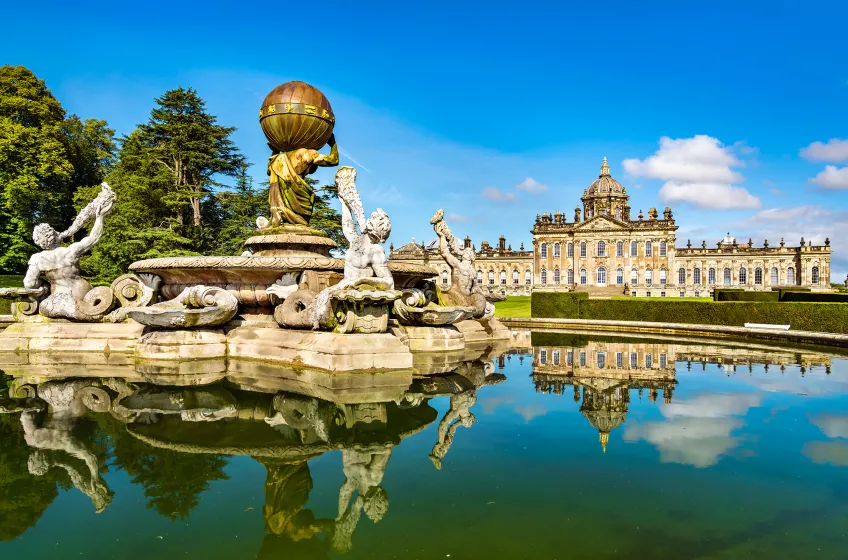
Castle Howard is one of England’s grandest and most recognisable stately homes, situated in the heart of North Yorkshire, approximately 15 miles north-east of York. This historic house has been the private residence of the Howard family for over 300 years and is set within a 9,000-acre estate of parkland, formal gardens, and woodlands. Often mistaken for a medieval castle due to its name, Castle Howard is in fact a baroque-style country house that stands as a testament to 18th-century architecture, art, and landscape design. Its striking dome, symmetrical wings, and ornate interiors have made it a familiar setting for period dramas and film productions, most notably Brideshead Revisited. Whether for its history, its art collection, its landscaped gardens or its family-friendly attractions, Castle Howard offers a multifaceted experience for a broad range of visitors.
Castle Howard visitor information and tickets
Recommended accommodation near Castle Howard: Hotels Bed & Breakfasts Pub Accommodation
Why is Castle Howard worth a visit?
Castle Howard presents a unique opportunity to experience one of the finest examples of baroque architecture in the country, along with beautifully preserved interiors and a substantial collection of art, sculpture, and antique furnishings. The combination of its historical significance, artistic richness, and extensive landscaped grounds makes it appealing to visitors with diverse interests—be they architecture enthusiasts, history buffs, families, or garden lovers. In addition to its cultural value, Castle Howard continues to be a working estate, offering insights into the evolution of aristocratic life in Britain from the early 18th century to the present. It strikes a balance between being a preserved historic site and a living, working heritage attraction, with seasonal events, exhibitions, and activities for all ages.
Castle Howard Highlights
The House
The main house is a masterpiece of early English baroque architecture, designed by Sir John Vanbrugh and Nicholas Hawksmoor in the early 18th century. Its construction began in 1699 and continued for over a century, resulting in a mixture of architectural styles, with baroque dominating the west wing and later Palladian features appearing in the east wing. A central feature is the great dome, added later in the design process, which crowns the Great Hall and creates a dramatic central space. Visitors can explore a series of opulent rooms, including the Long Gallery, the Great Hall, the Music Room, and the Chapel. Each room showcases period furniture, family portraits, classical sculptures, and intricate plasterwork.
The Great Hall and Dome
Arguably the most iconic interior space in Castle Howard, the Great Hall rises through three stories to the dome above, which is decorated with a dramatic fresco known as The Fall of Phaeton. The combination of the architectural scale and the painted ceiling creates a powerful sense of grandeur. This room has served as a central ceremonial space and remains one of the highlights for visitors.
The Chapel
Originally part of the main house, the Chapel was redecorated in the 19th century by Edward Blore and contains an impressive set of Pre-Raphaelite stained-glass windows by Morris & Co., with designs by Edward Burne-Jones. The interior is rich in religious symbolism and fine Victorian detail, providing a contrast to the baroque and classical styling elsewhere in the house.
The Art and Antiques Collection
The Howard family has amassed a significant collection of art and antiques over the centuries. Visitors will find works by artists such as Canaletto, Gainsborough, and Holbein, as well as classical antiquities and Renaissance sculpture. The house also contains a number of rare books and manuscripts within its private library collection, reflecting the intellectual interests of past generations.
The Gardens
The grounds surrounding Castle Howard are as much of a draw as the house itself. Designed to complement the baroque vision of the building, the gardens extend across hundreds of acres and include formal areas, lakes, fountains, and woodland paths. Notable features include the South Lake, the Temple of the Four Winds, and the Atlas Fountain. The walled garden, originally used for growing produce for the estate, is now a decorative garden with herbaceous borders, rose beds, and ornamental plantings.
The Temple of the Four Winds
Situated at the eastern end of the garden terrace, the Temple of the Four Winds is a Palladian-style garden pavilion designed as a retreat and place of contemplation. It offers panoramic views over the Howardian Hills and is a popular spot for photography and picnicking. Though not always open to the public, it remains a central element of the estate’s landscape design.
The Mausoleum
Located in the parkland, the Mausoleum is the burial place of the Howard family. Designed by Nicholas Hawksmoor and completed in the 1740s, it is an outstanding example of neo-classical architecture. While not open to visitors due to its role as a private burial site, it can be viewed from various vantage points around the estate.
The Atlas Fountain
Positioned at the centre of the South Parterre, the Atlas Fountain is an elaborate 19th-century addition featuring mythological figures supporting the globe. Its grandeur and waterworks add theatricality to the garden’s formal layout and provide a focal point for the South Front of the house.
Adventure Playground and Family Activities
Castle Howard caters well to families with children. The outdoor adventure playground includes slides, climbing frames, and swings in a woodland setting. Seasonal trails, such as Easter egg hunts or Halloween walks, are also organised. During the summer months, there are often open-air theatre performances and family-friendly events across the estate.
Skelf Island Adventure Playground
A more recent addition, Skelf Island is an imaginative play area set around a central lake. Children can cross rope bridges, climb towers, and engage in nature-based exploration, inspired by the estate’s woodland folklore. It enhances Castle Howard’s appeal to younger visitors and is designed to encourage active play in an outdoor environment.
The Gardens Centre and Farm Shop
The Castle Howard Garden Centre and Farm Shop are located just outside the main visitor entrance. The Garden Centre offers a range of plants, garden tools, and homewares, while the Farm Shop sells estate-produced and locally sourced food products, including meats, cheeses, preserves, and baked goods. These outlets extend the visit and allow guests to take home a piece of the estate’s produce.
Courtyard Café, Boathouse Café, and Coffee Shop
For refreshments, Castle Howard has several dining options. The Courtyard Café, located near the main car park, serves hot meals, light lunches, and cream teas, with indoor and outdoor seating. The Boathouse Café by the lake provides more casual dining in a scenic location, ideal for families. A smaller coffee shop is located near the house entrance, offering drinks and pastries.
Nearby Attractions
Castle Howard is situated within the Howardian Hills Area of Outstanding Natural Beauty, which offers numerous walking and cycling opportunities through scenic countryside. The market town of Malton is just under ten miles away and is known for its food scene, with regular markets and artisan producers. The historic city of York is a short drive away and offers a wealth of attractions, including York Minster, the Jorvik Viking Centre, the National Railway Museum, and the medieval city walls. For those interested in other stately homes and gardens, both Nunnington Hall and Scampston Hall are within 30 minutes' drive. Dalby Forest and the North York Moors National Park are also easily accessible for those looking to combine cultural sightseeing with outdoor activities.
Practical Advice for Visitors
Castle Howard is open to visitors for most of the year, though opening times vary by season and by attraction (house, gardens, shops). Tickets can be purchased online in advance or on arrival, with separate pricing for house and gardens or gardens-only access. Family tickets and memberships are available.
Parking is free and situated close to the main entrance. A land train connects the car park and courtyard area with the house and lakeside café during peak periods. Paths are mostly gravel or surfaced, but some areas, particularly in the woodland and gardens, may be uneven or muddy in poor weather. Accessible routes are clearly marked, and there are mobility scooters available to hire on request.
Dogs on leads are welcome in the grounds, though not in the house, playgrounds, or cafés (with the exception of assistance dogs). Picnic areas are available, and visitors are encouraged to explore the extensive grounds at their leisure. Toilets, baby changing, and accessible facilities are provided in the main courtyard and house.
Due to its size and variety, a visit to Castle Howard can easily fill a full day. Comfortable footwear is recommended, and checking the estate’s website ahead of a visit is advisable to confirm opening times, special events, and any seasonal closures or restoration work.
Shortlist
- Your Shortlist is empty