
Discover Battle Abbey | A Visitor's Introduction to Battle Abbey
Battle Abbey is a historic site located in the town of Battle, East Sussex, England. It was established by William the Conqueror following his victory at the Battle of Hastings in 1066, one of the most pivotal events in English history. The abbey was founded as a penance ordered by the Pope, and its high altar was reputedly built on the very spot where King Harold II fell during the battle. Today, the ruins of Battle Abbey, managed by English Heritage, are open to the public and include a visitor centre, an interactive exhibition, and access to the battlefield itself. As a combination of historical significance, architectural remains, and interpretive installations, the site provides a comprehensive experience for anyone interested in England's medieval past.
Recommended Battle accommodation: Hotels Bed & Breakfasts Pub Accommodation
Why Is Battle Abbey Worth a Visit?
Battle Abbey is worth visiting because it stands on the site of one of the most significant battles in English history—the Battle of Hastings. This confrontation changed the course of the nation, marking the end of Anglo-Saxon rule and the beginning of Norman dominance. Visiting Battle Abbey allows one to engage directly with this heritage, not only through the preserved remains of the abbey itself but also via the battlefield, museum displays, and multimedia presentations. The attraction offers a rare chance to explore a location where a defining moment in British history occurred, all within the framework of a well-curated visitor experience. Whether you are interested in history, archaeology, medieval architecture, or simply enjoy walking through scenic, heritage-rich landscapes, Battle Abbey offers something of genuine interest.
Battle Abbey Highlights
The Abbey Ruins
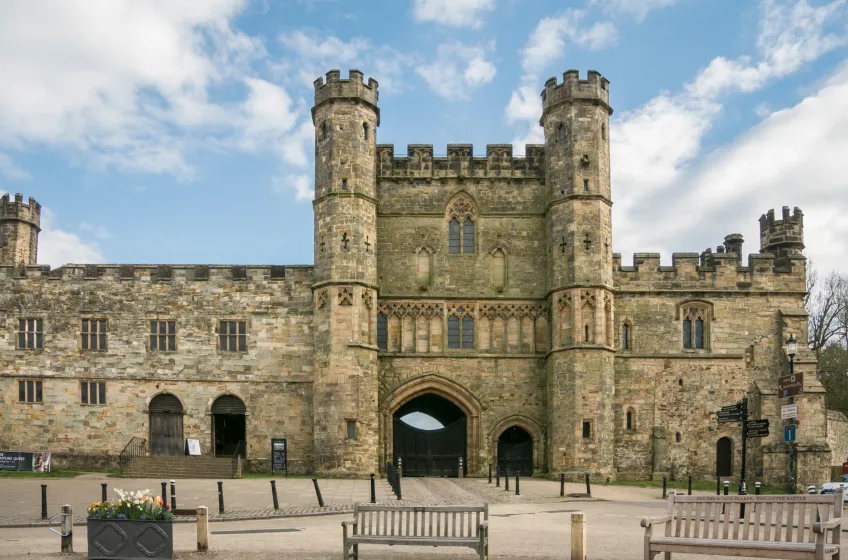
The remaining parts of the original abbey complex give a sense of its former scale and grandeur. Although much of the abbey was dismantled after the Dissolution of the Monasteries under Henry VIII, significant elements survive, including parts of the cloisters, the dormitory range, and sections of the church’s foundations. The surviving gatehouse, dating from the 14th century, remains intact and serves as a striking entry point to the site.
The Battlefield
Perhaps the most evocative element of a visit is walking the battlefield itself. The grounds are signposted with information panels that explain the key stages of the battle. There is a clearly marked route that follows the supposed line of engagement, and it provides an opportunity to reflect on how the landscape influenced the events of 14 October 1066. The slope of Senlac Hill, for example, is a key topographical feature that affected the battle’s dynamics.
Harold Stone
Within the grounds, a memorial stone marks the spot where King Harold is believed to have died. While the exact location remains uncertain, the stone provides a symbolic point of focus for understanding the events of the battle. It is situated near the former site of the abbey’s high altar, reinforcing the connection between the religious foundation and the battle it was meant to commemorate.
Visitor Centre and Exhibition
The modern visitor centre at Battle Abbey houses an informative exhibition that provides context for the events of 1066. Through the use of interactive displays, film projections, artefacts, and reconstructed models, the exhibition explores the causes of the Norman invasion, the key figures involved, the battle itself, and its aftermath. There is also a short animated film that offers a concise and accessible retelling of the battle.
Audio Guide and Interpretive Trail
Visitors can take advantage of an optional audio guide that adds depth to the tour by providing narrative accounts of the events of the battle, background information, and eyewitness-style storytelling. The interpretive trail around the site, including the abbey and battlefield, is clearly marked and allows for self-guided exploration at your own pace.
The Gatehouse
The 14th-century gatehouse is one of the most complete parts of the surviving abbey and now houses part of the visitor centre. Its stone architecture, battlements, and rooms provide an example of later medieval defensive design. From the upper levels, visitors can enjoy views over the battlefield and the surrounding countryside.
Monks’ Dormitory and Guest Range
The dormitory area, accessible to visitors, provides insight into monastic life. Although roofless and partly ruined, the structure’s scale and surviving features such as windows and doorways give clues about how the abbey functioned during its active years. Interpretive panels offer additional information about the daily routines of the monks who lived there.
Victorian Schoolrooms
Part of the site was repurposed as a private school during the 19th and 20th centuries. Some of the classrooms and associated facilities have been preserved to illustrate this later chapter in the abbey’s history. The inclusion of these schoolrooms adds an extra layer to the narrative of the site’s long and varied use.
Walled Gardens and Grounds
The landscaped grounds and walled gardens offer a peaceful setting for walking and reflection. The gardens are maintained and change with the seasons, adding a visual dimension to the historical visit. The natural setting complements the man-made structures and offers views across the surrounding Sussex countryside.
Educational Programmes and Events
Battle Abbey hosts a range of educational programmes for school groups, including workshops and living history days. Throughout the year, the site also holds special events, including re-enactments of the Battle of Hastings, medieval fairs, and themed family activities. These events offer visitors a more immersive experience and are especially popular during school holidays.
Nearby Attractions
Battle Abbey is located in the historic market town of Battle, which retains much of its old-world charm. The town centre features a number of independent shops, cafés, and traditional pubs. The Almonry, a 15th-century building that now houses the Battle Museum of Local History, is a short walk from the abbey and offers additional context on the town and surrounding area.
To the south-east lies the historic town of Hastings, around 20 minutes by car. Hastings boasts its own attractions such as the ruins of Hastings Castle, the Smugglers Adventure in St. Clements Caves, and the traditional Old Town with its fishing huts and maritime museum.
The wider East Sussex region is rich in heritage sites, including Herstmonceux Castle, Bodiam Castle, and Pevensey Castle—all within reasonable driving distance. The countryside around Battle is part of the High Weald Area of Outstanding Natural Beauty, offering walking trails and scenic drives.
Practical Advice for Visitors
Battle Abbey is operated by English Heritage, and entry is free for members. Tickets can be purchased online in advance or at the gate. The site is open year-round, although opening times vary seasonally. The visitor centre, exhibition, and main parts of the abbey are accessible for most visitors, although the battlefield trail includes uneven terrain and some steep sections which may not be suitable for all.
There is a café on site offering hot and cold food, drinks, and snacks, as well as picnic areas within the grounds. A gift shop located near the entrance sells books, souvenirs, and locally sourced goods.
To reach Battle Abbey, visitors can take a train to Battle Station, which is around a ten-minute walk from the site. By car, the site is accessible via the A2100, and paid parking is available nearby. Comfortable footwear is recommended, especially for those intending to walk the full battlefield route.
Dogs are allowed on leads in the outdoor areas, but not in the exhibition spaces. The site is family-friendly and includes activities for children, particularly during special events.
For those wanting to explore more deeply, guided tours may be available on select days. It’s advisable to check the English Heritage website for the latest information on opening hours, events, and facilities before visiting.
Shortlist
- Your Shortlist is empty