
Discover Bastogne | A Visitor's Introduction to Bastogne
Bastogne is a historic town in the province of Luxembourg in southern Belgium, close to the border with Luxembourg and not far from Germany. Best known for its pivotal role in the Battle of the Bulge during World War II, Bastogne is a place where history looms large, yet it offers much more than its wartime past. With its strategic location in the Ardennes forest, Bastogne is surrounded by rolling hills, dense woodland, and scenic countryside, making it a fascinating stop for history enthusiasts, hikers, cyclists, and anyone keen to explore a charming Belgian town with international significance.
Recommended Bastogne Accommodation: Hotels
Why is Bastogne Worth a Visit?
Bastogne is worth visiting for its unique blend of wartime history, Belgian small-town charm, and access to natural beauty. It was at the centre of one of the most significant and hard-fought battles of World War II—the Battle of the Bulge—and the town honours that heritage with excellent museums, memorials, and commemorative sites. Walking through Bastogne, you'll find plaques, monuments, and museums that reflect the resilience of its people and the bravery of Allied forces.
But Bastogne isn’t only for history buffs. Its location in the Ardennes makes it an excellent base for exploring forests, river valleys, and traditional villages. The town itself is friendly and walkable, with a lively central square, quality Belgian cuisine, and a mix of French and Dutch influences in the local culture. Whether you're here for remembrance or adventure, Bastogne offers a rich, meaningful experience.
Bastogne Highlights: Things to See and Do in Bastogne
Bastogne War Museum
The Bastogne War Museum is the town’s premier attraction and an absolute must-visit. Set next to the Mardasson Memorial, this modern, interactive museum tells the story of the Battle of the Bulge in detail, with immersive exhibits, personal testimonies, and artefacts from the battlefield. It provides a gripping and emotional account of life during the winter of 1944–45 from multiple perspectives—soldiers, civilians, and commanders alike.
The museum is thoughtfully designed and accessible, with multilingual exhibits (including English), and it appeals to both serious historians and casual visitors. A visit here provides essential context for everything else you’ll see in Bastogne.
Mardasson Memorial
Right next to the War Museum, the Mardasson Memorial is a striking monument shaped like a five-pointed star. It was built to honour the American soldiers who fought and died during the Battle of the Bulge. The names of all 50 U.S. states are engraved on the monument, and the crypt beneath contains mosaics and religious inscriptions.
Climb to the top for panoramic views of the Ardennes and to appreciate the peaceful contrast to the bloody battles that once took place here. It’s a place for quiet reflection and gratitude.
Bastogne Barracks
Another essential stop for World War II enthusiasts, Bastogne Barracks is a military museum operated by the Belgian Army. This former HQ of the U.S. 101st Airborne Division is where General McAuliffe famously replied “Nuts!” to a German surrender demand during the siege.
Today, the site houses restored vehicles, a large collection of wartime equipment, and guided tours that take you into the historic bunkers. It’s an especially good complement to the War Museum, offering a more tactile, up-close look at military life during the siege.
McAuliffe Square and the “Nuts” Monument
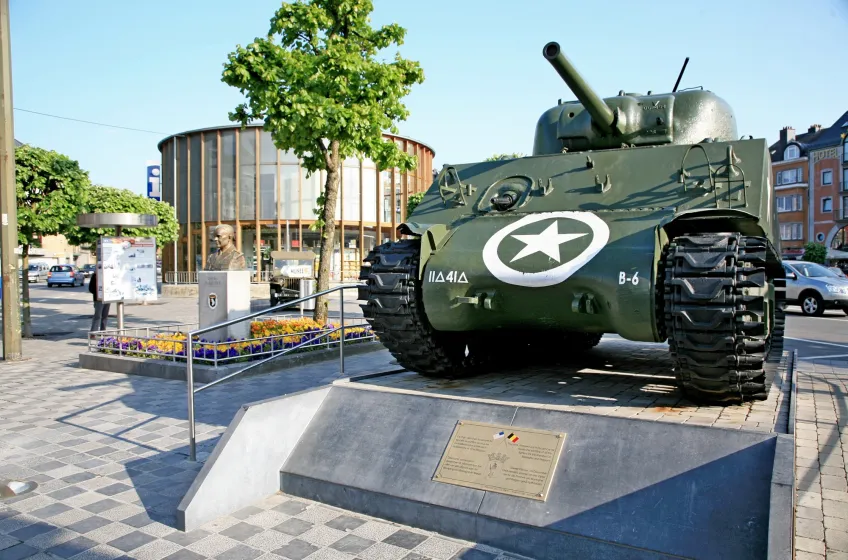
In the heart of town, McAuliffe Square is a tribute to Brigadier General Anthony McAuliffe and the defenders of Bastogne. The square is home to the “Nuts” monument and a Sherman tank donated by the U.S. Army. It’s a central gathering place surrounded by cafés and shops, and it serves as a symbolic anchor for the town’s memory of its liberation.
At Christmas, this square becomes a focal point for Bastogne’s festive and commemorative events.
101st Airborne Museum Le Mess
Set in an old Belgian officers’ mess, this smaller museum focuses specifically on the 101st Airborne Division. It features an impressive collection of weapons, uniforms, and personal items, and uses dioramas and soundscapes to depict the harsh conditions of the Battle of the Bulge. It’s particularly impactful thanks to its intimate scale and authentic setting.
The Bastogne Christmas Market and Nuts Weekend
Each December, Bastogne hosts the Nuts Weekend, a festive commemoration of the Battle of the Bulge. Reenactments, parades, and military vehicle displays bring the town to life with energy and remembrance. The Christmas Market adds a cosy, celebratory atmosphere with stalls selling seasonal treats, crafts, mulled wine, and Belgian beer. It’s a great time to visit if you want to experience both history and holiday charm.
Église Saint-Pierre
Bastogne’s main church, St. Peter’s Church, is a peaceful place with a long history dating back to the 10th century, though much of the current structure is 17th century. Damaged during the war and later restored, the church houses several memorials to fallen soldiers and offers a moment of tranquillity in the heart of the town.
Local Countryside and Outdoor Activities
While Bastogne is firmly rooted in its history, it’s also a gateway to the Ardennes. The surrounding countryside is ideal for hiking, mountain biking, and nature walks. The RAVeL network (Réseau Autonome de Voies Lentes) offers cycle routes on former railway lines, including a route through Bastogne that heads towards Houffalize and beyond.
If you're after peace and fresh air, the nearby forests and hills are full of scenic trails, wildlife, and World War II relics hidden among the trees.
Battle of the Bulge Sites in the Area
Bastogne is surrounded by small villages and sites tied to the Battle of the Bulge. Consider day trips to:
-
Foy, where the Easy Company of the 101st Airborne defended the line, made famous in Band of Brothers.
-
Recogne, home to a German war cemetery and the American cemetery nearby.
-
Noville, another key battlefield and the site of heavy fighting.
-
Sainte-Marie-Chevigny and Neffe, both with remains of bunkers and war memorials.
A self-guided driving tour or a guided battlefield tour can bring these places to life and provide a deeper understanding of the strategic movements during the battle.
Practical Advice for Visitors
Getting There
Bastogne is located in southeastern Belgium and is best reached by car, especially if you plan to explore the wider Ardennes region. The town lies about 2 hours from Brussels, 1.5 hours from Luxembourg City, and around 1 hour from Liège. There’s no train station in Bastogne itself, but buses run regularly from nearby rail hubs like Libramont, which is connected to the Belgian national rail network.
Driving offers the most flexibility, particularly for reaching outlying historical sites and countryside areas.
Parking
Parking in Bastogne is generally straightforward. There are several free and paid parking areas near the town centre, War Museum, and major attractions. Look for blue zones where you may need to display a parking disc (available from local shops or hotels).
Dining
Bastogne has a good selection of restaurants, from cosy brasseries to fine dining spots. Belgian and French cuisine dominate, with local specialities including Ardennes ham, game meats, and trappist cheeses.
For a traditional meal, try Le Nuts or Le Maxime, both located near McAuliffe Square. L’Enclos des Frênes offers a refined dining experience with seasonal menus. Local beers are widely available, and many restaurants proudly feature regional brews.
Don’t miss a stop at one of the many boulangeries or chocolatiers for fresh pastries or Belgian pralines.
Shopping
Bastogne has a mix of local shops, bakeries, outdoor gear stores, and souvenir shops selling books, historical memorabilia, and artisan goods. The town centre has a pedestrian-friendly layout with a lively Saturday market offering produce, cheese, meats, and clothing.
If you’re interested in war history, the museum gift shops have well-curated selections of books, maps, and reproductions.
When to Visit
The best time to visit Bastogne depends on your focus. For battlefield tourism and outdoor exploration, spring (April–June) and autumn (September–October) offer pleasant weather and fewer crowds. Winter, particularly December, is special due to the Nuts Weekend and Christmas Market, but weather can be cold and snowy—perfect if you're after atmosphere.
Summer is warmer, and most attractions are open daily, but the town is never overly crowded, even in peak season.
Local Events
-
Nuts Weekend (December): Commemorative parades, historical reenactments, and vehicle displays.
-
Christmas Market: Mid-December, held in McAuliffe Square, with festive food, crafts, and music.
-
Bastogne Liberation Walk: Organised hikes through historical sites, held in spring or autumn.
-
Military Vehicle Rallies: Often take place in July or August, featuring restored WWII vehicles.
Check the local tourist office or museum websites for dates and schedules.
Exploring Beyond Bastogne
If you have more time, the Ardennes region offers plenty more to discover. Consider visiting:
-
La Roche-en-Ardenne: A beautiful riverside town with a castle and war museum.
-
Bouillon: Famous for its medieval castle and connection to the Crusades.
-
Clervaux (Luxembourg): Home to the Family of Man photography exhibition and picturesque abbeys.
-
Luxembourg City: Great for a day trip, offering culture, cuisine, and history in a compact capital.
Bastogne is more than a historical footnote—it’s a town of resilience, remembrance, and natural beauty. Whether you're tracing the footsteps of WWII soldiers, walking forest trails, or enjoying a Belgian beer in the town square, Bastogne leaves a deep and lasting impression. It’s a place where past and present live side by side, and where every visit feels meaningful.
Shortlist
- Your Shortlist is empty