
Discover Balmoral | A Visitor's Introduction to Balmoral
Balmoral Castle is a working royal residence situated in Aberdeenshire, Scotland, within the Cairngorms National Park. Set against the backdrop of the River Dee and surrounded by dramatic Highland scenery, it has long been associated with the British Royal Family. Originally acquired by Queen Victoria and Prince Albert in 1852, Balmoral has remained a private estate of the monarchy ever since, rather than a property of the Crown. Today, while still serving as a summer retreat for members of the Royal Family, parts of the estate, including the gardens and exhibitions within the grounds, are open to the public for several months each year.
The estate covers around 50,000 acres, encompassing moorlands, forests, farmland and managed deer herds. Visitors come not only to view the striking architecture of the castle itself, with its baronial towers and granite façade, but also to explore the extensive parkland, learn about its royal heritage, and enjoy the tranquillity of the surrounding natural environment.
Balmoral current visitor information and tickets
Recommended accommodation near Balmoral: Hotels Bed & Breakfasts Pub Accommodation
Why is Balmoral Castle Worth a Visit?
Balmoral Castle is of interest for both its historical significance and its scenic setting. Unlike many other royal residences that function primarily as public museums, Balmoral remains a private home for the Royal Family, lending it a unique status. Its enduring connection to Queen Victoria and Prince Albert, who personally oversaw much of the castle's design and landscaping, adds a layer of Victorian heritage and sentiment that continues to shape the estate’s character.
For those interested in royal history, Balmoral offers an insight into the more personal side of monarchy. The exhibitions within the grounds highlight family life, traditional estate work, and the long-standing relationship between the British monarchy and Scotland. The estate also demonstrates aspects of traditional Highland estate management, including gamekeeping, forestry, and conservation.
Nature lovers are equally well catered for, as the surrounding estate includes a variety of habitats supporting native flora and fauna. The walking trails and gardens provide opportunities for gentle exploration, photography, and wildlife spotting. Balmoral is not a museum in the traditional sense, but rather a functioning estate where visitors can glimpse aspects of royal life within the context of Scotland’s Highland culture.
Balmoral Highlights
The Castle Exterior and Forecourt
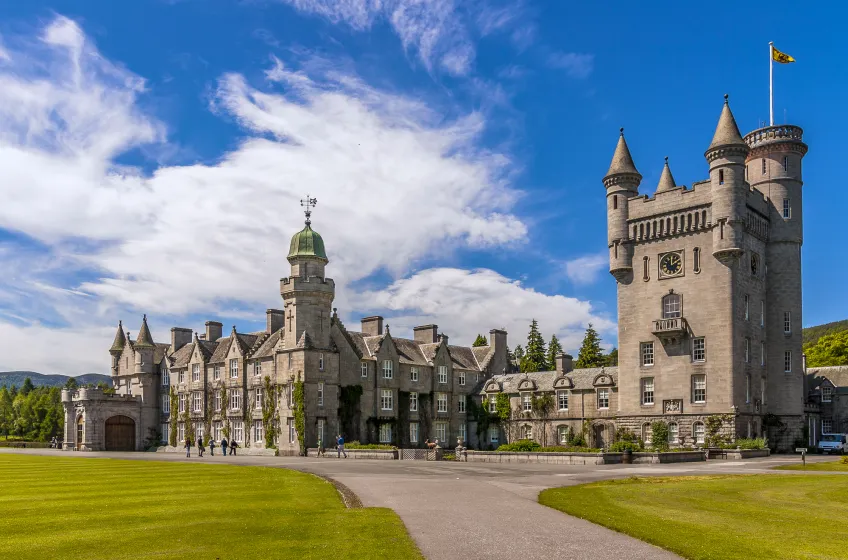
While the interior of Balmoral Castle is not open to the public, the exterior and forecourt are accessible during the open season. The granite castle, built in the Scottish Baronial style, was completed in 1856 and is notable for its turrets, gables, and clock tower. Visitors can view the structure from various angles within the grounds, with interpretive panels providing context on its architecture and development.
The Ballroom Exhibition
The only room inside the castle that visitors can enter is the Ballroom, which houses seasonal exhibitions. These displays typically include personal artefacts, photographs, and artworks from the Royal Collection, offering insights into royal traditions, past residents, and the role of the estate in royal life. The Ballroom also features ornate ceilings and furnishings, reflecting the period tastes of Queen Victoria and Prince Albert.
The Formal Gardens
Adjacent to the castle are the formal gardens, which have evolved over more than a century. Initially laid out under the direction of Prince Albert, the gardens include carefully maintained lawns, geometric flowerbeds, herbaceous borders, and glasshouses. Visitors can explore at their leisure, taking in both the planting schemes and the views towards the hills beyond. The gardens also include a kitchen garden that supplies seasonal produce to the castle.
The Stable Exhibitions
The former stables have been repurposed to house further exhibitions about the history of Balmoral, royal visitors, and estate life. Displays here often include historic carriages, photographs, clothing, and items related to the royal family’s leisure pursuits, including picnicking, hunting, and hiking.
Estate Grounds and Trails
Beyond the formal gardens, several marked trails allow visitors to explore the wider estate. These vary in length and difficulty, from short walks to longer circuits through woodland and alongside the River Dee. The trails are clearly marked and offer opportunities to see red squirrels, deer, and a variety of birdlife. Interpretation panels along the routes provide information on the flora, fauna, and land use.
The Royal Lochnagar Distillery
Located just outside the Balmoral estate, the Royal Lochnagar Distillery can be accessed on foot or by car and is often considered part of the Balmoral experience. The distillery holds a Royal Warrant and has historical ties to the monarchy, dating back to Queen Victoria’s time. Guided tours explain the whisky-making process and usually include a tasting session.
Crathie Kirk
A short walk from the castle grounds is Crathie Kirk, the local parish church attended by the Royal Family during their stays at Balmoral. The church, built in the 19th century, is modest but historically significant, having hosted generations of monarchs and their families for Sunday services. It remains an active place of worship and is open to visitors.
The Garden Cottage and Other Estate Buildings
Scattered throughout the estate are several smaller historic buildings, such as Garden Cottage, where Queen Victoria sometimes took breakfast. These are not open for internal viewing but can be seen from designated footpaths. Their architecture and setting add to the estate's picturesque and historic atmosphere.
Facilities on the Estate
Visitors to Balmoral have access to a range of facilities designed to enhance their visit. A ticketed entrance provides access to the grounds, gardens, exhibitions, and walking trails. The on-site café serves hot and cold meals, drinks, and snacks, with a focus on local produce. There is also a gift shop offering a selection of souvenirs, books, and locally produced goods.
Toilets and baby changing facilities are available near the visitor centre. Parking is provided on site, with a short walk leading to the ticket office and main entrance. For those with limited mobility, there are accessible paths and a mobility vehicle that can be arranged in advance. Dogs on leads are permitted in the grounds but not inside buildings or the gardens.
Nearby Attractions
Balmoral lies within the Cairngorms National Park, which offers a wide range of attractions and natural sites. Just a few miles away is Braemar, a village famous for its Highland Games, held each September and regularly attended by the Royal Family. The village also features the recently restored Braemar Castle, a 17th-century fortress with a rich history tied to the Jacobite uprisings.
To the east lies Ballater, a Victorian-era town with royal connections, independent shops, and a heritage railway station once used by the Royal Family. Further afield, the Mar Lodge Estate, managed by the National Trust for Scotland, offers hiking routes and access to some of the most dramatic scenery in the Cairngorms.
Outdoor enthusiasts can take advantage of hillwalking routes in the surrounding Munros, particularly Lochnagar, a peak mentioned in poetry by Lord Byron and visible from the Balmoral Estate. In winter, nearby Glenshee transforms into one of Scotland’s leading ski areas.
Practical Advice for Visitors
Balmoral Castle is open to visitors from April to mid-August each year, after which it is closed for the Royal Family’s summer stay. Opening times may vary slightly, so it is advisable to check the estate’s official website before planning a visit. Tickets can be purchased online in advance or at the gate, although advance booking is recommended during peak periods.
The estate is located off the A93, approximately one hour’s drive west of Aberdeen. Public transport options are limited, so visitors typically arrive by car. Ballater, about 8 miles to the east, offers accommodation options for those wishing to stay nearby, ranging from guesthouses to hotels.
As weather in the Highlands can be unpredictable, visitors should bring appropriate clothing and footwear, especially if they plan to walk the trails. Paths can be muddy after rain, and conditions may change quickly.
Photography is allowed in the grounds and gardens, but not within the Ballroom or exhibition spaces. Drones are not permitted. Dogs are welcome on leads, but not in the gardens or exhibition areas. Group visits and school trips can be arranged with prior notice.
For those interested in whisky, combining a visit to Balmoral with a tour of the Royal Lochnagar Distillery can make for a well-rounded day. There are also opportunities to visit during special events such as the annual Easter opening or various exhibitions tied to royal anniversaries.
Conclusion
Balmoral Castle offers a distinctive visitor experience that blends royal heritage with natural beauty. As a living royal estate rather than a museum, it provides a rare opportunity to see how traditions of monarchy, land stewardship, and Scottish culture intersect. Its setting in the Cairngorms, along with nearby historic towns and natural attractions, makes it a worthwhile destination for those interested in history, nature, or simply exploring the Scottish Highlands.
Shortlist
- Your Shortlist is empty