
Discover Aveyron | A Visitor's Introduction to Aveyron
Aveyron is a stunning department in the Occitanie region of southern France, known for its rugged landscapes, medieval villages, dramatic gorges, and rich gastronomic heritage. With a strong rural identity and a proud artisan culture, Aveyron offers a deep dive into authentic France, away from the usual tourist trail. Whether you're into hiking, heritage, food, or simply escaping into serene countryside, Aveyron makes for a captivating destination.
Recommended Aveyron Accommodation: Hotels
Why is Aveyron Worth a Visit?
Aveyron is worth visiting for its extraordinary blend of natural beauty and historical richness. It’s home to ten of France’s official “Plus Beaux Villages” (Most Beautiful Villages), and many of its towns feel like living museums, steeped in centuries of tradition. Dramatic gorges and plateaus carve through the region, offering breathtaking drives and world-class hiking.
This is also the heartland of some of France’s most iconic culinary traditions — think Roquefort cheese, aligot (a cheesy potato dish), and hearty charcuterie. Aveyron’s proud rural character means you’ll experience a slower, more grounded pace of life, with warm hospitality and a strong sense of place. It’s the ideal destination for those wanting to experience real, unspoilt France.
Aveyron Highlights: Things to See and Do in Aveyron
Conques
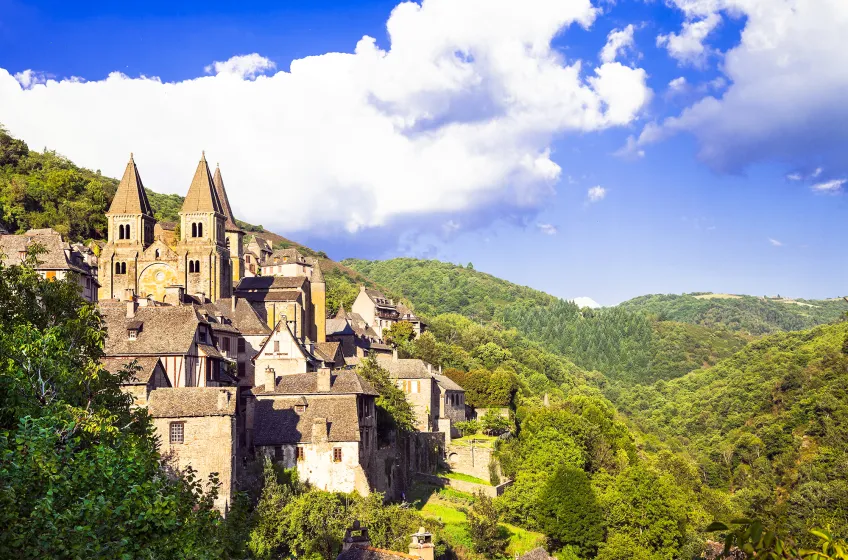
Conques is arguably Aveyron’s most famous village, a pilgrimage stop on the Way of St. James and a masterpiece of Romanesque architecture. The Sainte-Foy Abbey Church, with its stunning tympanum and contemporary stained glass windows by Pierre Soulages, is unmissable. The village is a labyrinth of cobbled lanes, half-timbered houses, and artisan workshops, all nestled into a lush valley. It’s peaceful, beautiful, and deeply atmospheric.
Rodez and the Soulages Museum
Rodez is Aveyron’s capital, a vibrant town where history and modernity meet. The city is dominated by the impressive Cathedral of Notre-Dame, while the nearby Soulages Museum showcases the work of abstract painter Pierre Soulages, who was born here. The museum itself is a modern architectural marvel, and its collection is bold, moody, and fascinating — a must-visit for art lovers.
Roquefort-sur-Soulzon
Famous worldwide for its blue cheese, Roquefort-sur-Soulzon is a must for foodies. You can visit the cheese caves where Roquefort matures in natural rock fissures, learning about the ageing process and, of course, enjoying tastings. The village sits dramatically at the foot of the Combalou cliff, and many tours are run by the major producers like Société or Papillon.
Millau Viaduct
An engineering marvel, the Millau Viaduct is the tallest bridge in the world and a symbol of modern French ingenuity. Designed by Sir Norman Foster, this sweeping cable-stayed bridge spans the Tarn Valley and offers breathtaking views. There’s a visitor centre and panoramic viewpoints, plus a walking route underneath the viaduct to fully appreciate its scale.
Belcastel
Belcastel is a fairy-tale village on the banks of the Aveyron River, crowned by a restored medieval castle. The village is a vision of stone cottages, narrow streets, and arched bridges. The Château de Belcastel itself is open to visitors and often hosts art exhibitions. It’s one of the most romantic spots in the region and feels untouched by time.
Najac
Najac is a dramatic hilltop village with a single street winding up to a commanding ruined fortress. The Château de Najac offers stunning views over the wild Gorges de l’Aveyron and is steeped in medieval history. The village’s isolated setting gives it a mysterious, almost cinematic feel, especially when shrouded in early morning mist.
Aubrac Plateau
The Aubrac Plateau is one of the most unique landscapes in France — a high-altitude expanse of rolling moors, wildflowers, and stone burons (traditional shepherd’s huts). It’s a fantastic place for hiking, especially on the GR65 (the French route of the Camino de Santiago). In May, the transhumance festival — when cows are adorned with flowers and bells and led to summer pastures — is a joyful, traditional event.
Laguiole
Laguiole (pronounced “lah-yol”) is synonymous with high-quality knives and buttery, rich cheeses. You can visit cutlery workshops to see how these iconic folding knives are made and browse shops selling beautiful hand-crafted blades. The Fromagerie Jeune Montagne offers tastings of local cheese including Laguiole AOP and aligot, the creamy, cheesy mashed potato dish that defines the region’s comfort food.
Villefranche-de-Rouergue
This bastide town, founded in the 13th century, is notable for its huge market square surrounded by arcades and its harmonious grid layout. The weekly Thursday market is one of the best in the region, full of local produce, charcuterie, and artisanal crafts. Don’t miss the Collegiate Church of Notre-Dame and its 58-metre-high bell tower.
Saint-Côme-d’Olt
Nestled on a bend in the Lot River, Saint-Côme-d’Olt is one of the official Plus Beaux Villages and a stop for pilgrims on the Way of St. James. Its distinctive twisted church spire is unique, and its flower-filled streets are a joy to explore. It’s a peaceful spot with a timeless, gentle charm.
Practical Advice for Visitors
Getting There
Aveyron is best accessed by car, as public transport can be limited outside the major towns. The A75 motorway links the region with Clermont-Ferrand to the north and Montpellier to the south. Rodez has a small airport with seasonal flights from Paris, Lyon, and London, or you can fly into Toulouse or Montpellier and drive in (roughly 2–3 hours).
Train services connect Rodez and Millau to larger hubs like Toulouse, though they’re infrequent. If you’re planning to explore widely, hiring a car is strongly recommended.
Parking
Most towns and villages in Aveyron have free or affordable public parking. Rodez, Millau, and Villefranche-de-Rouergue have several car parks close to the centre. In smaller villages like Conques or Belcastel, there are designated lots just outside the historic centre — often with a scenic walk in. Avoid driving directly into old villages, as streets are narrow and often pedestrianised.
Dining
Aveyron’s food is rustic, generous, and unforgettable. Must-tries include:
-
Aligot – a rich blend of mashed potatoes, cheese, cream, and garlic.
-
Tripoux – small parcels of lamb tripe cooked in white wine and herbs.
-
Farçous – savoury pancakes made with chard and herbs.
-
Roquefort – the region’s king of blue cheeses.
-
Fouace – a brioche-like bread, often flavoured with orange blossom.
Restaurants range from cosy village auberges to Michelin-starred establishments like Michel Bras in Laguiole, which combines local flavours with world-class presentation. In markets and cafés, you’ll find hearty set menus that reflect the best of local produce.
Shopping
Aveyron is fantastic for artisan shopping. Laguiole knives make excellent souvenirs, and you can even have one customised. Local cheese, charcuterie, wine (especially Marcillac red), and liqueurs are popular to take home. Rodez, Millau, and Villefranche have charming boutiques, while markets in towns like Saint-Affrique and Espalion are full of handmade soaps, pottery, textiles, and regional delicacies.
When to Visit
Late spring to early autumn is the best time to visit Aveyron. May and June are full of wildflowers and quieter trails, while July and August bring festivals, markets, and warm weather — though it can get busy in tourist hot spots. September and early October offer golden light, fewer crowds, and harvest celebrations.
Winter is quiet and atmospheric, especially in the highlands like Aubrac, but some sites and restaurants may close off-season. It’s a good time for a peaceful retreat or a gastronomic escape by the fire.
Local Events
Aveyron hosts numerous traditional festivals and markets, including:
-
Fête de la Transhumance (Aubrac, late May) – Celebrates the seasonal movement of livestock with music, feasting, and folk traditions.
-
Estivada (Rodez, July) – A celebration of Occitan culture, featuring music, theatre, and poetry in the local dialect.
-
Medieval Festivals (Najac, Belcastel) – Often held in summer with reenactments, markets, and music.
Weekly farmers’ markets are a highlight across the region. The Thursday market in Villefranche-de-Rouergue and the Sunday market in Saint-Affrique are particularly renowned.
Exploring Beyond Aveyron
If you’re staying longer, there’s plenty to see just beyond the borders. The Lot Valley offers more medieval villages and river scenery. Tarn to the south has the dramatic Gorges du Tarn and the charming town of Albi, with its UNESCO-listed cathedral. The Cantal mountains to the north provide alpine hiking and dramatic volcanic landscapes.
To the south, the Grands Causses Regional Natural Park continues into Lozère, offering more wild gorges, limestone plateaux, and adventure sports like canoeing and paragliding.
Summary
Aveyron is a treasure trove of history, nature, and culture, woven together in a landscape that feels both vast and intimately French. From the timeless beauty of Conques and Belcastel to the wild highlands of Aubrac and the futuristic sweep of the Millau Viaduct, this is a region that rewards exploration and curiosity. Whether you're indulging in Roquefort in its birthplace, hiking dramatic gorges, or getting lost in cobbled village streets, Aveyron offers an enriching, authentic experience that lingers long after the journey ends.
Shortlist
- Your Shortlist is empty