
Discover Ariège | A Visitor's Introduction to Ariège
Ariège is a hidden gem tucked away in the Occitanie region of southwestern France, nestled in the heart of the Pyrenees. With its unspoilt natural beauty, medieval castles, prehistoric caves, and authentic rural charm, Ariège is perfect for nature lovers, history enthusiasts, and travellers seeking tranquillity and authenticity. This mountainous department borders Andorra and Spain, offering dramatic landscapes, ancient villages, and a slower pace of life that's becoming increasingly rare in modern Europe.
Recommended Ariège Accommodation: Hotels
Why is Ariège Worth a Visit?
Ariège is worth visiting for its stunning landscapes, rich heritage, and sense of timelessness. It’s one of the least populated and most peaceful areas in France, making it ideal for outdoor adventures and cultural exploration without the crowds. The region boasts some of the most impressive cave art in Europe, dramatic Cathar castles perched on rocky crags, and rustic villages where traditions are proudly maintained.
The blend of French and Catalan influences gives the area a unique cultural identity, reflected in its architecture, cuisine, and language. Whether you're hiking through pristine mountain trails, wandering through a medieval bastide, or discovering ancient underground worlds, Ariège offers an immersive experience that feels both remote and deeply connected to history.
Ariège Highlights: Things to See and Do in Ariège
Château de Montségur
Montségur is one of the most iconic Cathar castles in France, dramatically perched on a mountain top at 1,200 metres. It was the last stronghold of the Cathars during the Albigensian Crusade and remains a powerful symbol of resistance and tragedy. The steep walk to the top is challenging but worth it for the panoramic views and haunting atmosphere. A small museum in the village below gives context to the site’s turbulent history.
Grotte de Niaux
The Grotte de Niaux is one of Europe’s most important prehistoric cave sites, featuring original cave paintings that date back over 14,000 years. Unlike most decorated caves, Niaux is still open to guided tours that take you through vast chambers to see the authentic Magdalenian-era drawings of bison, horses, and ibex. Booking in advance is essential, as numbers are strictly limited to protect the artwork.
Foix and Château de Foix
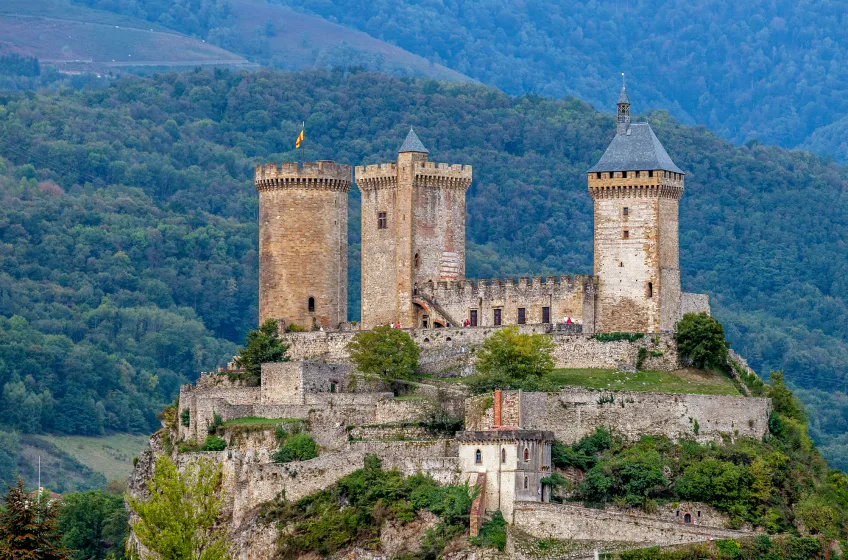
The departmental capital, Foix, is a picturesque town dominated by its fairy-tale castle, the Château de Foix. Recently renovated, the castle now includes interactive exhibits, medieval weaponry displays, and reconstructed living quarters that make it ideal for families and history buffs alike. The town itself has a charming old quarter with narrow lanes, markets, and cafés perfect for a relaxed stroll.
Mirepoix
Mirepoix is one of the prettiest bastide towns in southern France. Its central square is lined with colourful timber-framed houses and arcades that host regular markets and festivals. The gothic cathedral of Saint-Maurice and the lively Sunday market are highlights, but simply sitting at a café and soaking up the atmosphere is part of the appeal.
The Ariège Pyrenees Regional Natural Park
Covering a vast area of mountainous terrain, forests, and high pastures, this regional park is paradise for outdoor lovers. Hiking, cycling, and wildlife spotting are popular activities, with well-marked trails and jaw-dropping views. Look out for marmots, eagles, and even the elusive Pyrenean bear. The GR10 long-distance trail passes through the park, offering multi-day treks for the adventurous.
Grotte du Mas d’Azil
This unique cave is notable not only for its prehistoric art and archaeological finds but also because a road runs right through its enormous natural tunnel. You can drive through one part and then explore the cave system on foot with a guided tour. It’s a fascinating mix of natural wonder and human history, with layers of occupation dating back 35,000 years.
Ax-les-Thermes
This mountain spa town is famed for its natural hot springs, which have been used since Roman times. Today, Ax-les-Thermes is both a health and ski resort, offering thermal spas like Les Bains du Couloubret where visitors can soak in hot mineral waters while gazing at the surrounding mountains. In winter, it's a gateway to the Ax 3 Domaines ski area, while in summer it serves as a base for mountain walks and cycling.
Saint-Lizier
Saint-Lizier is a beautifully preserved village with Roman origins and strong religious heritage. The village is home to two cathedrals, ancient ramparts, and a bishop’s palace that houses a small but interesting museum. The cloister of Saint-Lizier is particularly peaceful and photogenic. The village is part of the prestigious “Les Plus Beaux Villages de France” list.
Parc de la Préhistoire in Tarascon-sur-Ariège
Ideal for families, this interactive park brings prehistory to life with reconstructions of cave art, flint-knapping demonstrations, and life-size models of prehistoric animals. It’s educational and fun, offering a great overview of the area's archaeological significance before visiting the nearby caves.
Lac de Bethmale
This small lake nestled in the Couserans region is a picture-postcard setting. Surrounded by dense forest and mountain peaks, the turquoise waters reflect the sky and trees, creating a serene atmosphere. It’s a lovely spot for a picnic, short walk, or just a quiet afternoon enjoying the view.
Practical Advice for Visitors
Getting There
Ariège is best accessed by car, especially if you plan to explore the mountains and smaller villages. The A66 motorway connects the area to Toulouse, with the journey to Foix taking about an hour. There are also train services from Toulouse to Foix, Tarascon-sur-Ariège, and Ax-les-Thermes, but public transport in more remote areas is limited.
Toulouse-Blagnac is the nearest major airport, offering connections across Europe. From there, hiring a car is the most convenient way to get around the region.
Parking
Most towns and tourist sites in Ariège have free or inexpensive parking. Foix and Mirepoix have dedicated parking areas near the town centres, with clear signage. In more remote areas, you can often park near trailheads or village squares without issue, though some popular hiking spots fill up early during peak season.
Dining
Ariège cuisine is rustic and hearty, often showcasing local produce and mountain traditions. Look out for dishes like duck confit, cassoulet, garbure (a thick soup), and charcuterie from the Couserans. The region also produces excellent cheeses, such as Bethmale and Tomme des Pyrénées.
Foix and Mirepoix have a good selection of restaurants and bistros. In rural areas, many gîtes and auberges offer traditional meals. For something special, Le Phoebus in Foix is a standout, combining fine dining with local ingredients.
Shopping
Markets are the best way to shop in Ariège. Mirepoix’s Monday market is one of the most atmospheric, while Foix hosts regular food and craft markets. You’ll find regional products like honey, cheese, jams, woollen goods, and handmade pottery. Many villages have small artisan shops selling local crafts, natural soaps, and herbal remedies.
When to Visit
Ariège is lovely year-round, but the best times to visit are late spring (May–June) and early autumn (September–October) when the weather is pleasant and the landscapes are vibrant. Summer is great for hiking and festivals but can be warm in the valleys. Winter brings snow to the high Pyrenees, turning Ax-les-Thermes and other areas into ski destinations.
If you’re keen on seeing wildflowers, May and June are especially beautiful. Autumn is a peaceful time, with golden forests and fewer tourists.
Local Events
The Fête de Mirepoix, held in mid-July, features medieval markets, costumes, and street performances in the town square. Foix hosts the Festival Ingénieuse Afrique and Foix en Fête, which bring music, dance, and cultural events to the town in summer.
Throughout the region, transhumance festivals celebrate the seasonal movement of livestock to high pastures, with traditional music, food, and shepherding demonstrations. These are usually held in late spring and early summer.
Exploring Beyond Ariège
If you have time, consider visiting nearby Andorra, a small mountain country about 1.5 hours from Foix, known for skiing, hiking, and tax-free shopping. The Aude department to the east is home to other Cathar sites like Carcassonne and the Château de Peyrepertuse. To the west, the Haute-Garonne leads toward the high Pyrenees and more challenging mountain hikes.
Closer by, the Caves of Le Mas d’Azil and Rivière Souterraine de Labouiche (an underground river you can tour by boat) offer even more geological wonders to explore.
Ariège is a land of contrasts and quiet beauty, where wild mountain landscapes meet deep-rooted history and rural simplicity. It’s not a place of glitz or grand tourist infrastructure — and that’s precisely its charm. Whether you’re drawn by the mystery of Cathar castles, the magic of prehistoric caves, or the serenity of its natural parks, Ariège rewards slow exploration and a curious spirit. For those looking to escape the modern rush and dive into authentic French heritage, Ariège is an unforgettable destination.
Shortlist
- Your Shortlist is empty