
Discover The Alabaster Coast | A Visitor's Introduction to The Alabaster Coast
The Alabaster Coast (Côte d'Albâtre) is one of France’s most stunning and underrated coastal stretches, located in the Normandy region along the Seine-Maritime department. Stretching over 120 kilometres from Le Tréport in the north-east to Le Havre in the south-west, this dazzling coastline is defined by its towering white chalk cliffs, pebble beaches, and picturesque fishing villages. The dramatic scenery, combined with artistic heritage and delicious local cuisine, makes the Alabaster Coast a perfect getaway for nature lovers, history buffs, and fans of slow, scenic travel.
Recommended Alabaster Coast Accommodation: Hotels Bed & Breakfasts
Why is the Alabaster Coast Worth a Visit?
The Alabaster Coast is worth visiting for its unique and unspoilt natural beauty, characterised by breathtaking chalk cliffs that plunge into the English Channel. These cliffs rival those of Dover, with their dramatic forms shaped over millennia by sea and wind. Dotted along the coast are charming seaside towns and villages—each with its own story, cultural flavour, and pace of life.
Aside from the views, the region offers a tranquil atmosphere that feels far removed from the hustle of urban France. Artists like Claude Monet, Gustave Courbet, and Eugène Boudin found inspiration here, and their legacy lives on in the light, sea, and skies that draw painters and photographers to this day. Whether you're hiking along cliff-top trails, enjoying fresh scallops in a harbour café, or soaking up local history, the Alabaster Coast promises a rich and restorative travel experience.
Alabaster Coast Highlights: Things to See and Do on the Alabaster Coast
Étretat and Its Iconic Cliffs
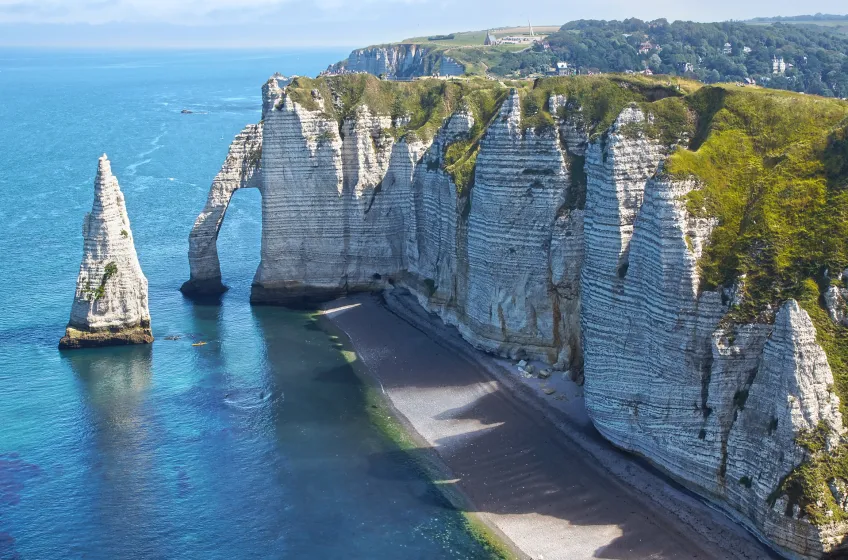
No visit to the Alabaster Coast is complete without seeing Étretat. This enchanting seaside town is famous for its extraordinary cliff formations—most notably the natural arch (Porte d'Aval) and the needle-like spire (L'Aiguille). Walking along the Falaise d’Amont and Falaise d’Aval provides jaw-dropping views over the Channel and is perfect for both casual strolls and longer hikes. The town itself is full of charm, with art galleries, boutiques, and cafés clustered near the beach.
Fécamp and the Benedictine Palace
Fécamp is a historic fishing port known for its grand Benedictine Palace—a neo-Gothic marvel where the famous herbal liqueur is still produced. You can tour the opulent building, learn about the liqueur’s unique recipe, and enjoy a tasting. The town is also home to the Abbaye de la Sainte-Trinité, a magnificent example of Norman Gothic architecture, and a working fishing port that brings in fresh catches daily.
Dieppe
Dieppe blends beach resort charm with historical depth. Known for its wide pebble beach, bustling Saturday market, and rich maritime history, the town is a great base for exploring the Alabaster Coast. Visit the Château-Musée overlooking the sea, wander through the old town, and enjoy a seafood feast at one of the portside restaurants. Dieppe also has direct ferry connections to England, making it a popular entry point for British visitors.
Le Tréport and the Funicular
Le Tréport is a classic Norman seaside town set beneath towering cliffs. Take the free funicular to the top of the cliffs for stunning panoramic views of the town and coast. The working fishing port adds charm, and the seafood restaurants here are among the best on the coast. The nearby town of Mers-les-Bains, with its beautiful Belle Époque villas, is just a short walk away along the promenade.
Veules-les-Roses
One of the most beautiful villages in France, Veules-les-Roses is a peaceful retreat nestled around the shortest river in the country, the Veules. The riverside walk takes you past ancient watermills, stone cottages, and flower-filled gardens before ending at a quiet beach. The town is particularly photogenic and ideal for a romantic or contemplative escape.
Varengeville-sur-Mer
Famous for its clifftop church of Saint-Valéry with stained-glass windows by Georges Braque, Varengeville-sur-Mer is a place where art and nature intersect. The nearby Bois des Moutiers garden combines English landscaping with Art Nouveau architecture, and the town itself has long attracted painters and musicians.
Saint-Valery-en-Caux
This peaceful harbour town is known for its beach, marina, and dramatic cliffs. The lighthouse and fishing boats add to its maritime feel. It's a good spot for relaxing, enjoying seafood, or using as a base for coastal walks. There’s also a poignant WWII history here, with memorials marking the role of Free French forces.
Yport
Smaller and less touristy than Étretat or Fécamp, Yport offers a more tranquil experience. The beach is surrounded by high cliffs, and the village has kept its traditional feel, with old fishermen’s houses, narrow lanes, and a charming church. It’s perfect for those looking to escape the crowds.
The GR21 Hiking Trail
For walkers and outdoor adventurers, the GR21 long-distance trail runs the length of the Alabaster Coast. It hugs the cliff tops and offers uninterrupted views over the sea, winding through scenic villages, farmland, and forests. Whether you do a short stretch or a multi-day trek, it’s one of the best ways to truly experience the coast.
Culinary Experiences
The Alabaster Coast is a paradise for seafood lovers. Scallops, mussels, oysters, and sole are local staples, often served in buttery sauces or lightly grilled. Try marmite dieppoise (a creamy fish stew), fresh crab from the quay, or a dozen oysters with a splash of lemon and glass of Norman cider. Local markets and seaside restaurants offer plenty of chances to indulge.
Practical Advice for Visitors
Getting There
The Alabaster Coast is best accessed by car for flexibility, especially if you plan to explore multiple towns. Dieppe and Le Havre have direct train connections from Paris (2–2.5 hours), and ferries link Dieppe to Newhaven in England. Once in the region, the D925 coastal road provides scenic drives linking the main towns and villages.
Parking
Parking is usually available in all the main towns, though it can get busy in peak season. Larger towns like Dieppe, Étretat, and Fécamp offer designated car parks, some free and others pay-and-display. In smaller villages, you can often park near the beach or village centre without issue.
Dining
Restaurants along the coast serve up excellent fresh seafood—look for daily catch specials and set menus. Don’t miss local delicacies like Neufchâtel cheese, apple tarts, and salted butter caramels. For more casual eats, crêperies, boulangeries, and fish & chip shops (with a French twist) are plentiful. Book ahead in summer, especially in Étretat and Veules-les-Roses.
Shopping
Markets are held in most towns weekly—Dieppe’s Saturday market is especially famous for its variety and size. Pick up local cider, Calvados, cheeses, honey, and handmade soaps. Artisan shops in towns like Varengeville-sur-Mer and Étretat also sell unique art, ceramics, and textiles.
When to Visit
The best time to visit is from May to September when the weather is mild and the days are long. July and August are peak months with vibrant festivals, open gardens, and beach events, but also more tourists. Spring is quieter and full of blossom, while autumn offers beautiful light for photography and fewer crowds.
Local Events
The Festival of the Sea in Fécamp (Fête de la Mer), kite festivals in Dieppe, and numerous summer music and art festivals take place across the coast. Look out for village brocantes (flea markets) and fêtes de la coquille (scallop festivals) in late autumn, particularly in Dieppe and Saint-Valery-en-Caux.
Exploring Beyond the Alabaster Coast
From the coast, it’s easy to explore inland Normandy, with rolling countryside, apple orchards, and picturesque villages. Rouen, with its Gothic cathedral and half-timbered houses, is about an hour from the coast and makes a superb day trip. Giverny, the home and garden of Claude Monet, is another must-visit for art and garden lovers.
Shortlist
- Your Shortlist is empty