
Discover Ain | A Visitor's Introduction to Ain
Ain is a diverse and scenic department in eastern France, part of the Auvergne-Rhône-Alpes region, and named after the Ain River. Bordering Switzerland and located just northeast of Lyon, Ain is a land of contrasts — from the snow-capped Jura Mountains and lush river valleys to medieval villages and the wild plains of the Dombes. Whether you're here to hike, taste exceptional local produce, discover Renaissance architecture, or just enjoy a peaceful countryside escape, Ain offers an authentic, under-the-radar French experience.
Recommended Ain Accommodation: Hotels Bed & Breakfasts
Why is Ain Worth a Visit?
Ain is worth visiting for its incredible geographical diversity, rich gastronomy, historical depth, and peaceful rural charm. Unlike more tourist-heavy parts of France, Ain offers quiet beauty, affordable travel, and authentic experiences across its four main regions: Bugey (mountainous and forested), Dombes (wetlands and lakes), Bresse (rolling farmland and famous poultry), and the Pays de Gex (bordering Switzerland and the Jura Mountains).
Nature lovers can explore dramatic gorges, waterfalls, and mountain peaks. Foodies will be in heaven with Bresse chicken, freshwater fish, and creamy local cheeses like Comté and Bleu de Gex. History buffs can wander through perfectly preserved medieval towns, Renaissance castles, and Romanesque churches. Ain is also a gateway to the Jura Mountains and Geneva, making it an ideal base for exploring eastern France and western Switzerland.
Ain Highlights: Things to See and Do in Ain
Pérouges
The stunning medieval hilltop village of Pérouges is one of France’s official Plus Beaux Villages and a highlight of any visit to Ain. This walled town, with its cobbled streets and beautifully preserved stone houses, looks straight out of a historical film set. Not surprisingly, it’s been used as a backdrop for several movies.
Don’t miss tasting the local speciality — galette de Pérouges, a sweet, buttery flatbread sprinkled with sugar — best enjoyed on a terrace in the main square. Go early in the morning or late in the day to avoid crowds and see the village at its most atmospheric.
Cerdon and the Caves of Cerdon
Cerdon is a lovely village in the Bugey region, famous for its pink sparkling wine (Cerdon méthode ancestrale) and for the nearby Grottes du Cerdon, an impressive cave system set within a forested park. You can walk through vast limestone chambers and even try your hand at prehistoric activities like flint knapping or cave painting in the on-site workshops.
Cerdon is also a good base for hikes and offers spectacular viewpoints over the surrounding valleys.
Parc des Oiseaux (Bird Park), Villars-les-Dombes
In the heart of the Dombes, Parc des Oiseaux is one of Europe’s leading bird parks, home to over 3,000 birds from across the globe. Set around a series of lakes and natural enclosures, the park combines conservation with education and entertainment. Daily flying shows are a highlight, and kids will love the hands-on exhibits and interactive zones.
Spring and early summer are the best times to visit for birdwatching and enjoying the lush setting.
Gorges de l’Ain and Lake Nantua
The Gorges de l’Ain are a dramatic series of limestone cliffs and wooded slopes that follow the Ain River, offering scenic drives, kayaking, and hiking. The village of Poncin makes a good stop, with its medieval streets and riverside charm.
Nearby, Lac de Nantua is a glacial lake surrounded by steep cliffs and forest, ideal for swimming, paddleboarding, or lakeside picnics. It’s also famous for quenelles de brochet, a creamy pike dish often served with Nantua sauce — a regional delicacy.
Haute Chaîne du Jura and Crêt de la Neige
In the east of Ain lies the Pays de Gex, bordering Switzerland and home to the Haute Chaîne du Jura, a nature reserve and part of the Jura Mountains. Crêt de la Neige, at 1,720 metres, is the highest peak in the Jura and offers fantastic hiking with breathtaking views over Lake Geneva and Mont Blanc on clear days.
In winter, the Jura resorts such as Lélex-Crozet and Mijoux provide family-friendly skiing, snowshoeing, and Nordic skiing — often quieter and more affordable than the Alps.
Bourg-en-Bresse and the Royal Monastery of Brou
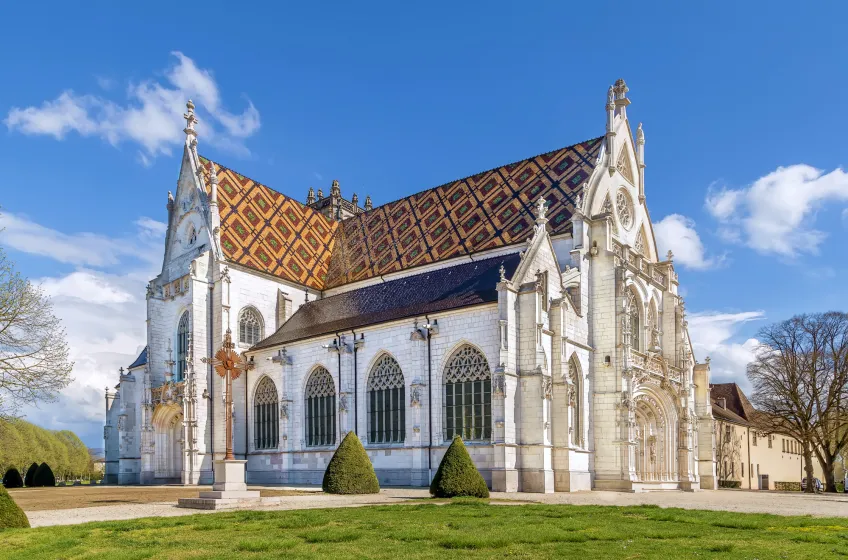
Bourg-en-Bresse, the capital of Ain, is best known for the Royal Monastery of Brou, a Gothic masterpiece with exquisite stonework, stained glass, and Renaissance tombs. It’s one of France’s most remarkable religious buildings and a must-see for art and architecture lovers.
The town itself has a charming old centre with half-timbered houses, lively markets, and good shopping. It’s also a great place to sample poulet de Bresse, the only chicken in the world with a protected designation of origin (AOC), often served in creamy morel mushroom sauce.
Château de Voltaire, Ferney-Voltaire
Just outside Geneva, the Château de Voltaire is a beautifully restored 18th-century manor where the famous philosopher spent his final years. The house is filled with exhibits on Voltaire’s life and ideas, while the gardens offer superb views of the Alps.
The town of Ferney-Voltaire itself is lovely for a wander and makes a good base if you’re planning to visit Geneva or the Jura.
The Dombes Lakes and Nature
The Dombes is a unique area of over 1,000 man-made lakes originally created for fish farming. Today, it's a paradise for birdwatchers and nature lovers. Bring your binoculars and explore on foot, bike, or even horseback. Many lakes are private, but there are viewing platforms and signed trails, especially around Villars-les-Dombes and Sandrans.
This area is also known for traditional carp and tench dishes, often served in creamy white wine sauces — a real taste of the Dombes.
Wine and Gastronomy in Bugey
The Bugey region in southern Ain is a lesser-known but increasingly respected wine area. Local wineries produce reds, rosés, whites, and sparkling wines, with Cerdon rosé being particularly prized.
Stop by vineyards around Vongnes, Arbignieu, or Montagnieu for tastings and vineyard tours. Pair your wine with comté, bleu de Gex, or goat’s cheese from the Jura foothills.
Practical Advice for Visitors
Getting There
Ain is centrally located and well-connected:
-
By car: Easily accessed via the A40 and A42 motorways. It’s around 1 hour from Lyon, 1.5 hours from Geneva, and 4–5 hours from Paris.
-
By train: High-speed TGV trains stop at Bourg-en-Bresse, with regional connections to towns like Ambérieu, Oyonnax, and Bellegarde-sur-Valserine.
-
By air: The nearest major airports are Lyon-Saint Exupéry and Geneva. Both offer car rental and public transport links into Ain.
Getting Around
Ain is best explored by car, especially if you want to visit rural areas, vineyards, lakes, and mountains. The public transport network is limited in more remote areas, though trains and buses connect the larger towns.
Cycling is increasingly popular, especially in the Dombes and along greenways like the Voie Bleue, which runs along the Rhône.
Parking
Parking is widely available and usually free or inexpensive outside city centres. In Bourg-en-Bresse, there are several car parks near the old town. In villages, you'll rarely struggle to find a space.
Dining
Ain is a true paradise for food lovers. Be sure to try:
-
Poulet de Bresse – Often roasted or served with creamy mushroom sauces.
-
Quenelles de brochet – Pike dumplings with Nantua sauce.
-
Carpe frite – Fried carp, a speciality in the Dombes.
-
Bleu de Gex and Comté – Excellent local cheeses.
-
Cerdon – A fruity pink sparkling wine from the Bugey vineyards.
You’ll find everything from rustic village inns to Michelin-starred restaurants, including Georges Blanc in Vonnas, a gastronomic institution in Ain.
Shopping
Look for local delicacies in markets (especially in Bourg-en-Bresse on Wednesdays and Saturdays), cheese shops, and wine cellars. Many towns also host seasonal food festivals, craft fairs, and brocantes (flea markets).
Souvenirs to take home include regional wines, Bresse ceramics, traditional wooden toys, and honey or preserves from the Jura foothills.
When to Visit
-
Spring (April–June): Ideal for walking, birdwatching, and flower-filled countryside.
-
Summer (July–August): Warm and lively, great for lakes and outdoor dining, though villages remain quiet and peaceful.
-
Autumn (September–October): Grape harvest, golden forests, and ideal food-tasting weather.
-
Winter (December–March): Best for Jura skiing, thermal baths, and hearty cuisine.
Local Events
-
Fête de la Bresse (various villages, summer) – Celebrating local poultry with markets, tastings, and folk music.
-
Voltaire Festival (Ferney-Voltaire, summer) – Literature, music, and theatre in honour of the town’s famous resident.
-
Bird Festival at Parc des Oiseaux (April) – Special events and demonstrations.
-
Christmas Markets – Especially in Bourg-en-Bresse and Oyonnax, with local crafts and winter treats.
Exploring Beyond Ain
If you have extra time, nearby highlights include:
-
Lyon – A UNESCO-listed culinary and cultural capital, just 1 hour away.
-
Geneva – Elegant, lakeside, and packed with museums and gardens.
-
Annecy – With its fairytale canals and lake, just 1.5 hours away.
-
Haut-Jura Regional Park – A haven for hiking, skiing, and wildlife-watching, right on Ain’s doorstep.
Summary
Ain is one of France’s best-kept secrets — a destination where nature, history, food, and culture intertwine across varied landscapes and centuries of tradition. Whether you're sipping sparkling rosé in a quiet vineyard, exploring medieval Pérouges, kayaking through river gorges, or simply enjoying a cheese-laden picnic beside a peaceful lake, Ain invites you to slow down, breathe deep, and savour the best of rural France.
Perfect for nature lovers, foodies, families, and cultural travellers alike, Ain is a place where every road leads to something beautiful — and delicious.
Shortlist
- Your Shortlist is empty